Garden

How to Use Aromatic Plants in Your Garden

Benefits of Aromatic Plants

The addition of aromatic plants to your garden can have a profound impact on your outdoor space, and learning How to care for aromatic plants at home – Be.Green will help you make the most of their benefits.

Why Incorporate Aromatic Plants in Your Garden

Integrating aromatic plants into your garden design will add depth and complexity to your outdoor space, and as you explore the world of fragrant herbs and flowers, you’ll discover the joy of nurturing your senses in your own backyard.

Advantages of Using Aromatic Plants for Health and Wellness

Across the spectrum of aromatic plants, you’ll find a variety of benefits that can enhance your health and wellness, from stress relief to improved mood, and as you tend to your garden, you’ll begin to appreciate the simple pleasures of being surrounded by nature.

Indeed, as you research into the world of aromatic plants, you’ll find that the advantages extend far beyond their fragrance, and the act of cultivating and caring for these plants can be a therapeutic experience in itself, allowing you to connect with the natural world and nurture your mind, body, and spirit in the process, and with a little practice, you’ll be able to harness the full potential of your aromatic garden to enhance your overall well-being.

Key Takeaways:

To make the most of aromatic plants in your garden, consider the following points:

  • Using fragrant herbs such as rosemary, thyme, and lavender can enhance the sensory experience of your outdoor space, creating a soothing and inviting atmosphere.
  • Incorporating aromatic flowers like jasmine and gardenias into your garden design can attract pollinators and add a touch of elegance to your landscape.
  • Planting fragrant foliage such as scented geraniums and lemon balm in containers or directly in the ground can provide a natural and low-maintenance way to freshen the air and repel pests.

Choosing the Right Aromatic Plants

Some of the most fragrant plants can elevate your garden to a sensory paradise, and you can select from a variety of aromatic herbs, flowers, and shrubs to suit your taste and preferences. You’ll want to consider the scent, growth habits, and maintenance needs of each plant to ensure they thrive in your garden.

Popular Aromatic Plants for Beginners

One of the simplest ways to get started is by choosing plants like lavender, rosemary, and mint, which are easy to grow and maintain, and will fill your garden with fragrance and beauty, allowing you to enjoy their scents and flavors in your daily life.

Selecting Plants Based on Climate and Soil Type

To create a thriving aromatic garden, you need to consider the specific climate and soil conditions in your area, as different plants have unique requirements, and you want to choose plants that will flourish in your local environment, so you can enjoy their fragrance and beauty throughout the seasons.

This consideration will help you narrow down your options and select plants that are well-suited to your garden’s conditions, allowing you to create a harmonious and fragrant outdoor space that reflects your personal style and brings you joy, as you tend to your plants and watch them grow and flourish under your care.

Designing an Aromatic Garden

If you’re looking to create a sensory experience in your outdoor space, consider designing an aromatic garden. You can find inspiration and guidance on Building a Fragrance-Focused Garden to get started.

Layout and Organization of Aromatic Plants

Against the backdrop of your garden’s natural beauty, you’ll want to thoughtfully arrange your aromatic plants to maximize their fragrance and visual appeal. Consider grouping plants by scent or texture to create a harmonious and inviting atmosphere.

Companion Planting for Optimal Growth

Optimally, you’ll want to choose companion plants that complement each other in terms of growth habits, sunlight requirements, and fragrance profiles. This will ensure a diverse and thriving aromatic garden that delights your senses.

Garden with intention by selecting plants that not only smell wonderful but also support each other’s growth. For example, planting lavender near rosemary can improve the fragrance of both, while basil and mint can enhance the flavor of nearby herbs. By thoughtfully combining plants, you’ll create a vibrant and aromatic garden that’s a joy to tend and enjoy.

Planting and Care

Keep your aromatic plants thriving by providing them with the right conditions, including plenty of sunlight, water, and well-draining soil. This will help them grow strong and healthy, filling your garden with their beautiful fragrance.

Planting Aromatic Plants at the Right Time

With warm weather approaching, you can start planting your aromatic plants, choosing a spot that receives plenty of sunlight and has good air circulation. This will help them grow and flourish, filling your garden with their sweet scent.

Maintenance and Pruning Techniques

Timing is everything when it comes to maintaining your aromatic plants, and you’ll want to prune them regularly to encourage new growth and prevent them from becoming leggy. This will help you enjoy their fragrance and beauty throughout the growing season.

Understanding the specific needs of your aromatic plants is key to keeping them healthy and thriving. As you tend to your garden, you’ll begin to notice the unique characteristics of each plant, and you can adjust your care routine accordingly, ensuring that your garden remains a vibrant and fragrant oasis that you’ll love spending time in, surrounded by the beauty and scent of your aromatic plants.

Using Aromatic Plants in Cooking and Crafts

Despite the many ways to enjoy aromatic plants, you’ll find that using them in cooking and crafts brings a new level of delight to your garden experience. You can explore various ways to incorporate these fragrant plants into your daily life.

Culinary Uses of Aromatic Plants

The beauty of aromatic plants lies in their ability to elevate your dishes with their unique flavors and scents, allowing you to create delicious meals that will leave your family and friends impressed, and you can start by adding fresh herbs to your favorite recipes.

Creative Ways to Use Aromatic Plants in Crafts

Using your aromatic plants in crafts is a wonderful way to bring the garden into your home, and you can make potpourri, wreaths, or sachets that fill your space with lovely fragrances, making your home feel cozy and inviting.

With your aromatic plants, you can get creative and make all sorts of crafts, from infused oils and vinegars to scented candles and soaps, and as you experiment with different projects, you’ll find that the possibilities are endless, and you’ll enjoy the process of discovering new ways to use your fragrant herbs and flowers, adding a personal touch to your home and gifts for loved ones.

Pest Control and Companion Planting

All gardeners know that a well-designed garden is not just about aesthetics, but also about creating a balanced ecosystem. You can learn more about aromatic plants and their uses at Aromatic Plant Preparation & Uses, to enhance your garden’s natural harmony.

Using Aromatic Plants to Repel Pests

Beneath the surface of your garden, aromatic plants can help repel pests, keeping your garden healthy. You’ll find that certain plants, like basil and mint, have natural properties that deter unwanted insects, allowing you to enjoy your garden without pests.

Companion Planting for a Balanced Ecosystem

Around your garden, companion planting can create a thriving ecosystem, where plants work together in harmony. You’ll notice that by pairing certain plants, like marigolds with tomatoes, you can prevent pests and diseases, promoting a balanced environment.

To take your companion planting to the next level, you’ll want to consider the specific needs of each plant, and how they interact with one another. As you plan your garden, think about how you can pair plants to enhance their growth, and create a vibrant, diverse ecosystem that thrives, with you as the gentle guide, nurturing your garden’s unique beauty.

Conclusion

On the whole, you’ve discovered the joys of incorporating aromatic plants into your garden, and now you can unlock their full potential. You’ll find that your garden becomes a sensory delight, with fragrances and flavors to savor. As you tend to your aromatic plants, you’ll appreciate the simple pleasures they bring to your outdoor space, and your connection to nature will deepen, enriching your life in ways you never thought possible, right in your own backyard.

FAQ

Q: What are the benefits of using aromatic plants in my garden?

A: Aromatic plants can bring numerous benefits to your garden, including attracting pollinators, repelling pests, and creating a pleasing fragrance that can enhance your outdoor experience. They can also be used in cooking, herbal remedies, and as a natural air freshener. By incorporating aromatic plants into your garden, you can create a multisensory experience that promotes relaxation and well-being.

Q: Which aromatic plants are easy to grow and suitable for beginners?

A: Some of the easiest aromatic plants to grow include lavender, rosemary, thyme, and mint. These plants are relatively low maintenance, can thrive in a variety of conditions, and can be used in a range of ways. Lavender and rosemary are great for attracting pollinators, while thyme and mint can be used in cooking and herbal remedies. These plants are perfect for beginners, as they are forgiving and can help build confidence in gardening skills.

Q: How do I care for aromatic plants to ensure they thrive?

A: To care for aromatic plants, make sure to plant them in well-draining soil and provide them with adequate sunlight and water. Most aromatic plants prefer full sun to partial shade and should be watered regularly, but not overwatered. Fertilize your aromatic plants regularly, but avoid overfertilizing, as this can reduce their fragrance and flavor. Prune your plants regularly to promote healthy growth and prevent them from becoming leggy.

Q: Can I use aromatic plants in cooking and herbal remedies?

A: Yes, many aromatic plants can be used in cooking and herbal remedies. Herbs like basil, rosemary, and thyme can be used to add flavor to a range of dishes, from soups to sauces. Other plants, like chamomile and calendula, can be used to make herbal teas, salves, and creams. When using aromatic plants in cooking and herbal remedies, make sure to use them in moderation and follow proper preparation and safety guidelines to avoid any adverse effects.

Q: How can I incorporate aromatic plants into my garden design?

A: Aromatic plants can be incorporated into your garden design in a variety of ways. Consider planting them in containers or borders, where they can be easily accessed and enjoyed. You can also plant them in sensory gardens, where they can be combined with other plants and features to create a multisensory experience. Consider pairing aromatic plants with other plants that have different textures, colors, and fragrances to create a dynamic and engaging garden space. By incorporating aromatic plants into your garden design, you can create a beautiful and fragrant outdoor space that promotes relaxation and well-being.
The Best Tips for Keeping Your Garden Organic

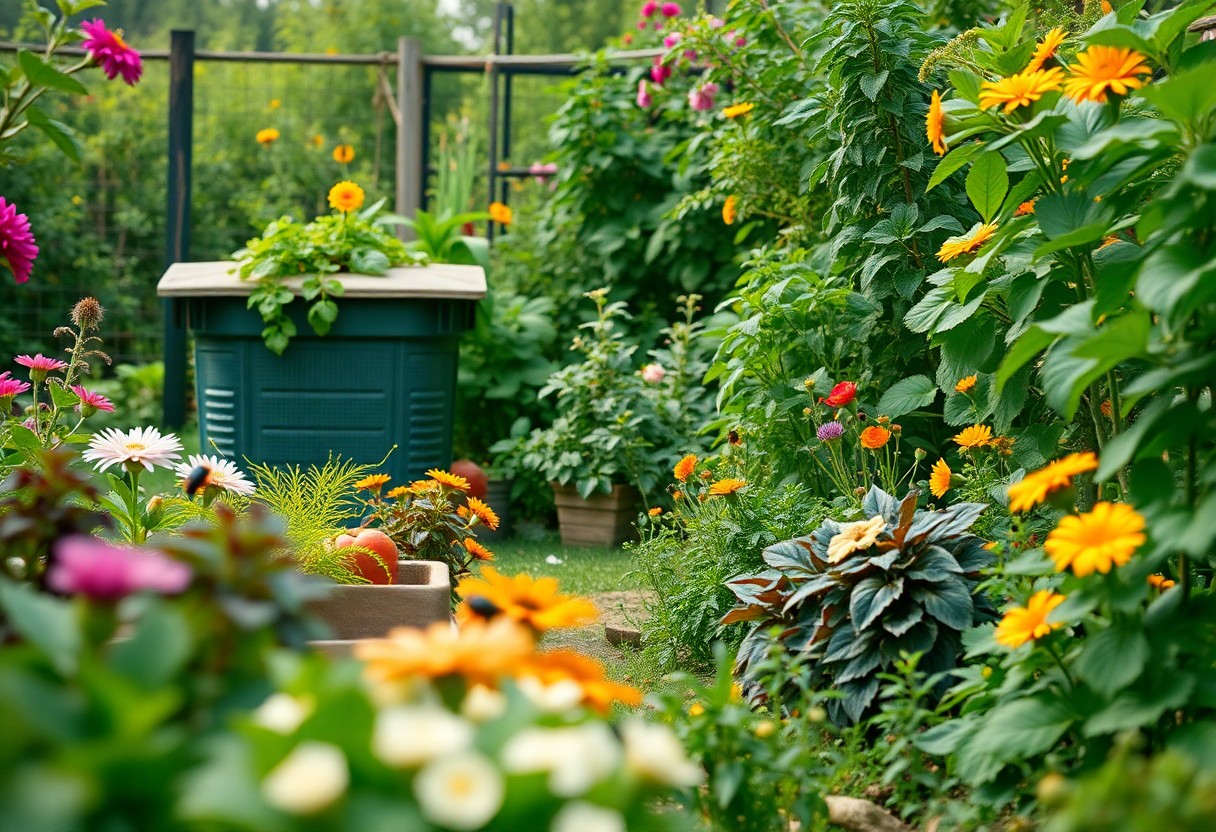
As you tend to your garden, you nurture a delicate balance between nature and nurture. To cultivate a thriving, chemical-free oasis, you’ll want to adopt practices that prioritize the health of your soil, plants, and the environment. For inspiration, you can explore 11 Organic Gardening Tips to Grow an Incredible Garden, and discover simple, effective methods to create a lush, organic haven that flourishes under your care, reflecting the beauty and wonder of the natural world.

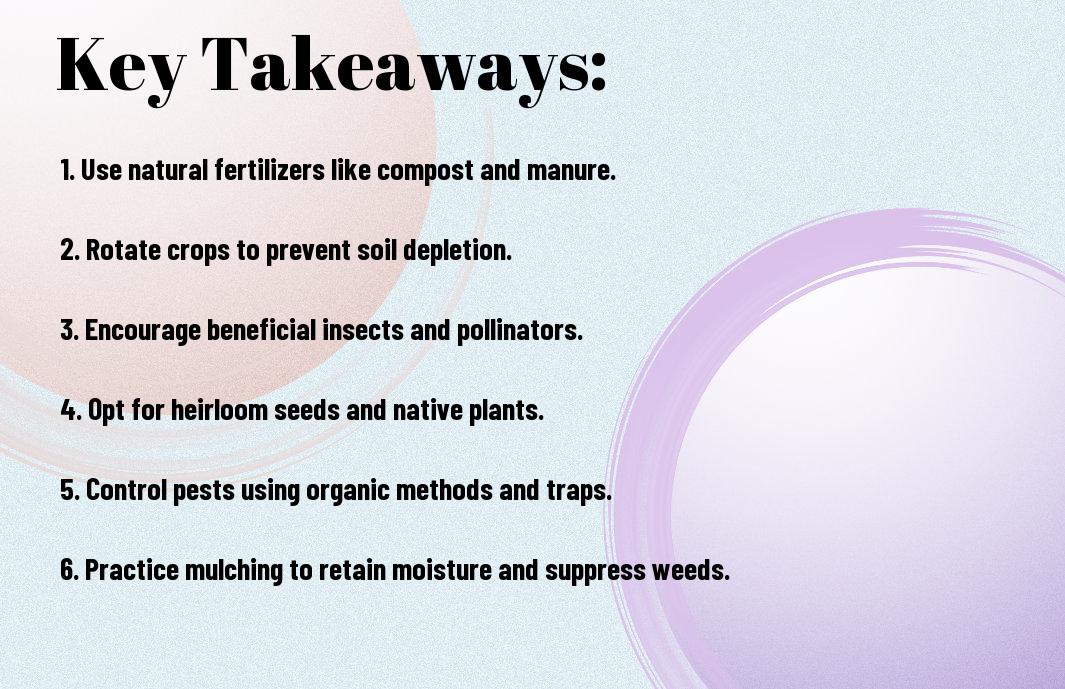
Key Takeaways:

To maintain a healthy and thriving organic garden, consider the following tips:

  • Use natural pest control methods, such as introducing beneficial insects or using homemade pest repellents, to avoid harming the environment and your plants.
  • Incorporate composting into your gardening routine, as it provides crucial nutrients for your plants and helps reduce waste.
  • Choose heirloom seeds or non-GMO varieties to promote biodiversity and ensure your garden remains free from genetically modified organisms.

Planning Your Organic Garden

A well-designed garden begins with careful planning, considering the space, climate, and your needs. As you start, consider visiting what are some organic gardening tips to keep in mind for beginners to guide your decisions.

Choosing the Right Plants

Below the surface of garden planning lies the selection of plants that will thrive in your environment, and you will want to choose those that are suitable for your climate and soil type.

Preparing the Soil

On the path to creating a thriving garden, you must first prepare the soil, nurturing it with organic matter and ensuring its pH balance is suitable for your chosen plants.

Indeed, as you investigate deeper into preparing your soil, you will find that adding compost and well-rotted manure will enrich it, allowing your plants to grow strong and healthy, and your garden to flourish under your care.

Natural Pest Control

While cultivating your garden, you may encounter pests that threaten to destroy your hard work. To maintain an organic approach, consider alternatives to chemical pesticides. You can use natural methods to control pests and keep your garden healthy.

Using Companion Planting

Pests can be deterred by certain plants, so you can use companion planting to your advantage. By placing specific plants alongside your crops, you can naturally repel unwanted insects and maintain a balanced ecosystem in your garden.

Encouraging Beneficial Insects

Companion insects, such as bees and butterflies, can be beneficial to your garden. You can attract these helpful creatures by incorporating plants that provide them with food and shelter, creating a welcoming environment for them to thrive.

In fact, as you encourage beneficial insects to visit your garden, you will notice a decrease in the number of harmful pests. This is because these beneficial insects will help to pollinate your plants and prey on the pests that threaten your garden, creating a natural balance that allows your garden to flourish. By working with nature, you can maintain a healthy and thriving organic garden.

Organic Fertilizers

All gardens benefit from organic fertilizers, which promote healthy growth and sustainability. You can create your own fertilizers using natural materials, reducing your reliance on synthetic products and cultivating a more balanced ecosystem in your garden.

Composting at Home

Beneath the surface of your daily life, you can turn kitchen scraps and yard waste into a valuable resource. You can compost at home, transforming would-be waste into nutrient-rich soil that will nourish your plants and enhance the overall health of your garden.

Using Natural Mulch

Homeward bound, your garden’s beauty and fertility can be enhanced by using natural mulch. You can collect leaves, straw, or wood chips to spread around your plants, retaining moisture and suppressing weeds in a simple, effective way.

Mulch becomes a protective blanket for your soil, shielding it from extreme temperatures and erosion. As you spread it around your garden, you’re not only beautifying the space, but also creating an environment where your plants can thrive, their roots digging deeper into the earth, and their leaves reaching for the sun.

Water Conservation

Keep your garden organic by reducing water waste, a simple yet effective way to promote sustainability. You can achieve this by adopting efficient practices that conserve this precious resource.

Efficient Irrigation Systems

Besides traditional methods, consider installing drip irrigation systems or soaker hoses, which deliver water directly to the roots of your plants, minimizing evaporation and runoff, allowing you to make the most of your water supply.

Collecting Rainwater

Between the rainfall and your garden, lies an opportunity to harvest and store rainwater for later use, reducing your reliance on municipal water supplies and lowering your water bill, as you make use of this free and abundant resource.

With a rainwater collection system in place, you can redirect rainwater from your roof into a storage tank or barrel, providing your garden with a natural and chemical-free source of water, and you can use this stored water for irrigation, reducing the demand on your well or municipal water supply, and helping to maintain your garden’s natural balance.

Maintaining Your Garden

Your garden is a reflection of your dedication to the natural world, and with gentle care, it will flourish. You nurture the soil, and it will nurture you in return. As you tend to your garden, you begin to understand the intricate balance of nature.

Regular Weeding and Pruning

Between the blooms and the harvest, you must attend to the quiet tasks that keep your garden thriving. You will find that regular weeding and pruning allow your plants to grow strong and healthy, their beauty unfolding like a tapestry.

Monitoring for Pests and Diseases

About the time you notice a change in your garden’s harmony, you should inspect your plants for signs of trouble. You look for the subtle signals that something is amiss, and take action to restore balance.

Hence, as you monitor your garden for pests and diseases, you develop a deeper understanding of the interconnectedness of all living things. You learn to observe the subtle signs of distress, and take gentle, effective action to protect your plants, using natural methods that work in harmony with the environment, allowing your garden to become a vibrant, thriving ecosystem that nourishes both body and soul.

Tips for a Thriving Garden

For a resilient garden, consider the following:

  • using compost
  • conserving water

Thou shalt find that your garden flourishes with these simple practices.

Crop Rotation and Diversity

Towards a balanced garden, you’ll want to plant a variety of crops, rotating them seasonally to maintain soil health and prevent pests.

Using Natural Supports

Tricks for supporting your plants include using twine, sticks, and rocks to create a natural trellis.

Crop production can be maximized by using your own natural resources, such as branches and stones, to support plants as they grow, allowing you to tend to your garden with minimal waste and environmental impact, and fostering a deeper connection with the land you cultivate.

Summing up

The path to an organic garden is one you’ve commenceed upon with intention and care. As you tend to your land, you’ve learned to nurture the soil, choosing natural methods to cultivate life. You’ve discovered the harmony that exists between your garden and the world around it, and by embracing this simplicity, your outdoor space has become a thriving oasis, reflecting the beauty of nature and the tranquility of your own spirit.

FAQ

Q: What are the benefits of keeping my garden organic?

A: Keeping your garden organic has numerous benefits, including reducing your exposure to harmful chemicals, creating a healthier environment for your family and pets, and promoting biodiversity. Organic gardening also helps to improve soil quality, conserve water, and support local ecosystems. By choosing organic methods, you can enjoy a more sustainable and environmentally friendly gardening experience.

Q: How do I start an organic garden from scratch?

A: To start an organic garden from scratch, begin by testing your soil to determine its pH level and nutrient content. Next, choose a location that receives plenty of sunlight and has good drainage. Select organic seeds or seedlings that are suitable for your climate and soil type. Prepare your soil by adding compost or well-rotted manure, and then plant your seeds or seedlings. Be sure to water them regularly and maintain a consistent gardening routine. As you begin your organic gardening journey, consider keeping a gardening journal to track your progress and note any challenges you encounter.

Q: What are some effective natural pest control methods for my organic garden?

A: There are several effective natural pest control methods you can use in your organic garden. One approach is to introduce beneficial insects, such as ladybugs or lacewings, which prey on common garden pests. You can also use physical barriers, like fine mesh or fine-netting, to keep pests away from your plants. Additionally, consider spraying your plants with homemade pest control solutions, such as garlic or soap solution, to deter pests. Another option is to use companion planting, where you plant certain species together to deter pests. For example, planting marigolds with tomatoes can help to repel nematodes.

Q: How can I make my own organic fertilizer for my garden?

A: Making your own organic fertilizer is a simple and cost-effective way to provide your plants with imperative nutrients. One method is to create a compost pile using kitchen scraps, leaves, and grass clippings. As the materials break down, they will form a nutrient-rich fertilizer that you can add to your soil. You can also make a liquid fertilizer by steeping comfrey leaves or manure tea in water. Another option is to use worm casting, which is a nutrient-rich fertilizer produced by worms as they break down organic matter. By making your own organic fertilizer, you can reduce your reliance on synthetic fertilizers and create a more sustainable gardening practice.

Q: What are some tips for maintaining soil health in my organic garden?

A: Maintaining soil health is imperative for a thriving organic garden. One tip is to add organic matter, such as compost or well-rotted manure, to your soil regularly. This will help to improve soil structure, increase nutrient availability, and support beneficial microorganisms. Another approach is to use crop rotation, which involves rotating different plants or plant families to avoid depleting the soil of specific nutrients. You should also avoid over-tilling, as this can damage soil structure and disrupt beneficial microorganisms. Finally, consider using mulch to retain moisture, suppress weeds, and regulate soil temperature. By following these tips, you can create a healthy and balanced soil ecosystem that supports the overall health and productivity of your organic garden.

How to Design a Bird-Friendly Garden

As you step into your garden, you envision a haven that welcomes the gentle songs of birds. You want to create a space where these creatures can thrive, and your outdoor sanctuary can become a haven for them. By choosing the right plants, water features, and structures, you can design a bird-friendly garden that will attract a variety of species and bring joy to your daily life. Your garden can be a peaceful retreat, teeming with life and beauty, where you can connect with nature.

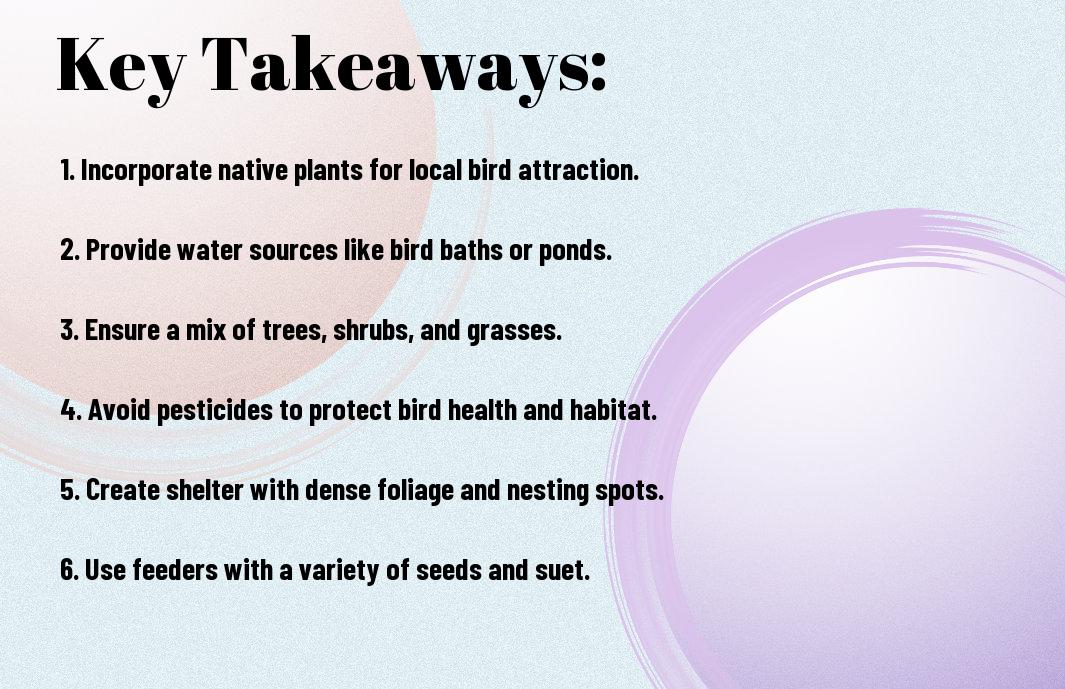
Key Takeaways:

To create a bird-friendly garden, consider the following points:

  • Provide a diverse range of plants that offer food sources, such as seeds, berries, and nectar, to attract different species of birds.
  • Incorporate native plants, shrubs, and trees that provide shelter and nesting sites for birds, as well as water sources like birdbaths or ponds.
  • Use sustainable gardening practices, such as avoiding pesticides and creating a wildlife-friendly habitat, to support the overall health and well-being of the birds visiting your garden.

Choosing the Right Plants

The selection of plants is a vital step in designing a bird-friendly garden, as you want to create a haven that will attract a variety of bird species to your yard. Consider the types of birds you want to attract and the types of plants that will provide the necessary food and shelter for them.

Native species selection

With native plants, you can create a garden that is tailored to the specific needs of the birds in your area, providing them with the food and shelter they need to thrive. You can choose plants that are indigenous to your region, which will attract birds that are native to your area.

Flower and shrub options

After selecting native plants, you can consider adding flowers and shrubs that will provide additional food sources for the birds, such as nectar, seeds, and berries. You can choose plants with varying bloom times to ensure a constant source of food throughout the year.

Indeed, the flowers and shrubs you choose can make a significant difference in the types of birds that visit your garden. As you consider your options, think about the different types of food that various bird species need to survive, and choose plants that will provide those necessities, such as sunflowers for seeds or coneflowers for nectar, allowing you to create a garden that is a true haven for your feathered friends.

Providing Food Sources

Some of the most effective ways to attract birds to your garden involve providing them with a reliable source of food. You can learn more about how to Create a Bird-Friendly Habitat by visiting Create a Bird-Friendly Habitat guide, which offers valuable tips and insights.

Bird feeder placement

Around your garden, place bird feeders in spots that offer birds protection from strong winds and predators, allowing them to feed safely and comfortably.

Suet and seed choices

On the topic of suet and seeds, you’ll want to select options that cater to the diverse needs of your feathered visitors, offering a mix of high-energy foods and nutritious treats.

Understanding the different types of suet and seeds available will help you make informed choices for your bird-friendly garden. You’ll find that offering a variety of foods, such as black oil sunflower seeds, safflower seeds, and peanut suet, will attract a wide range of bird species to your garden, keeping them nourished and happy throughout the year.

Creating a Water Feature

Unlike other garden features, a water feature can be a simple yet effective way to attract birds to your yard. You can create a small pond or birdbath, which will provide your feathered friends with a source of water for drinking and bathing.

Birdbath design

Allying with nature, you’ll want to choose a birdbath design that complements your garden’s surroundings. You’ll find that a shallow, freshwater source with a rough surface will be perfect for birds to land and take off from.

Pond installation

Against the backdrop of your garden, a pond can be a beautiful addition. You’ll want to consider the size and depth of your pond, as well as the type of plants and features you’ll include, such as a fountain or waterfall.

Considering the specifics of your pond installation, you’ll want to think about the types of birds you’re trying to attract and the habitat you’re trying to create. You may want to include native plants, rocks, and other features that will provide shelter and food for the birds, and make your pond a welcoming oasis in your garden, allowing you to observe and appreciate the beauty of nature.

Designing a Bird-Friendly Layout

All aspects of your garden’s design should be considered when creating a haven for birds. You can find inspiration and guidance on creating a bird-friendly garden to inform your design decisions.

Tree and shrub placement

Trees and shrubs provide excellent habitats for birds, so you’ll want to place them strategically in your garden to offer shelter and food. You can plant native species that produce berries or nectar to attract a variety of bird species.

Meadow and grassland creation

For a unique and inviting space, consider creating a meadow or grassland area in your garden, complete with native wildflowers and grasses that will attract birds and other wildlife. You can choose plants that are native to your region to ensure the best results.

Considering the types of birds you want to attract, you’ll want to plant a diverse range of species in your meadow or grassland area. You can include plants with different growth habits, such as tall grasses and low-growing wildflowers, to create a layered and inviting space. By doing so, you’ll be able to attract a variety of bird species to your garden, and enjoy watching them thrive in their new habitat.

Reducing Hazards

Despite your best efforts to create a welcoming space, your bird-friendly garden may still pose risks to your feathered friends. You’ll want to take steps to minimize these dangers and ensure the well-being of your visitors.

Window collision prevention

Beneath the surface of your garden’s design, lies the potential for window collisions. You can apply decals or install netting to prevent birds from flying into your windows, saving them from injury or death.

Cat and predator control

Along the edges of your garden, predators like cats may lurk, waiting to pounce on unsuspecting birds. You can take measures to deter them, such as using physical barriers or repellents, to protect your bird population.

Hazards from cats and other predators can be particularly problematic, as they can significantly impact the bird population in your garden. You can consider taking additional steps, such as providing sheltered feeding areas or using bird-friendly plants that provide hiding spots, to help mitigate these risks and create a safer environment for your birds to thrive.

Maintenance and Enjoyment

To keep your bird-friendly garden thriving, consider the changing seasons.

Seasonal gardening tips

You’ll find that tasks like pruning and planting vary by season, so

  • adapt your gardening schedule accordingly

.
The beauty of nature will unfold before your eyes as you tend to your garden.

Birdwatching and observation

On quiet mornings, you can observe the birds in your garden, learning their habits and habitats.
As you sit among the trees and flowers, you’ll notice the unique characteristics of each species, and your appreciation for these creatures will grow.

But as you explore deeper into the world of birdwatching, you’ll discover that it’s not just about observing birds, it’s also about understanding their behavior, migration patterns, and social interactions, and you’ll find that your garden has become a vibrant ecosystem, full of life and wonder, where you can connect with nature and find peace.

To wrap up

With these considerations, you’ll be well on your way to creating a haven for your feathered friends. As you tend to your bird-friendly garden, you’ll find joy in the simple act of nurturing nature. For more guidance, visit How to Make Your Yard Bird-Friendly | Audubon to discover the beauty of sharing your space with the natural world, and watch your yard flourish into a vibrant oasis for you and your avian companions to enjoy.

FAQ

Q: What are the key elements to consider when designing a bird-friendly garden?

A: When designing a bird-friendly garden, it’s vital to consider a variety of elements, including the types of plants, water sources, and shelter. Incorporating native plants that provide nectar, seeds, and berries will attract a diverse range of bird species. Additionally, providing a source of water, such as a birdbath or pond, and incorporating native trees and shrubs for shelter will create a welcoming environment for birds. A mix of evergreen and deciduous plants will also provide year-round interest and habitat for birds.

Q: How can I choose the right plants for my bird-friendly garden?

A: Choosing the right plants for your bird-friendly garden involves selecting a variety of plants that provide food and shelter for birds throughout the year. Consider plants that produce nectar-rich flowers, such as coneflowers and black-eyed susans, as well as plants that produce seeds and berries, like sunflowers and shrubs with berry-producing branches. Native plants are also an excellent choice, as they will attract native bird species and require less maintenance. It’s also important to choose plants that are suitable for your local climate and soil type.

Q: What types of bird feeders and watering stations are best for a bird-friendly garden?

A: Pertaining to bird feeders and watering stations, there are many options to consider. Tube feeders, hopper feeders, and platform feeders are all great options, as they allow birds to easily access food. For watering stations, consider a birdbath with fresh water and a few rocks or sticks for perching, or a small pond with a fountain or mister to create movement and sound. It’s also important to keep your feeders and watering stations clean and well-maintained to ensure the health and safety of the birds.

Q: How can I create a bird-friendly garden in a small space, such as a balcony or patio?

A: Even in small spaces, such as a balcony or patio, you can create a bird-friendly garden. Consider using container gardens or hanging baskets to grow a variety of plants that attract birds, such as herbs, flowers, and shrubs. You can also use a small birdbath or a self-contained watering station, and hang a few bird feeders from the railing or a nearby hook. Additionally, choose plants that are compact or dwarf varieties, and consider using a trellis or arbor to make the most of your space.

Q: How can I maintain my bird-friendly garden and ensure it remains a welcoming habitat for birds?

A: To maintain your bird-friendly garden and ensure it remains a welcoming habitat for birds, it’s vital to regularly inspect and maintain your plants, feeders, and watering stations. Keep your feeders and birdbaths clean, and refill them regularly to ensure a constant source of food and water. Prune your plants regularly to maintain their shape and promote healthy growth, and consider adding a layer of mulch or compost to retain moisture and suppress weeds. By following these simple steps, you can create a thriving and welcoming bird-friendly garden that will attract a variety of bird species and provide hours of enjoyment and entertainment.

How to Make a Natural Bug Repellent for Your Garden

As you tend to your garden, you want to protect it from harmful pests without harming the environment. You can create a safe and effective natural bug repellent using everyday ingredients. By making your own repellent, you’ll avoid exposing your garden to harsh chemicals, keeping your plants and the ecosystem healthy. You’ll learn how to mix and match ingredients to keep bugs at bay, nurturing your garden in a gentle, environmentally friendly way.

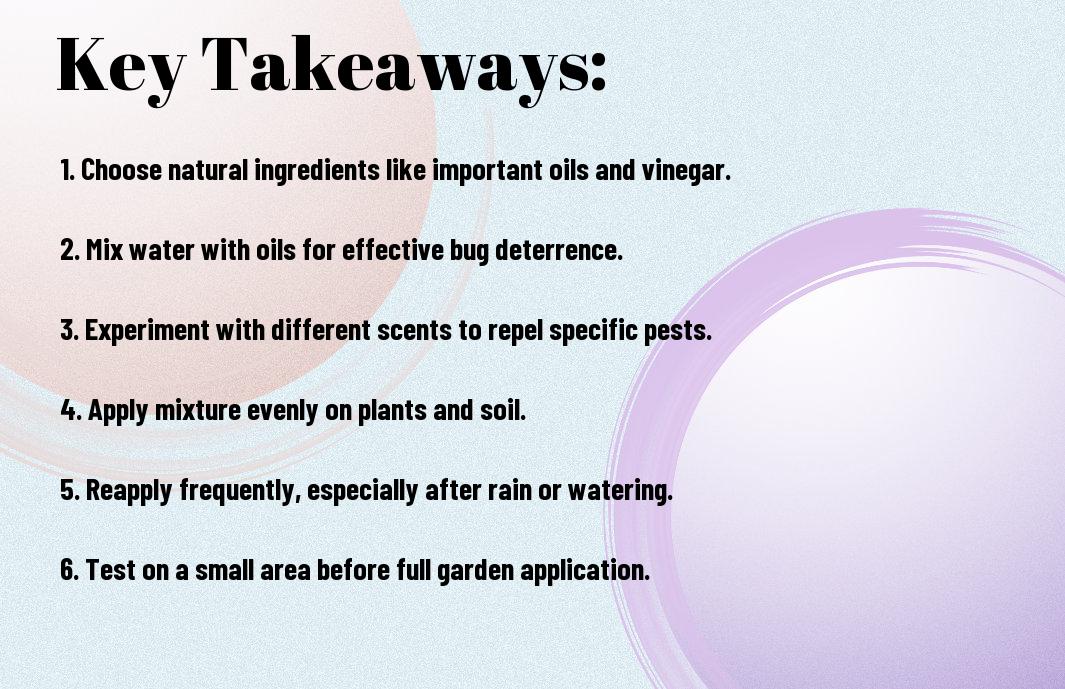
Key Takeaways:

To create an effective natural bug repellent for your garden, consider the following points:

  • Use a combination of necessary oils such as citronella, lemongrass, and peppermint, which have been shown to repel insects and can be mixed with water and sprayed directly on plants.
  • Combine herbal ingredients like garlic, chili peppers, and basil to create a potent repellent that can be used to protect your garden from pests.
  • Apply the natural repellent regularly, ideally after rainfall or irrigation, to ensure optimal protection for your plants and maintain a healthy garden ecosystem.

Choosing Natural Ingredients

A key step in creating your own bug repellent is selecting the right natural ingredients, and you can find inspiration from trusted sources like Bug Off! 5 Homemade Pesticides: DIY Soap Sprays for Plants, which offer effective and eco-friendly solutions for your garden.

Essential Oils for Repellent Properties

Approximately, you will find that certain important oils possess natural repellent properties that can help protect your garden from pests, and you can explore these options to create a potent blend.

Herbs and Plants for Bug Repellent

Beneath the surface of conventional pest control methods, you will discover that herbs and plants like basil, mint, and lemongrass have natural bug-repelling properties that can be used to your advantage in your garden.

Repellent herbs and plants are a great addition to your natural bug repellent, and as you explore the various options, you will find that you can use them in different forms, such as infusions, sprays, or even plant them alongside your other garden plants to keep pests at bay, allowing you to tend to your garden with a clearer conscience and a deeper connection to nature.

Preparing the Repellent

If you’re looking to create a natural bug repellent for your garden, you’ll need to start by gathering the necessary ingredients, such as vital oils, herbs, and water. You can choose from a variety of natural ingredients that are known to deter bugs, like citronella, lemongrass, or lavender.

Mixing the Ingredients

One of the most important steps in preparing your natural bug repellent is mixing the ingredients in the right proportions. You will need to combine your chosen vital oils with water and other natural substances to create a potent blend that will keep bugs at bay in your garden.

Creating a Spray or Solution

Against the backdrop of a thriving garden, you’ll want to create a spray or solution that is easy to apply and effective at deterring bugs. You can mix your natural ingredients with water in a spray bottle, creating a solution that you can spritz directly on your plants.

Consequently, as you create your natural bug repellent spray or solution, you’ll find that it’s not only effective at keeping bugs away, but also gentle on your plants and the environment. You can use your spray or solution regularly to protect your garden from bugs, and enjoy the peace of mind that comes with knowing you’re using a natural and sustainable method to keep your garden thriving.

Applying the Repellent

Not only is making your own natural bug repellent easy, but applying it is also straightforward. You can find more information on natural bug repellents at Natural Bug Repellent for Plants: 15 Organic Sprays That Work, to help keep your garden pest-free.

Spray Application Methods

To apply the repellent, you will need a spray bottle, which you can fill with your homemade solution and spray directly on the affected areas of your garden.

Soil and Plant Treatment

Above all, your goal is to protect your plants from pests, and treating the soil and plants directly can be an effective way to do this, allowing you to target the root of the problem.

Methods for treating the soil and plants include mixing the repellent into the soil or using it as a foliar spray, which allows you to directly target the pests that are damaging your plants, giving you a healthy and thriving garden, free from harmful chemicals, and full of life, just like you envision your outdoor space to be, with you taking care of your plants in a gentle and sustainable way.

Common Garden Pests and Targets

To effectively protect your garden, you need to understand the pests you’re up against. You can find more information on natural pest control methods by visiting what is a natural garden pest control recipe to learn more about the options available to you.

Insects to Repel

Across your garden, various insects can cause damage, including aphids, whiteflies, and beetles, which can wreak havoc on your plants, so you’ll want to target these pests with your natural repellent.

Preventing Infestations

Behind every healthy garden is a strategy for preventing infestations, and you can achieve this by using natural repellents and maintaining good garden hygiene, which will help keep pests at bay.

Considering the types of pests that can affect your garden, you’ll want to develop a comprehensive plan to prevent infestations, including using physical barriers, encouraging beneficial insects, and practicing good garden hygiene, all of which will help protect your garden from damage and ensure a healthy, thriving ecosystem, allowing you to enjoy the fruits of your labor.

Safety Precautions and Considerations

Once again, as you commence on making your natural bug repellent, consider the potential risks involved, and take necessary precautions to ensure your safety and the well-being of your garden.

Handling Essential Oils

By following the instructions carefully, you can avoid any adverse effects of necessary oils, which can be potent and potentially irritating if not used properly, so be sure to dilute them according to your recipe.

Skin and Eye Protection

Handling the ingredients with care, you will want to protect your skin and eyes from any potential irritation, so wear gloves and goggles to prevent exposure to the mixture.

Consequently, your skin and eyes will be safeguarded from the potentially irritating effects of the necessary oils and other ingredients in your natural bug repellent, allowing you to work confidently and safely in your garden, creating a haven for yourself and the environment.

Tips for Effective Use

Many factors contribute to the success of your natural bug repellent. Consider the following:

  • apply regularly
  • use in combination with other methods
  • The effectiveness of your repellent depends on your diligence in using it.

    Frequency of Application

    After preparing your natural bug repellent, apply it to your garden regularly to maintain its effectiveness. You will notice a significant reduction in bug infestations as you continue to use it.

    Combining with Other Methods

    Above all, combining your natural bug repellent with other gardening practices will enhance its effectiveness. You can try using physical barriers or introducing beneficial insects to your garden.

    Plus, when you combine your natural bug repellent with these methods, you create a holistic approach to gardening that prioritizes the health of your plants and the environment. You will find that your garden becomes a thriving ecosystem, teeming with life and free from harmful chemicals, allowing you to enjoy the beauty of nature while also protecting your garden from bug infestations.

    Conclusion

    On the whole, by following these simple steps, you can create a natural bug repellent for your garden, keeping your plants healthy and thriving. You will be able to enjoy your outdoor space without harming the environment, and your garden will flourish as a result of your efforts, making your natural bug repellent a valuable addition to your gardening routine, helping you nurture your garden with care and respect for nature.

    FAQ

    Q: What are the benefits of using a natural bug repellent in my garden?

    A: Using a natural bug repellent in your garden has several benefits. It helps protect your plants from harmful insects without exposing them to harsh chemicals found in commercial repellents. Natural repellents are also environment-friendly and safe for pets and children. Additionally, they can be cost-effective and easy to make at home using common household ingredients.

    Q: What ingredients can I use to make a natural bug repellent for my garden?

    A: There are several ingredients you can use to make a natural bug repellent for your garden. Some common ingredients include citronella oil, lemongrass oil, garlic, and hot peppers. You can also use herbs like basil, mint, and lavender, which have natural insect-repelling properties. Mixing these ingredients with water and soap can create an effective spray to deter bugs from your garden.

    Q: How do I make a natural bug repellent spray using citrus and vinegar?

    A: To make a natural bug repellent spray using citrus and vinegar, combine equal parts water and white vinegar in a spray bottle. Add the peels of citrus fruits like oranges, lemons, or limes to the mixture. Let it infuse for a few hours or overnight. Strain the mixture and add a few drops of citrus crucial oil for extra potency. Spray the mixture around the perimeter of your garden and on plants to keep bugs away.

    Q: Can I use neem oil as a natural bug repellent in my garden, and how does it work?

    A: Yes, neem oil is a popular natural bug repellent that can be used in your garden. Neem oil is derived from the seeds of the neem tree and has insecticidal properties that can help control a wide range of garden pests, including aphids, whiteflies, and spider mites. Mix neem oil with water according to the product’s instructions and spray it on plants to repel bugs. Neem oil works by disrupting the hormone systems of insects, preventing them from reproducing and eventually killing them.

    Q: How often should I apply a natural bug repellent to my garden to ensure its effectiveness?

    A: The frequency of applying a natural bug repellent to your garden depends on several factors, including the type of repellent used, weather conditions, and the severity of the bug infestation. As a general rule, apply the repellent every 7-10 days to maintain its effectiveness. After heavy rainfall or when new plants are introduced to the garden, reapply the repellent to ensure continuous protection. Regularly inspect your garden for signs of bug infestation and adjust the application frequency accordingly.

How to Add Shade to Your Garden Naturally

16 Stylish Garden Shade Ideas For A Comfortable Outdoor Space, and then discover how to add shade to your garden naturally, allowing you to bask in its beauty while protected from the sun.

Key Takeaways:

To create a shaded garden oasis, consider the following points:

  • Using natural elements like trees, especially those with a sprawling canopy, can provide shade and beauty to your garden. Deciduous trees shed their leaves in autumn, allowing sunlight to filter through during winter months.
  • Incorporating arbors or pergolas with climbing plants like vines or flowering creepers can add shade while enhancing the aesthetic appeal of your garden.
  • Strategically placing garden umbrellas or canopies made from natural materials can offer portable shade options, allowing you to control the amount of shade in different areas of your garden throughout the day.

Section

Before you commence on adding shade to your garden naturally, consider the beauty of embracing the simplicity of nature. You can create a serene oasis by working with the land, rather than against it. By doing so, you’ll not only reduce your environmental footprint but also cultivate a deeper connection with the natural world.

Identifying Shade Needs

Following your initial assessment, you’ll need to determine which areas of your garden require shade. You’ll want to consider the types of plants you’re growing and their specific needs, as well as your own desire for a cool, shaded space to relax.

Assessing Your Garden’s Sun Patterns

Along with considering your garden’s layout, you’ll need to observe the sun’s movement and how it affects your outdoor space. You’ll want to note the areas that receive direct sunlight and those that are naturally shaded, taking into account the time of day and season.

Indeed, as you take the time to observe your garden’s sun patterns, you’ll begin to appreciate the subtle nuances of nature. You’ll notice how the sunlight filters through the leaves of your trees, casting dappled shadows on the ground below, and how the shade shifts throughout the day, creating an ever-changing tapestry of light and shadow. By paying attention to these details, you’ll be able to create a shaded oasis that not only provides respite from the sun but also cultivates a sense of harmony with the natural world.

Section

It is necessary to consider the natural beauty of your garden when thinking about adding shade. You want to create a serene and peaceful atmosphere, where you can escape the hustle and bustle of daily life. Your garden should be a reflection of your connection with nature, and shade is an integral part of that.

Planting Trees for Shade

Following the initial planning stage, you’ll want to start planting trees that provide ample shade for your garden. You can choose from a variety of species, considering factors such as growth rate, size, and maintenance requirements. As you plant your trees, envision the canopy they will create, sheltering you from the sun’s intense rays.

Using Vines and Climbers for Coverage

Above all, using vines and climbers is an effective way to add shade to your garden. You can train them to grow up trellises, arbors, or even walls, creating a lush, shaded area. Your choice of vines and climbers will depend on your garden’s climate and the amount of sunlight it receives.

Understanding the growth habits of your chosen vines and climbers will help you make the most of their shading capabilities. You’ll want to consider how they will spread, how much maintenance they require, and how they will interact with other plants in your garden. As you watch your vines and climbers grow, you’ll notice the shade they provide, and the sense of tranquility it brings to your outdoor space, allowing you to unwind and connect with nature.

Section

For a serene and shaded garden, you’ll want to explore natural methods to filter the sun’s rays. You can achieve this by incorporating elements that not only provide shade but also complement your garden’s beauty.

Creating Shade with Gazebos and Pergolas

Among the many options, gazebos and pergolas stand out as charming solutions. You can train vines to climb up these structures, allowing foliage to act as a natural canopy, shielding you from the sun.

Installing Awnings and Canopies

Behind your outdoor seating area, a carefully placed awning or canopy can create a cozy, shaded spot. You can choose from various materials, such as fabric, wood, or metal, to match your garden’s aesthetic.

Also, when installing awnings and canopies, consider the direction of the sun and the surrounding landscape to ensure the shade falls where you need it most, allowing you to bask in the serenity of your garden, shaded from the harsh sunlight.

Section

To create a serene and shaded oasis in your garden, consider the natural surroundings and how you can work with them to achieve your goal. You can use various elements to add shade, from trees and plants to structures and accessories.

Utilizing Natural Shade Providers like Umbrellas

Across your garden, you’ll find opportunities to incorporate shade-providing elements, such as umbrellas or canopies, to shield you from the sun’s intense rays. You can place them strategically to create inviting areas for relaxation.

Incorporating Shade-Spreading Plants and Flowers

Behind the beauty of your garden lies the potential for lush foliage and flowering plants to spread shade and serenity. You can choose plants with large leaves or dense growth to create natural shade.

But as you explore the world of shade-spreading plants and flowers, you’ll discover the numerous benefits they bring to your garden, from attracting birds and bees to creating a cooling microclimate. You can select plants that fit your climate and soil type, and watch as they grow and thrive, providing you with a peaceful retreat from the sun.

Section

Keep in mind that adding shade to your garden naturally is a thoughtful process that requires consideration of your yard’s unique characteristics. You’ll want to observe the way sunlight filters through your trees and the layout of your outdoor space to determine the best approach.

Designing Shade-Friendly Garden Layouts

One of the most effective ways to create a shaded oasis is by designing your garden with shade in mind. You can arrange plants, trees, and other features to maximize shade and create a cool retreat from the sun.

Incorporating Water Features for Cooling Effect

Above all, incorporating water features can greatly enhance the cooling effect in your garden. You can add a small pond, fountain, or even a birdbath to create a soothing and shaded atmosphere.

For instance, the sound of gently flowing water can create a sense of calm, while the water itself can help to lower the temperature in your garden, making it an ideal spot to relax and unwind on a warm day. As you incorporate water features into your garden design, you’ll find that your outdoor space becomes a serene and inviting haven, perfect for escaping the heat of the sun.

Section

After considering the layout of your garden, you can explore natural ways to add shade. For inspiration, visit 6 Ways to Add Shade to Your Backyard to discover new ideas for your outdoor space.

Maintaining Your Shade-Providing Elements

Between pruning and watering, you’ll find that maintaining your shade-providing elements is a simple task that keeps your garden thriving, allowing you to enjoy the shade and beauty of your outdoor space.

Seasonal Adjustments for Optimal Shade

Beside the natural changes in sunlight, you’ll need to make adjustments to your garden to ensure optimal shade throughout the year, taking into account the position of the sun and the growth of your plants.

In fact, as you observe the changing seasons, you’ll find that your garden’s shade needs will shift, and by making subtle adjustments, such as pruning or relocating plants, you can create a haven that provides shade and tranquility, inviting you to slow down and connect with nature, just as you had envisioned when you first set out to add shade to your garden naturally.

To wrap up

To wrap up, you’ve learned how to add shade to your garden naturally, cultivating a serene oasis. As you tend to your garden, you can explore more innovative methods, such as Using DIY Shade Cloth in the Summer Square Foot Garden, to shield your plants from harsh sunlight, and bask in the tranquility of your shaded haven, surrounded by nature’s beauty.

FAQ

Q: What are the benefits of adding shade to my garden?

A: Adding shade to your garden can provide numerous benefits, including reducing soil temperature, preventing weed growth, and creating a comfortable outdoor living space. Shade can also help protect plants from intense sunlight, which can cause scorching and discoloration. Additionally, shaded areas can provide a haven for wildlife, such as birds and butterflies, and can even help reduce the urban heat island effect.

Q: What are some natural ways to add shade to my garden?

A: There are several natural ways to add shade to your garden, including planting trees, installing a pergola or arbor, and using outdoor umbrellas or canopies. You can also use natural materials like bamboo or reeds to create a shaded area. Another option is to use a trellis or lattice to support climbing plants like vines or flowering shrubs, which can provide shade and add beauty to your garden.

Q: What types of trees are best for providing shade in my garden?

A: The type of tree that is best for providing shade in your garden will depend on your climate, soil type, and personal preference. Some popular options for shade trees include oak, maple, and pine, which are known for their large canopies and ability to provide dense shade. Fruit trees like apple or citrus can also provide shade, as well as produce delicious fruit. If you have a small garden, consider using a smaller tree like a dogwood or redbud, which can provide shade without overtaking the space.

Q: How can I use outdoor structures to add shade to my garden?

A: Outdoor structures like pergolas, arbors, and gazebos can provide shade and add beauty to your garden. You can train vines or climbing plants to grow up the structure, or use a canopy or umbrella to provide additional shade. You can also use a sail shade or a shade sail to provide shade for a specific area, like a patio or seating area. Consider using a structure with a natural material like wood or stone to add warmth and texture to your garden.

Q: Can I use plants other than trees to add shade to my garden?

A: Yes, there are many plants that can provide shade in your garden beyond trees. Large shrubs like rhododendron or hydrangea can provide dense shade, as well as flowering plants like wisteria or clematis. You can also use grasses like bamboo or pampas grass to provide shade and add texture to your garden. Additionally, you can use a combination of plants to create a layered shade effect, with taller plants providing shade for shorter plants. Consider using native plants, which are adapted to your local climate and can thrive in shaded conditions.

Skip to content