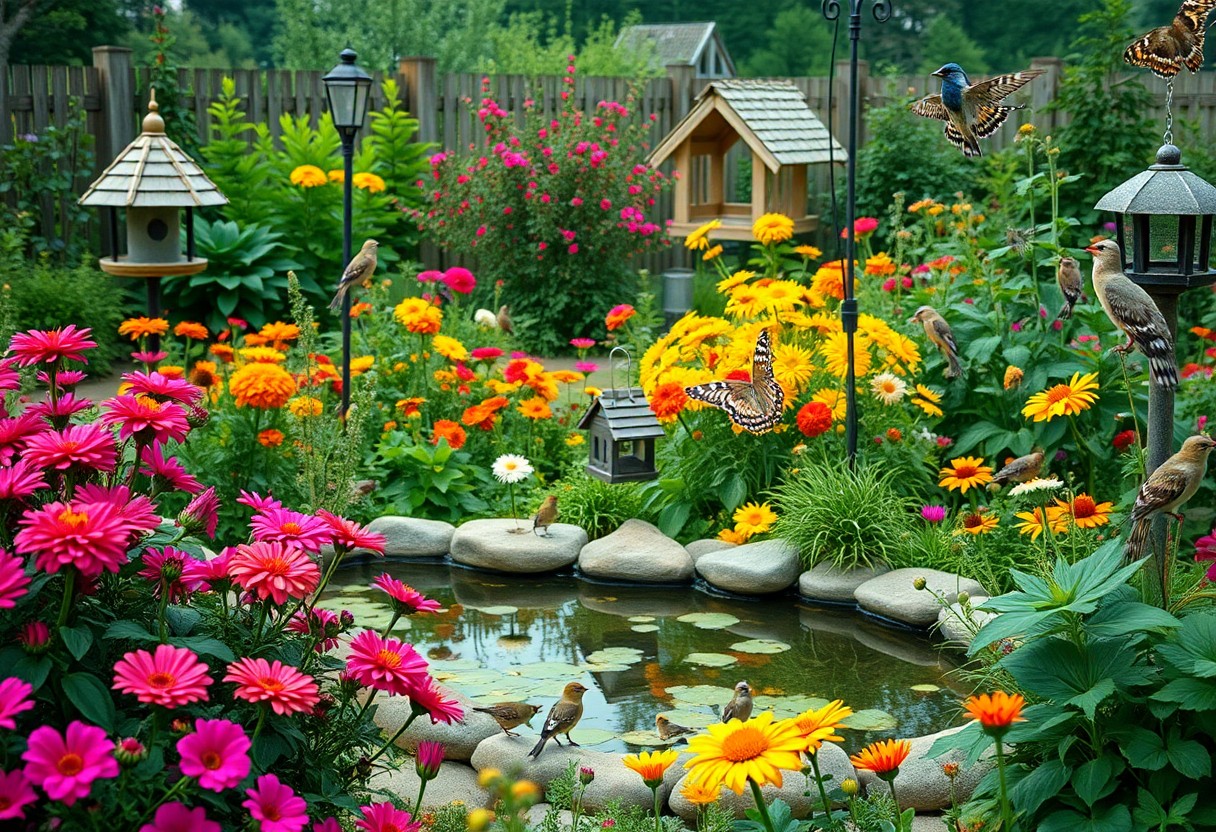
You can create a thriving oasis for local wildlife by designing your garden with their needs in mind. As you plan your outdoor space, you’ll want to consider the types of plants, features, and habitats that will attract and support a variety of species. By making a few intentional design choices, you can turn your garden into a haven for birds, bees, and other wildlife, enhancing your outdoor experience and contributing to the local ecosystem.
Key Takeaways:
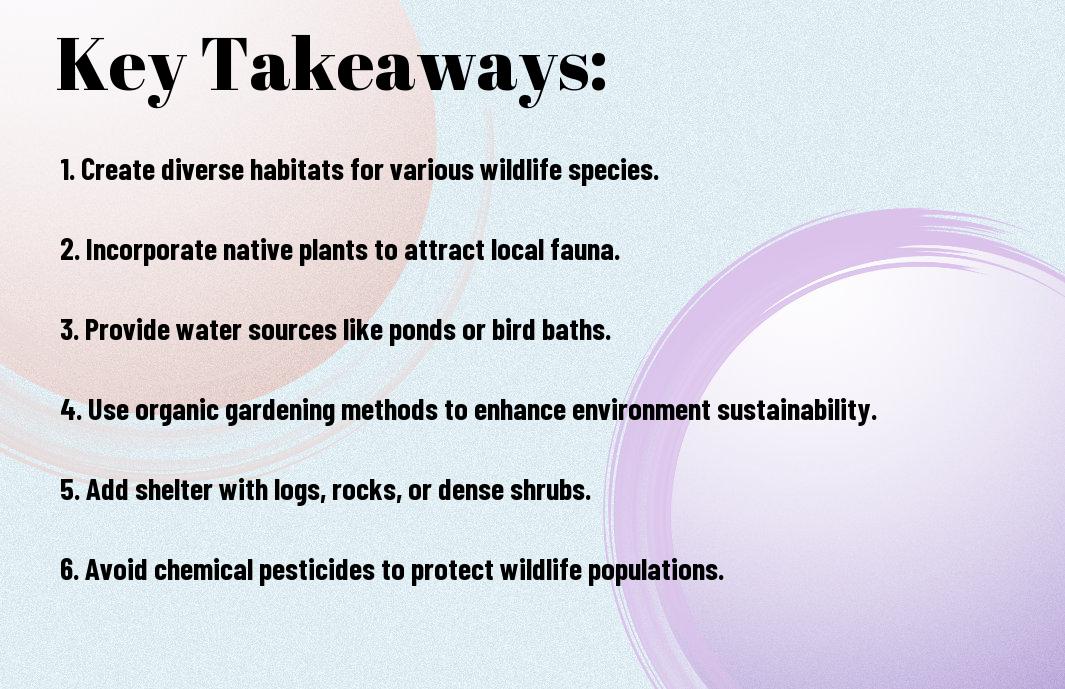
To create a garden that attracts and supports local wildlife, consider the following points:
- Provide a source of water, such as a pond or birdbath, to attract a variety of species and support their hydration needs.
- Incorporate a mix of native plants that offer food and shelter for animals, such as birds, bees, and butterflies, and choose plants that thrive in your local climate.
- Create a diverse garden landscape with a variety of habitats, including trees, shrubs, and flower beds, to support a wide range of wildlife and promote biodiversity.
Assessing Your Yard
Your yard’s potential for supporting wildlife can be determined by assessing its current state, considering factors like sunlight, water sources, and existing vegetation, and taking cues from resources like Cues to Care – Wild by Design for inspiration.
Evaluating Soil and Climate
Around your yard, observe the soil type, moisture levels, and climate conditions to determine which plants and features will thrive, helping you create a welcoming environment for wildlife.
Identifying Native Species
The types of plants and animals native to your area will be crucial in designing a garden that supports local wildlife, so take note of the species you already have in your yard.
Evaluating the native species in your area will help you choose plants that provide the right food and shelter for local wildlife, allowing you to create a balanced and sustainable ecosystem that benefits both you and the environment, as you design your garden with their needs in mind, you will be able to attract a diverse range of species to your yard.
Choosing the Right Plants
Clearly, the type of plants you choose will greatly impact the wildlife that visits your garden. You’ll want to select plants that provide a source of food, shelter, and habitat for various species, taking into account the local climate and soil conditions.
Selecting Plants for Pollinators
Beneath the surface of a thriving garden, you’ll find a variety of plants that attract pollinators like bees and butterflies, and you can achieve this by incorporating a mix of native flowers, shrubs, and trees that provide nectar and pollen.
Incorporating Plants for Wildlife Shelter
Similar to designing a home, you’ll want to choose plants that provide shelter and protection for wildlife, such as native grasses, shrubs, and trees that offer hiding places and nesting sites.
This type of shelter can be especially beneficial for small animals, like birds and insects, which need a safe place to hide from predators and harsh weather conditions, and by incorporating these plants into your garden design, you can create a haven for wildlife to thrive, and as you do so, you’ll be able to observe and enjoy the various species that visit your garden.
Creating a Water Feature
Once again, you have the opportunity to get creative and make a significant impact on your garden’s ecosystem by incorporating a water feature, which will attract a wide variety of wildlife to your outdoor space.
Designing a Pond or Birdbath
Among the various options available, you can choose a design that suits your garden’s style and size, considering factors such as depth, material, and placement to create an ideal spot for wildlife to drink, bathe, and thrive.
Maintaining a Healthy Water Source
Hygienic practices are important to prevent the growth of harmful bacteria and algae, ensuring your water feature remains a safe haven for visiting wildlife, and you can achieve this by regularly cleaning and monitoring your pond or birdbath.
Water quality is vital to the well-being of the wildlife that visits your garden, and you can maintain a healthy water source by ensuring adequate circulation, using natural methods to control algae, and avoiding the use of harsh chemicals, which will help you create a thriving ecosystem that supports a diverse range of wildlife.
Providing Food Sources
After designing your garden layout, it’s time to think about the food sources you’ll provide for wildlife. You’ll want to create a diverse and abundant supply of food to attract a variety of species to your garden.
Planting Fruit and Berry-Bearing Shrubs
The key to attracting wildlife is to plant a variety of fruit and berry-bearing shrubs that produce food throughout the year. You can choose shrubs like dogwood, hawthorn, or elderberry that produce berries in winter, and perennials like coneflower or black-eyed susan that produce seeds in summer.
Installing a Bird Feeder or Suet Station
Birds are attracted to easy food sources, so installing a bird feeder or suet station is a great way to provide them with energy-rich food. You can choose from a variety of feeder types, such as tube feeders or hopper feeders, and offer different types of seed or suet to attract different species.
With a bird feeder or suet station in place, you can expect to attract a variety of bird species to your garden, from finches and sparrows to woodpeckers and nuthatches. You’ll need to maintain your feeder or suet station regularly, refilling it with fresh seed or suet and cleaning it to prevent mold and bacterial growth, to keep your feathered visitors happy and healthy.
Minimizing Hazards
Many gardeners are unaware of the hazards that their gardens can pose to wildlife. You can learn more about creating a safe garden by visiting 10 Ways to Start Building a Garden for Wildlife to get started on your wildlife-friendly garden journey.
Removing Pesticides and Herbicides
The first step in minimizing hazards is to remove pesticides and herbicides from your garden, as these can harm or kill wildlife that come into contact with them, so you should prioritize their removal.
Creating a Safe Haven for Wildlife
Behind every successful wildlife garden is a safe and welcoming space, you can achieve this by considering the needs of the wildlife you want to attract and taking steps to meet those needs.
To create a safe haven for wildlife, you should consider providing a source of water, such as a pond or birdbath, and incorporating native plants that provide food and shelter for wildlife, allowing you to create a thriving ecosystem in your garden that will attract a variety of wildlife species.
Maintenance and Enjoyment
Despite the initial effort, maintaining a wildlife garden is relatively easy, allowing you to enjoy the fruits of your labor and the company of the wildlife that inhabits it.
Regularly Monitoring and Maintaining Your Garden
For instance, you will need to regularly inspect your garden to ensure that it continues to meet the needs of the wildlife that visits it, making adjustments as necessary to maintain a balanced ecosystem.
Observing and Appreciating Wildlife
With patience and practice, you can develop a deeper understanding and appreciation of the wildlife that inhabits your garden, learning to identify the different species and their habits.
A key part of enjoying your wildlife garden is taking the time to observe and appreciate the variety of species that visit, from the birds and bees to the butterflies and other insects, allowing you to connect with nature and feel a sense of wonder and awe at the beauty and complexity of the natural world, and you can do this by sitting quietly in your garden, equipped with a pair of binoculars and a field guide to help you identify the different species.
Final Words
So, you have learned how to design a garden for wildlife, now it’s time to put your knowledge into practice. You will be creating a haven for local wildlife, and your efforts will contribute to a larger conservation effort. By following these steps, you can make a positive impact on the environment and enjoy the benefits of a thriving ecosystem in your own backyard, enhancing your outdoor experience and connecting with nature through your beautifully designed wildlife garden.
FAQ
Q: What are the key elements to consider when designing a garden for wildlife?
A: When designing a garden for wildlife, it’s crucial to consider the needs of various species, including plants, animals, and insects. Key elements to include are a source of water, such as a pond or birdbath, a variety of native plants that provide food and shelter, and a mix of open spaces and dense areas for habitat diversity. Additionally, consider the types of wildlife you want to attract, such as birds, bees, or butterflies, and incorporate features that cater to their specific needs.
Q: How can I choose the right plants for a wildlife-friendly garden?
A: Choosing the right plants is vital for creating a wildlife-friendly garden. Opt for native plants, shrubs, and trees that are adapted to your local climate and soil type. Consider plants that provide nectar, pollen, seeds, or berries, as these will attract a variety of wildlife. Also, include a mix of plants that offer different heights, textures, and growth habits to provide shelter and habitat for various species. Consult with local nurseries, gardening experts, or online resources to select the best plants for your area and the type of wildlife you want to attract.
Q: What features can I include to provide a source of water for wildlife in my garden?
A: Providing a source of water is crucial for attracting wildlife to your garden. Consider installing a pond, fountain, or birdbath, and make sure it’s shallow and has a rough surface for easy access. You can also add a few rocks or twigs for perching and a source of fresh water, such as a dripping faucet or a rainwater harvesting system. Change the water regularly to keep it clean and free of bacteria, and avoid using chemicals or pesticides that can harm wildlife.
Q: How can I create a wildlife-friendly garden in a small or urban space?
A: Even in small or urban spaces, you can create a wildlife-friendly garden by incorporating a few key elements. Start by choosing compact or dwarf varieties of plants that are suitable for small spaces, and consider using containers or vertical planters to maximize space. Incorporate a small water feature, such as a birdbath or a self-watering planter, and add a few rocks or logs to provide shelter and habitat for wildlife. You can also use a trellis or a pergola to provide a climbing structure for plants and a habitat for insects and small animals.
Q: How can I maintain my wildlife-friendly garden and ensure its continued success?
A: To maintain your wildlife-friendly garden and ensure its continued success, adopt a few simple habits. Avoid using pesticides, herbicides, or fertilizers, as these can harm wildlife and the environment. Instead, use natural methods to control pests and weeds, such as hand-picking or using physical barriers. Keep your garden well-watered, but avoid overwatering, which can lead to erosion and water waste. Also, consider keeping a gardening journal to track the types of wildlife that visit your garden and the plants that attract them, and make adjustments as needed to create a thriving wildlife-friendly ecosystem.

