design

How to Design a Mediterranean-Inspired Garden

As you step into your outdoor space, you want to be transported to a sunny Mediterranean oasis. You envision a garden filled with vibrant colours, enticing scents, and a sense of effortless elegance. With a few simple steps, you can bring the essence of the Mediterranean to your backyard, creating a haven that’s perfect for relaxing and entertaining. Your journey to designing a stunning Mediterranean-inspired garden starts here, and by following these tips, you’ll be well on your way to creating a beautiful and inviting outdoor space.

Key Takeaways:

To create a beautiful and inviting Mediterranean-inspired garden, consider the following points:

  • Choose drought-tolerant plants that are native to the Mediterranean region, such as lavender, rosemary, and olive trees, to minimize watering needs and maintenance.
  • Incorporate natural stone elements, like flagstones, gravel, or brick, to add warmth and texture to the garden, and to create a sense of authenticity.
  • Emphasize simple and clean lines in your garden design, using terracotta pots, weathered wood, and other traditional Mediterranean materials to create a sense of timeless elegance.

Planning Your Garden

The first step in designing a Mediterranean-inspired garden is to plan carefully. You’ll need to consider the unique conditions of your outdoor space and how you want to use it. Take time to think about the style and atmosphere you want to create, and make a note of any existing features that you want to incorporate or change.

Assessing Your Climate and Soil

Your yard’s specific climate and soil type will play a significant role in determining the types of plants you can grow. You’ll need to evaluate the amount of sunlight and rainfall your garden receives, as well as the type of soil you have, to choose plants that will thrive in those conditions.

Choosing a Color Scheme and Theme

Color is a key element in a Mediterranean-inspired garden, and you’ll want to choose a palette that evokes the warm, sunny feel of the region. You can draw inspiration from the colors of the Mediterranean landscape, such as terracotta, turquoise, and olive green.

Understanding the importance of a cohesive color scheme and theme will help you create a beautiful and harmonious Mediterranean-inspired garden. You can choose a theme, such as a Spanish courtyard or a Greek villa, to guide your design decisions and help you select plants, furniture, and decorative elements that fit with your vision. As you consider your color scheme and theme, think about the overall mood and atmosphere you want to create in your garden, and let that guide your choices.

Selecting Plants

Now that you have a sense of the overall aesthetic you want to achieve, it’s time to think about the plants that will bring your Mediterranean-inspired garden to life. You’ll want to choose plants that thrive in warm, sunny conditions and can tolerate dry spells.

Native Mediterranean Plants to Consider

One of the best ways to create an authentic Mediterranean feel is to incorporate plants native to the region, such as olive trees, rosemary, and lavender, into your garden design.

By opting for drought-tolerant plants like succulents and cacti, you can create a beautiful and low-maintenance garden that requires minimal watering and care.

But as you consider your drought-tolerant options, think about the specific conditions in your garden and choose plants that will thrive in your local climate. You can also combine drought-tolerant plants with other Mediterranean natives to create a unique and resilient garden that reflects your personal style and meets your needs.

Garden Layout and Design

Your Mediterranean-inspired garden should reflect the classic, timeless style of the region, with a focus on simplicity, elegance, and a connection to nature.

Creating a Sense of Intimacy and Seclusion

Seclusion is key to a Mediterranean-inspired garden, and you can achieve this by using lush greenery, tall trees, and meandering paths to create cozy nooks and secluded areas.

Incorporating Water Features and Hardscapes

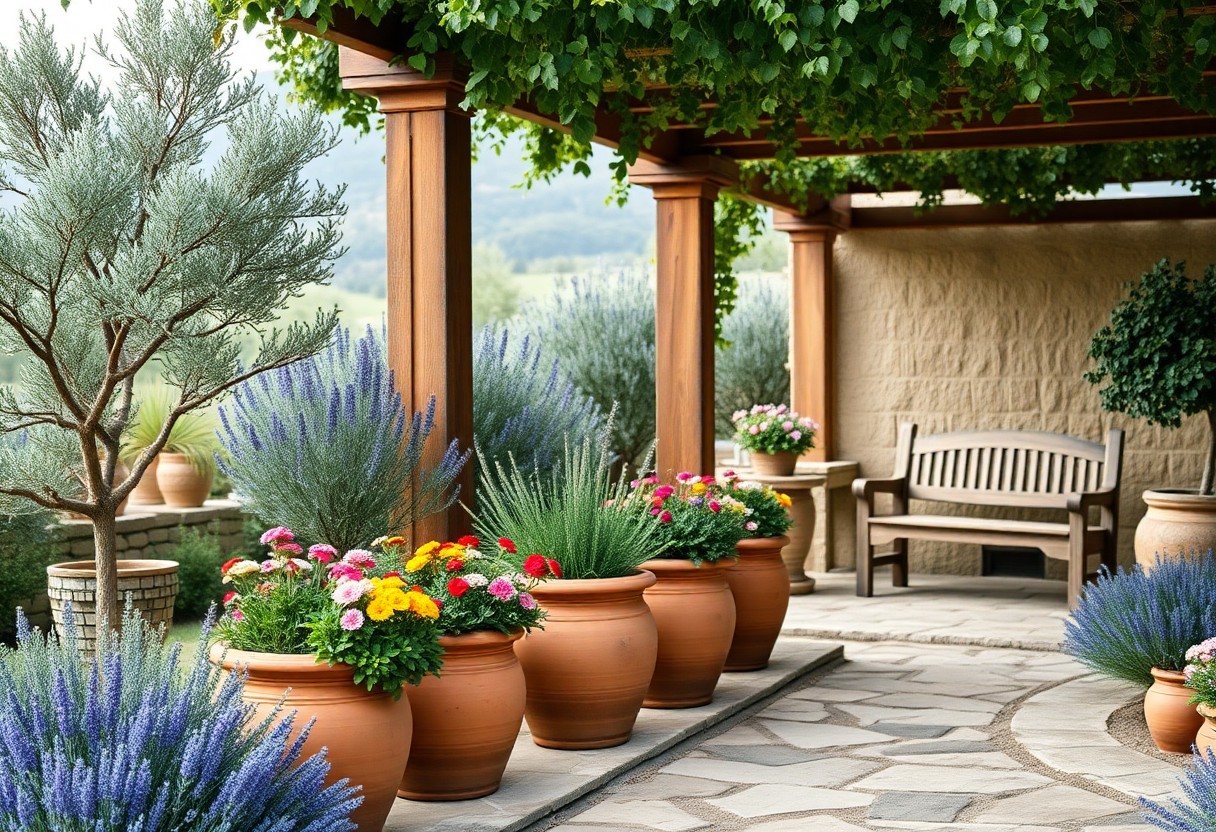
Above all, a Mediterranean-inspired garden is about balancing natural beauty with structured elements, and you can achieve this by incorporating water features, such as fountains or pools, alongside hardscapes like terracotta tiles and stone walls.

For instance, you can create a stunning water feature by installing a small fountain or pond, surrounded by lush greenery and colorful flowers, and complement it with a meandering path made of natural stone, leading to a secluded seating area, perfect for relaxation and contemplation.
Hardscaping and Decor

All the elements in your Mediterranean-inspired garden should work together in harmony, and you can find great inspiration on How to create a Mediterranean garden: design inspiration.

Choosing Materials and Textures

For a authentic look, you will want to choose materials and textures that evoke the feeling of the Mediterranean, such as terracotta pots and weathered stone.

Adding Lighting and Other Decorative Elements

To complete your garden, consider adding softly glowing lanterns and decorative elements like fretwork and mosaics.

Plus, as you add these decorative elements, you will start to see your Mediterranean-inspired garden come to life, and you can enjoy the warm and inviting atmosphere you have created, perfect for relaxing and entertaining in your own outdoor oasis, with you making the final touches to reflect your personal style.

Maintenance and Upkeep

Unlike other garden styles, a Mediterranean-inspired garden is relatively low-maintenance, but you can learn more about it in How To Design a Mediterranean Garden Your Clients Will Love.

Tips for Watering and Pruning

The key to keeping your garden thriving is proper care. You should:

, Thou shalt also monitor your garden’s condition.

Managing Pests and Diseases in Your Garden

Maintenance of your garden’s health involves checking for pests and diseases.

And by taking preventative measures, you can minimize the risk of infection, ensuring your Mediterranean-inspired garden remains a haven of beauty and tranquility, where you can relax and enjoy the fruits of your labor.

Incorporating Lifestyle Elements

After designing the basic layout of your Mediterranean-inspired garden, consider incorporating lifestyle elements that will make it a true oasis. You can find plenty of Mediterranean Garden Ideas and Inspiration on Mediterranean Garden Ideas and Inspiration to help you get started.

Designing Outdoor Living Spaces

On a warm summer evening, you’ll want to spend time outdoors, so think about designing a space that invites relaxation and entertainment. You can create a shaded seating area or a sunny spot for lounging, depending on your preferences.

Adding Fire Pits and Outdoor Kitchens

Behind every great Mediterranean-inspired garden is a functional outdoor space that allows you to enjoy the fresh air and company of loved ones. Consider adding a fire pit or outdoor kitchen to create a cozy atmosphere.

Outdoor living is a big part of the Mediterranean lifestyle, and adding fire pits and outdoor kitchens can help you achieve this. You can use these features to cook delicious meals, gather with friends and family, or simply enjoy a quiet evening under the stars. As you design your outdoor space, think about how you want to use it and what features will make it most enjoyable for you.
Conclusion

Taking this into account, you should now be able to create your own serene Mediterranean-inspired garden. With your careful planning and attention to detail, your outdoor space will evoke the warmth and beauty of the Mediterranean region. As you sit amidst your lush greenery and vibrant flowers, you’ll feel transported to a tranquil oasis, enjoying the fruits of your labor in your very own Mediterranean haven, surrounded by the sights, scents, and sounds of your carefully designed garden.

FAQ

Q: What are the key elements of a Mediterranean-inspired garden?

A: A Mediterranean-inspired garden typically features a combination of elements such as terracotta pots, olive trees, rosemary, and lavender. The color palette often includes warm, sun-baked hues like terracotta, sienna, and golden yellow. Incorporating natural stone, such as limestone or fieldstone, and using drought-resistant plants are also characteristic of this style. To create an authentic look, consider adding decorative elements like vintage doors, windows, or mosaic tiles.

Q: How do I choose the right plants for a Mediterranean-inspired garden?

A: Selecting plants that are native to the Mediterranean region or have similar growing conditions is necessary. Consider plants like bougainvillea, jasmine, and citrus trees, which thrive in warm, sunny climates. Succulents and cacti are also excellent choices, as they are drought-tolerant and add interesting textures to the garden. Don’t forget to incorporate fragrant herbs like thyme, oregano, and rosemary, which are not only beautiful but also edible.

Q: What type of paving and flooring is suitable for a Mediterranean-inspired garden?

A: Natural stone paving, such as limestone, travertine, or flagstone, is a popular choice for Mediterranean-inspired gardens. These materials are durable, timeless, and blend seamlessly with the surrounding landscape. If you prefer a more rustic look, consider using gravel or decomposed granite as an alternative. For a more polished appearance, terracotta or brick pavers can add a touch of elegance to the garden.

Q: How can I incorporate water features into my Mediterranean-inspired garden?

A: Water features are a staple of Mediterranean-inspired gardens, and can range from small, self-contained fountains to large, Infinity-edge pools. Consider adding a small fountain or birdbath to create a soothing, melodic sound. If you have the space, a larger pool or spa can be a stunning focal point, especially when surrounded by lush greenery and colorful flowers. Don’t forget to incorporate a few strategically placed water features, like a small rill or bubbling pot, to add visual interest and create a sense of movement.

Q: What kind of outdoor lighting is best suited for a Mediterranean-inspired garden?

A: Warm, soft lighting is necessary for creating a cozy and inviting ambiance in a Mediterranean-inspired garden. Consider using string lights, lanterns, or tabletop torches to add a warm glow to the space. Solar-powered lights are also a great option, as they are energy-efficient and can be placed throughout the garden without the need for wiring. For a more dramatic effect, use uplighting to highlight specific plants or features, such as a statement tree or a decorative wall.
How to Design a Functional Home Office

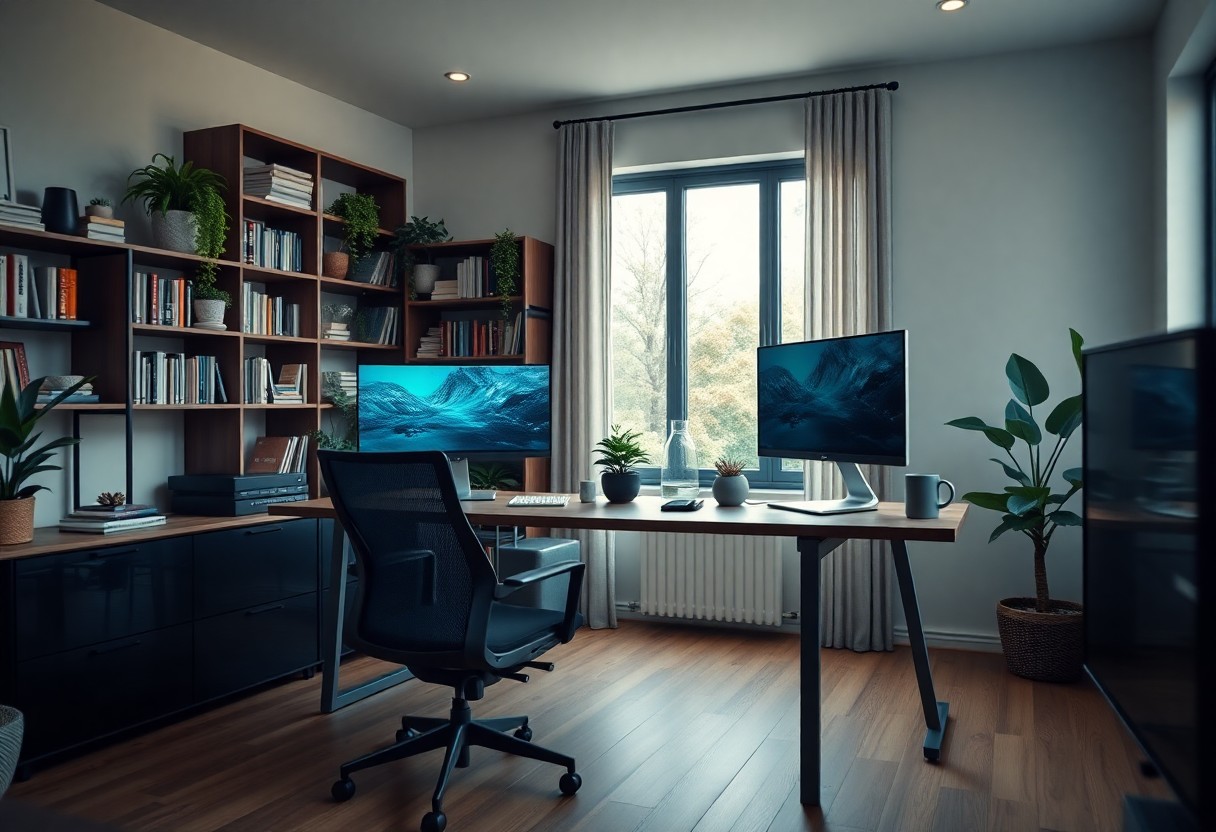
As you set out to create your ideal workspace, you’ll want to consider the specifics of your work style and needs. You’ll be spending a significant amount of time in your home office, so it’s necessary to design a space that promotes productivity and comfort. Your goal is to create an environment that fosters focus and inspiration, and with the right design elements, you can achieve just that, making your workdays more efficient and successful. You will learn how to do it in this post.

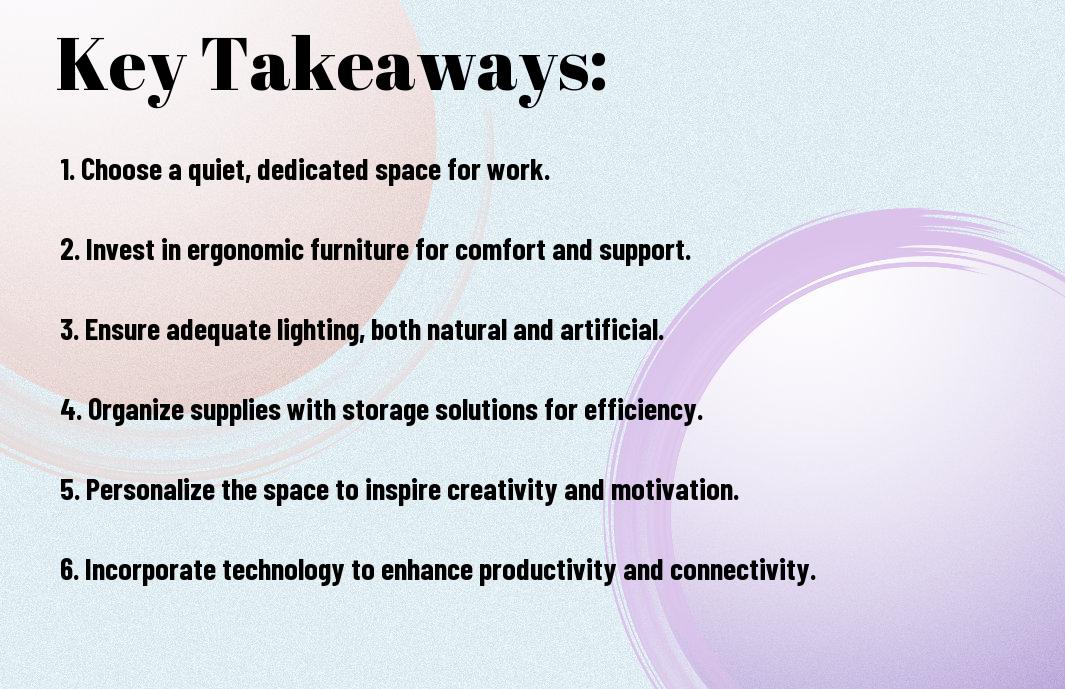
Key Takeaways:

To create an efficient workspace, consider the following points when designing a functional home office:

  • Start by assessing your workstyle and identifying the type of activities you will be doing in your home office to determine the necessary equipment and furniture.
  • Consider the ergonomics of your workspace, including the placement of your desk, chair, and lighting, to promote comfort and productivity.
  • Think about the storage and organization of your home office, incorporating shelving and file cabinets to keep your workspace clutter-free and organized.

Planning Your Home Office

A well-designed home office can boost your productivity and overall work experience, and you can find valuable insights on Tips For Designing The Perfect Home Office to get started.

Assessing Your Space

Similar to spatial planning, you will need to evaluate the area where your home office will be located, considering factors such as natural light, electrical outlets, and storage options to create an efficient workspace.

Defining Your Needs

Defining your work style and requirements is imperative to designing a functional home office, as you will need to determine the type of furniture, equipment, and technology necessary to support your work.

According to your specific needs, you may require a dedicated desk, bookshelves, or a comfortable reading area, so take the time to think about what you need to stay productive and focused while working from home, and prioritize those elements when designing your home office.

Designing for Productivity

Some of the most effective home offices are designed with productivity in mind, allowing you to stay focused and efficient. You can learn more about creating a functional home office by visiting How To Create A Functional Home Office Guide to get the best tips and tricks.

Choosing the Right Furniture

The key to a productive home office is selecting furniture that fits your needs and work style, allowing you to work comfortably and efficiently, which will help you to boost your productivity and achieve your goals in your home office.

Optimizing Lighting and Ergonomics

Designing your home office with optimal lighting and ergonomics in mind will help you stay focused and avoid fatigue, enabling you to work for longer periods without discomfort, which is necessary for your overall well-being and productivity.

Lighting is an necessary aspect of your home office design, and you should consider using a combination of natural and artificial light sources to create a well-lit and comfortable workspace that allows you to work effectively, and by positioning your computer and chair to promote good posture, you can avoid straining your eyes and body, ensuring that your home office is a space where you can work efficiently and safely.

Technology and Equipment

Many home office designs overlook the importance of technology and equipment, but you should prioritize these elements to boost productivity. You will need to consider your specific needs and choose the right tools to support your work.

Selecting Essential Hardware

Against the backdrop of numerous options, you will need to select hardware that meets your specific needs, such as a reliable computer, printer, and comfortable keyboard. You should consider the type of work you will be doing and choose equipment that supports your tasks.

Setting Up Software and Tools

At the heart of your home office is the software and tools you use to manage your work. You will need to set up systems that help you stay organized, such as project management tools and time tracking software, to maximize your productivity.

In fact, setting up software and tools is an ongoing process that requires regular evaluation and adjustment. As you work, you will discover new tools and software that can help you streamline your workflow, and you should be open to adopting these to improve your efficiency and achieve your goals. You can explore different options, such as cloud-based services, and choose the ones that best fit your needs, allowing you to work more effectively and stay focused on your objectives.

Organization and Storage

For a productive home office, you need a well-organized space that promotes efficiency and reduces stress. You can achieve this by implementing a thoughtful storage system and maintaining a clutter-free environment, allowing you to focus on your work without distractions.

Creating a Filing System

Between the various documents and paperwork, you’ll need a system to keep track of everything. You can set up a filing system that categorizes and prioritizes your documents, making it easy for you to access the information you need when you need it.

Managing Cables and Clutter

Managing your home office’s cables and clutter is necessary to maintaining a tidy and organized space. You can use cable organizers and storage solutions to keep your workspace clutter-free and ensure that you can move around freely without tripping over cords or wires.

Indeed, keeping your cables and clutter under control will not only improve the aesthetics of your home office but also help you stay focused and avoid wasting time searching for misplaced items, allowing you to be more productive and efficient in your work. You can invest in desk organizers, cord concealers, and storage bins to keep your office supplies and equipment tidy and within reach.

Personalizing Your Space

Your home office should reflect your personality and work style, making it a space where you feel comfortable and productive, allowing you to focus on your work and achieve your goals.

Adding Decor and Color

Decorating your space with items that inspire you, such as artwork or motivational quotes, can enhance your overall work experience, and choosing a color scheme that suits your taste can boost your mood and energy levels.

Incorporating Plants and Textures

Beyond the basics, you can add plants and textures to create a cozy atmosphere, making your home office a pleasant space to spend time in, and helping you to stay motivated and engaged.

Adding plants, rugs, and other textured elements can not only purify the air and improve the aesthetic of your space, but also help you to create a unique and inviting environment that supports your well-being and productivity, allowing you to work effectively and efficiently in your home office.

Maintaining Your Home Office

Now that your home office is set up, it’s time to think about maintaining it to ensure it continues to serve your needs effectively. You’ll want to establish routines and practices that keep your space organized, clean, and functional.

Establishing a Cleaning Routine

Besides keeping your home office tidy, a regular cleaning routine helps maintain a healthy and productive work environment. You can start by scheduling a daily or weekly cleaning session to keep your space organized and clutter-free.

Updating and Upgrading Equipment

Below the surface of your home office’s physical space, your equipment and technology also need attention. You should regularly assess your equipment to ensure it’s still meeting your needs and consider upgrading or replacing items as necessary.

Cleaning your equipment and updating your software are also important parts of maintaining your home office. You can start by backing up your data, updating your operating system, and cleaning your devices to keep them running smoothly and efficiently, which will help you stay focused and productive in your work.

Summing up

Ultimately, designing a functional home office is about creating a space that boosts your productivity and comfort. You can achieve this by considering your specific needs and incorporating elements that promote efficiency. For more inspiration, you can check out 12 Home Office Ideas That Are Functional and Beautiful to find the perfect balance of style and functionality for your workspace, allowing you to work effectively in your newly designed home office.

FAQ

Q: What are the key elements to consider when designing a functional home office?

A: When designing a functional home office, there are several key elements to consider. First, think about the purpose of your home office and how you plan to use it. This will help you determine the type of furniture and equipment you need. Consider the amount of space you have available and how you can optimize it for productivity. Additionally, think about the lighting, ergonomics, and storage needs of your home office. A well-designed home office should be functional, comfortable, and reflective of your personal style.

Q: How do I choose the right furniture for my home office?

A: Choosing the right furniture for your home office involves considering several factors, including the size of the room, your work style, and your personal preferences. Start by selecting a comfortable and ergonomic chair and desk that fit your body and work style. Consider a desk with built-in storage to keep your workspace organized. You may also want to invest in a bookshelf or filing cabinet to keep your office supplies and documents within easy reach. Finally, think about adding a few decorative pieces, such as a rug or artwork, to make your home office feel welcoming and inspiring.

Q: What are some ways to optimize the lighting in my home office?

A: Optimizing the lighting in your home office is important for productivity and comfort. Natural light is always the best option, so position your desk near a window if possible. If natural light is not an option, consider using a combination of overhead lighting and task lighting to illuminate your workspace. Table lamps or under-cabinet lighting can provide focused lighting for tasks such as reading or computer work. Avoid harsh overhead lighting, which can cause eye strain and discomfort. Finally, consider using smart light bulbs that can be adjusted to different color temperatures and brightness levels to suit your needs.

Q: How can I minimize distractions and stay focused in my home office?

A: Minimizing distractions and staying focused in your home office requires some intentional design choices. Start by creating a dedicated workspace that is separate from the rest of your home. Consider using a room divider or noise-cancelling headphones to block out distractions. Remove any non-important items from your workspace and keep your desk organized to reduce clutter and visual noise. Finally, establish a routine and set boundaries with family members or roommates to protect your worktime and maintain a healthy work-life balance.

Q: What are some ways to incorporate technology and organization tools into my home office design?

A: Incorporating technology and organization tools into your home office design can help you stay organized and productive. Consider investing in a wireless printer, scanner, and shredder to streamline your workflow. Use a paper tray and file organizer to keep your documents in order. You may also want to invest in a whiteboard or bulletin board to keep track of tasks and deadlines. Finally, consider using a desk calendar or planner to stay organized and on top of your schedule. By incorporating these tools and technologies into your home office design, you can create a workspace that is efficient, effective, and tailored to your needs.

The Most Popular Home Design Trends for This Year

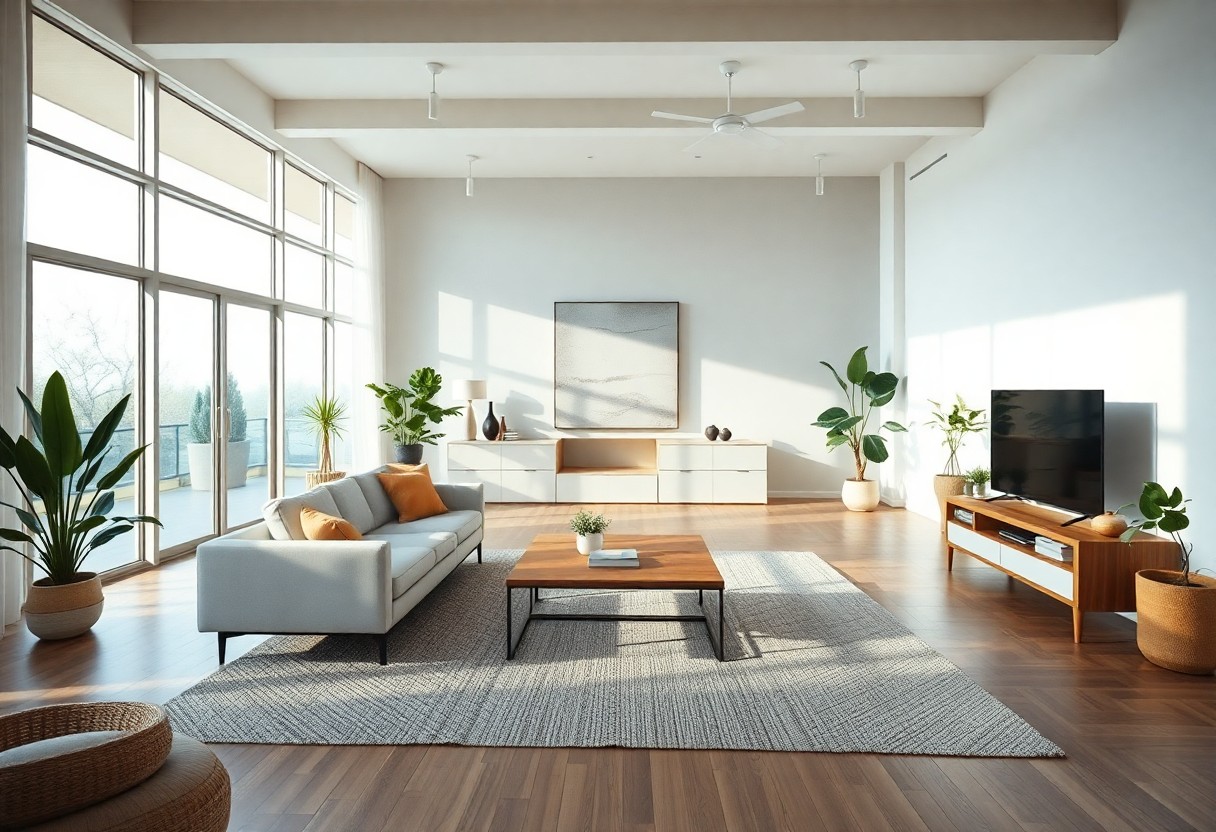
As you contemplate renovating or redecorating your living space, you’ll want to stay abreast of the latest styles. Your home is a reflection of your personal taste, and this year’s design trends offer a wealth of inspiration. You’ll discover a range of innovative and elegant ideas, from sleek minimalism to opulent luxury, to enhance your residence and make it a true sanctuary. You can expect to find fresh perspectives on classic designs, allowing you to create a space that is uniquely your own.

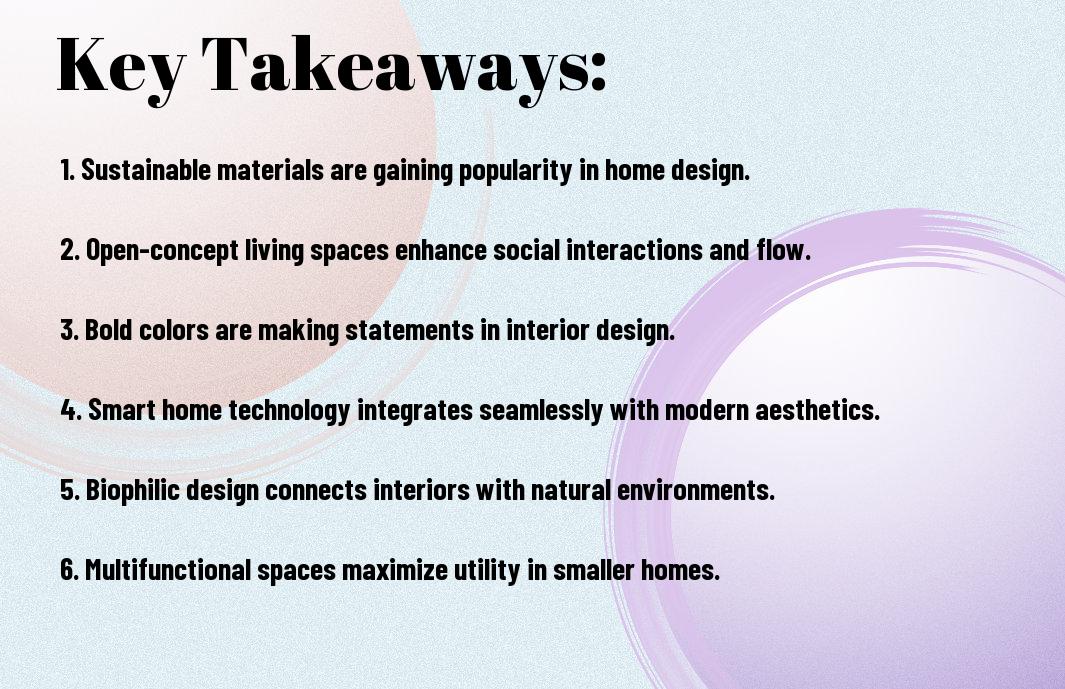
Key Takeaways:

To stay updated with the latest in home design, here are the key points to consider:

  • The Sustainability trend is gaining momentum, with homeowners opting for Eco-Friendly materials and Energy-Efficient solutions to reduce their environmental footprint.
  • Minimalism is becoming increasingly popular, with a focus on Clean Lines, Monochromatic Color Schemes, and Functional spaces that promote a sense of calm and serenity.
  • The Smart Home revolution is picking up pace, with Home Automation systems and Voice-Controlled devices being integrated into homes to enhance convenience, comfort, and Security.

Modern Minimalism

While embracing modern minimalism, you will find that your space is transformed into a serene and sophisticated oasis, perfect for those who value simplicity and elegance in their home design.

Emphasis on Clean Lines

Alongside this trend, you notice that an emphasis on clean lines and minimal ornamentation creates a sense of clarity and focus, allowing your eye to flow effortlessly throughout the space.

Monochromatic Color Schemes

With a keen eye for detail, you can create a stunning monochromatic color scheme that exudes understated luxury and poise, making your home a true reflection of your refined taste.

In fact, as you explore the world of monochromatic color schemes, you will discover that the subtle nuances of different shades and tones can add depth and visual interest to your space, creating a truly unique and captivating atmosphere that invites you to relax and unwind in style.

Sustainable Design

Now, as you consider revamping your home, you’ll find that sustainable design has become a top priority, and for good reason. You’re likely looking for ways to reduce your environmental footprint, and your home is a great place to start.

Eco-Friendly Materials

Betwixt the numerous options available, you’ll discover that eco-friendly materials are gaining popularity, and you can choose from a variety of sustainable options, such as reclaimed wood and bamboo, to create a beautiful and environmentally conscious space.

Energy-Efficient Features

Only by incorporating energy-efficient features can you truly make a significant impact on your home’s sustainability, and you can start by installing solar panels or energy-efficient windows to reduce your energy consumption.

But as you examine deeper into energy-efficient features, you’ll find that there are many more ways to make your home sustainable, such as investing in a smart thermostat or upgrading to energy-efficient appliances, which will not only help you reduce your environmental footprint but also save you money on your utility bills, allowing you to create a space that is both stylish and sustainable, tailored to your unique needs and preferences.

Smart Home Technology

Once again, smart home technology is at the forefront of home design trends, and you can read more about it in articles like People Are Revealing Which Current Interior Design Trends They Think Will Age Poorly. As you consider incorporating smart technology into your home, consider the various options available.

Voice-Controlled Systems

By investing in voice-controlled systems, you can experience the convenience of controlling your home’s functions with just your voice, making it easier to manage your living space.

Automated Lighting and Temperature Control

The following

Features and Benefits

Feature Benefit
Automated Lighting Energy Efficiency
Temperature Control Comfort

are available to enhance your smart home experience.

Control your home’s ambiance with ease, as you explore the options for automated lighting and temperature control, which can be broken down into

Options and Advantages

Option Advantage
Scheduling Convenience
Remote Access Flexibility

, allowing you to personalize your space to suit your preferences.

Outdoor Living Spaces

Not surprisingly, outdoor living spaces have become an imperative part of your home design, allowing you to seamlessly transition between indoor and outdoor living.

Expanded Patios and Decks

Across your neighborhood, you’ll notice that expansive patios and decks are gaining popularity, providing you with ample space to entertain and relax in the fresh air.

Outdoor Kitchens and Dining Areas

It is in these beautifully designed outdoor spaces that you can create lasting memories with family and friends, surrounded by lush greenery and soothing ambiance, making your outdoor kitchen and dining area an extension of your indoor living space, perfect for alfresco dining and warm weather entertaining.

Bold Color Accents

To add a touch of personality to your home, consider incorporating bold color accents into your design. This trend allows you to express your unique style and create a space that truly reflects your personality.

Statement Walls and Ceilings

Walls and ceilings are no longer just background elements, as you can now use them to make a bold statement in your home. By painting one wall or the ceiling in a vibrant color, you can add depth and visual interest to any room.

Vibrant Furniture and Decor

After selecting your bold accent color, you can incorporate it into your furniture and decor to create a cohesive look. You can choose vibrant pieces that complement your overall design aesthetic, adding a pop of color to your space.

It is delightful to see how vibrant furniture and decor can elevate your room’s ambiance, as you get to enjoy the beauty of bold colors in a way that is both subtle and striking. As you explore this trend, you will discover the numerous ways to balance bold colors with neutral elements, allowing you to create a space that is truly your own.

Functional Spaces

Many homeowners are embracing the concept of functional spaces, where every area of the house serves a purpose. As you consider your own home design, you’ll want to think about how to optimize your space for maximum usability.

Multifunctional Rooms

By incorporating multifunctional rooms into your design, you can create a more efficient and flexible living space. You’ll find that rooms can serve multiple purposes, such as a home office that doubles as a guest room, allowing you to make the most of your square footage.

Space-Saving Solutions

Spaces that are cleverly designed can make a significant difference in the overall feel of your home. You’ll appreciate the innovative storage solutions and clever furniture arrangements that help keep your belongings organized and out of the way, creating a sense of calm and serenity in your living space.

Hence, as you explore space-saving solutions, you’ll discover a wide range of options to suit your needs, from hidden storage compartments to wall-mounted furniture. You can choose the solutions that work best for your lifestyle, allowing you to create a functional and beautiful home that reflects your personal style and meets your unique requirements.

Conclusion

On the whole, you now have a sense of the most sought-after home design trends for this year. As you launch on your design journey, you can explore 5 Interior Design Trends That Will Define 2025 to discover the perfect style for your abode, ensuring your space is both stylish and timeless, reflecting your unique taste and personality.

FAQ

Q: What are the most popular home design trends for this year?

A: This year’s most popular home design trends include modern farmhouse style, minimalist interiors, and eco-friendly designs. These trends focus on creating a cozy and inviting atmosphere, while also incorporating sustainable and environmentally conscious elements. Homeowners are opting for clean lines, neutral color palettes, and natural materials to create a sense of warmth and comfort in their living spaces.

Q: How can I incorporate sustainable design elements into my home?

A: Incorporating sustainable design elements into your home can be achieved through the use of eco-friendly materials, such as reclaimed wood, bamboo, and low-VOC paints. Additionally, consider using energy-efficient appliances and lighting, and incorporating natural ventilation and insulation to reduce your carbon footprint. You can also add some greenery to your space, like plants or a living wall, to purify the air and create a natural ambiance.

Q: What is the modern farmhouse style and how can I achieve it in my home?

A: The modern farmhouse style is a design trend that combines rustic and modern elements to create a cozy and inviting atmosphere. To achieve this style in your home, consider incorporating natural materials like wood and stone, and adding vintage or antique pieces, such as metal signs or old doors. You can also add modern touches, like sleek lighting and minimalist decor, to balance out the rustic elements and create a unique and stylish space.

Q: How can I make my home look more luxurious without breaking the bank?

A: Making your home look more luxurious doesn’t have to break the bank. Consider adding high-end finishes, such as marble or quartz countertops, and incorporating metallic accents, like gold or copper, through lighting or decor. You can also add plush textiles, like throw blankets and rugs, and create a statement piece, like a bold piece of art or a show-stopping light fixture, to elevate the look and feel of your space.

Q: What are some popular color schemes for home design this year?

A: This year’s popular color schemes for home design include neutral tones, such as beige, gray, and white, as well as bold and bright colors, like navy blue and emerald green. Earthy tones, like sage and sand, are also trending, and can add warmth and coziness to your space. Consider pairing complementary colors to create a unique and visually interesting color scheme that reflects your personal style and complements your home’s natural lighting.

How to Design a Garden for Wildlife

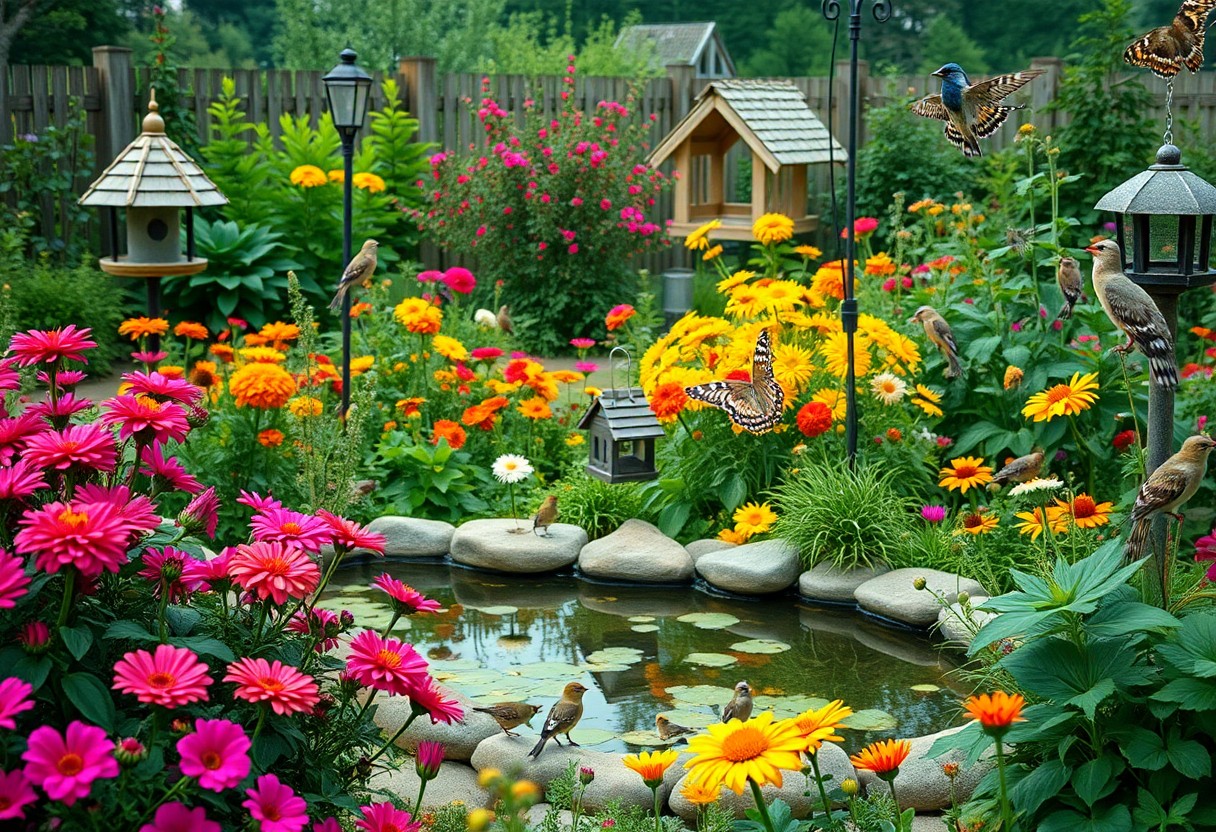
You can create a thriving oasis for local wildlife by designing your garden with their needs in mind. As you plan your outdoor space, you’ll want to consider the types of plants, features, and habitats that will attract and support a variety of species. By making a few intentional design choices, you can turn your garden into a haven for birds, bees, and other wildlife, enhancing your outdoor experience and contributing to the local ecosystem.

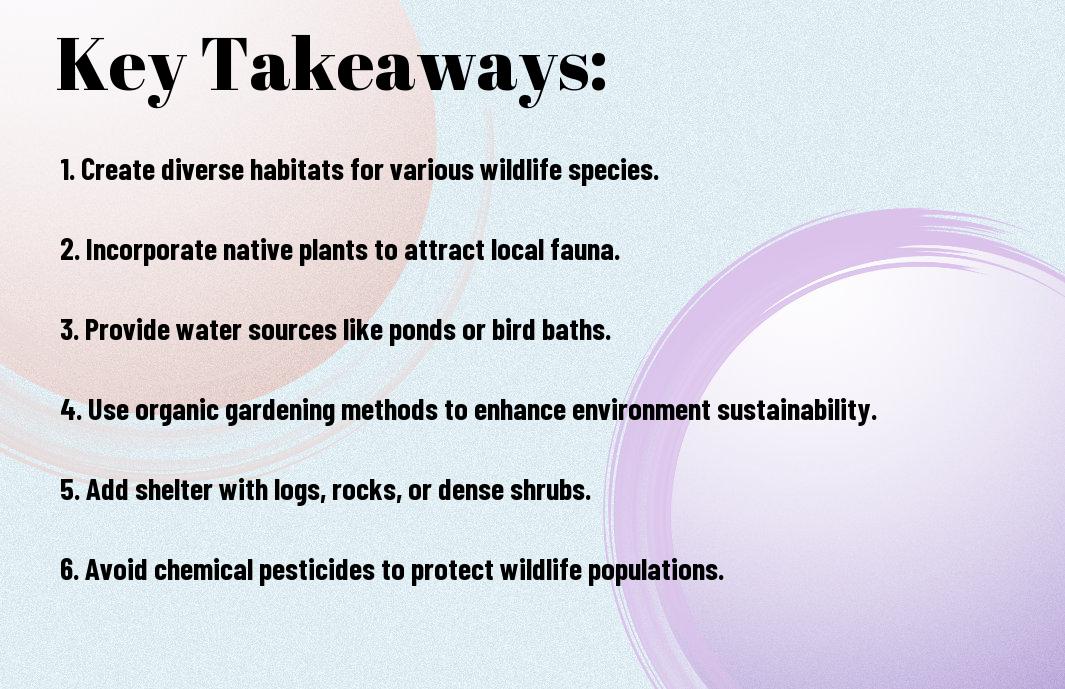
Key Takeaways:

To create a garden that attracts and supports local wildlife, consider the following points:

  • Provide a source of water, such as a pond or birdbath, to attract a variety of species and support their hydration needs.
  • Incorporate a mix of native plants that offer food and shelter for animals, such as birds, bees, and butterflies, and choose plants that thrive in your local climate.
  • Create a diverse garden landscape with a variety of habitats, including trees, shrubs, and flower beds, to support a wide range of wildlife and promote biodiversity.

Assessing Your Yard

Your yard’s potential for supporting wildlife can be determined by assessing its current state, considering factors like sunlight, water sources, and existing vegetation, and taking cues from resources like Cues to Care – Wild by Design for inspiration.

Evaluating Soil and Climate

Around your yard, observe the soil type, moisture levels, and climate conditions to determine which plants and features will thrive, helping you create a welcoming environment for wildlife.

Identifying Native Species

The types of plants and animals native to your area will be crucial in designing a garden that supports local wildlife, so take note of the species you already have in your yard.

Evaluating the native species in your area will help you choose plants that provide the right food and shelter for local wildlife, allowing you to create a balanced and sustainable ecosystem that benefits both you and the environment, as you design your garden with their needs in mind, you will be able to attract a diverse range of species to your yard.

Choosing the Right Plants

Clearly, the type of plants you choose will greatly impact the wildlife that visits your garden. You’ll want to select plants that provide a source of food, shelter, and habitat for various species, taking into account the local climate and soil conditions.

Selecting Plants for Pollinators

Beneath the surface of a thriving garden, you’ll find a variety of plants that attract pollinators like bees and butterflies, and you can achieve this by incorporating a mix of native flowers, shrubs, and trees that provide nectar and pollen.

Incorporating Plants for Wildlife Shelter

Similar to designing a home, you’ll want to choose plants that provide shelter and protection for wildlife, such as native grasses, shrubs, and trees that offer hiding places and nesting sites.

This type of shelter can be especially beneficial for small animals, like birds and insects, which need a safe place to hide from predators and harsh weather conditions, and by incorporating these plants into your garden design, you can create a haven for wildlife to thrive, and as you do so, you’ll be able to observe and enjoy the various species that visit your garden.

Creating a Water Feature

Once again, you have the opportunity to get creative and make a significant impact on your garden’s ecosystem by incorporating a water feature, which will attract a wide variety of wildlife to your outdoor space.

Designing a Pond or Birdbath

Among the various options available, you can choose a design that suits your garden’s style and size, considering factors such as depth, material, and placement to create an ideal spot for wildlife to drink, bathe, and thrive.

Maintaining a Healthy Water Source

Hygienic practices are important to prevent the growth of harmful bacteria and algae, ensuring your water feature remains a safe haven for visiting wildlife, and you can achieve this by regularly cleaning and monitoring your pond or birdbath.

Water quality is vital to the well-being of the wildlife that visits your garden, and you can maintain a healthy water source by ensuring adequate circulation, using natural methods to control algae, and avoiding the use of harsh chemicals, which will help you create a thriving ecosystem that supports a diverse range of wildlife.

Providing Food Sources

After designing your garden layout, it’s time to think about the food sources you’ll provide for wildlife. You’ll want to create a diverse and abundant supply of food to attract a variety of species to your garden.

Planting Fruit and Berry-Bearing Shrubs

The key to attracting wildlife is to plant a variety of fruit and berry-bearing shrubs that produce food throughout the year. You can choose shrubs like dogwood, hawthorn, or elderberry that produce berries in winter, and perennials like coneflower or black-eyed susan that produce seeds in summer.

Installing a Bird Feeder or Suet Station

Birds are attracted to easy food sources, so installing a bird feeder or suet station is a great way to provide them with energy-rich food. You can choose from a variety of feeder types, such as tube feeders or hopper feeders, and offer different types of seed or suet to attract different species.

With a bird feeder or suet station in place, you can expect to attract a variety of bird species to your garden, from finches and sparrows to woodpeckers and nuthatches. You’ll need to maintain your feeder or suet station regularly, refilling it with fresh seed or suet and cleaning it to prevent mold and bacterial growth, to keep your feathered visitors happy and healthy.

Minimizing Hazards

Many gardeners are unaware of the hazards that their gardens can pose to wildlife. You can learn more about creating a safe garden by visiting 10 Ways to Start Building a Garden for Wildlife to get started on your wildlife-friendly garden journey.

Removing Pesticides and Herbicides

The first step in minimizing hazards is to remove pesticides and herbicides from your garden, as these can harm or kill wildlife that come into contact with them, so you should prioritize their removal.

Creating a Safe Haven for Wildlife

Behind every successful wildlife garden is a safe and welcoming space, you can achieve this by considering the needs of the wildlife you want to attract and taking steps to meet those needs.

To create a safe haven for wildlife, you should consider providing a source of water, such as a pond or birdbath, and incorporating native plants that provide food and shelter for wildlife, allowing you to create a thriving ecosystem in your garden that will attract a variety of wildlife species.

Maintenance and Enjoyment

Despite the initial effort, maintaining a wildlife garden is relatively easy, allowing you to enjoy the fruits of your labor and the company of the wildlife that inhabits it.

Regularly Monitoring and Maintaining Your Garden

For instance, you will need to regularly inspect your garden to ensure that it continues to meet the needs of the wildlife that visits it, making adjustments as necessary to maintain a balanced ecosystem.

Observing and Appreciating Wildlife

With patience and practice, you can develop a deeper understanding and appreciation of the wildlife that inhabits your garden, learning to identify the different species and their habits.

A key part of enjoying your wildlife garden is taking the time to observe and appreciate the variety of species that visit, from the birds and bees to the butterflies and other insects, allowing you to connect with nature and feel a sense of wonder and awe at the beauty and complexity of the natural world, and you can do this by sitting quietly in your garden, equipped with a pair of binoculars and a field guide to help you identify the different species.

Final Words

So, you have learned how to design a garden for wildlife, now it’s time to put your knowledge into practice. You will be creating a haven for local wildlife, and your efforts will contribute to a larger conservation effort. By following these steps, you can make a positive impact on the environment and enjoy the benefits of a thriving ecosystem in your own backyard, enhancing your outdoor experience and connecting with nature through your beautifully designed wildlife garden.

FAQ

Q: What are the key elements to consider when designing a garden for wildlife?

A: When designing a garden for wildlife, it’s crucial to consider the needs of various species, including plants, animals, and insects. Key elements to include are a source of water, such as a pond or birdbath, a variety of native plants that provide food and shelter, and a mix of open spaces and dense areas for habitat diversity. Additionally, consider the types of wildlife you want to attract, such as birds, bees, or butterflies, and incorporate features that cater to their specific needs.

Q: How can I choose the right plants for a wildlife-friendly garden?

A: Choosing the right plants is vital for creating a wildlife-friendly garden. Opt for native plants, shrubs, and trees that are adapted to your local climate and soil type. Consider plants that provide nectar, pollen, seeds, or berries, as these will attract a variety of wildlife. Also, include a mix of plants that offer different heights, textures, and growth habits to provide shelter and habitat for various species. Consult with local nurseries, gardening experts, or online resources to select the best plants for your area and the type of wildlife you want to attract.

Q: What features can I include to provide a source of water for wildlife in my garden?

A: Providing a source of water is crucial for attracting wildlife to your garden. Consider installing a pond, fountain, or birdbath, and make sure it’s shallow and has a rough surface for easy access. You can also add a few rocks or twigs for perching and a source of fresh water, such as a dripping faucet or a rainwater harvesting system. Change the water regularly to keep it clean and free of bacteria, and avoid using chemicals or pesticides that can harm wildlife.

Q: How can I create a wildlife-friendly garden in a small or urban space?

A: Even in small or urban spaces, you can create a wildlife-friendly garden by incorporating a few key elements. Start by choosing compact or dwarf varieties of plants that are suitable for small spaces, and consider using containers or vertical planters to maximize space. Incorporate a small water feature, such as a birdbath or a self-watering planter, and add a few rocks or logs to provide shelter and habitat for wildlife. You can also use a trellis or a pergola to provide a climbing structure for plants and a habitat for insects and small animals.

Q: How can I maintain my wildlife-friendly garden and ensure its continued success?

A: To maintain your wildlife-friendly garden and ensure its continued success, adopt a few simple habits. Avoid using pesticides, herbicides, or fertilizers, as these can harm wildlife and the environment. Instead, use natural methods to control pests and weeds, such as hand-picking or using physical barriers. Keep your garden well-watered, but avoid overwatering, which can lead to erosion and water waste. Also, consider keeping a gardening journal to track the types of wildlife that visit your garden and the plants that attract them, and make adjustments as needed to create a thriving wildlife-friendly ecosystem.

How to Design a Bird-Friendly Garden

As you step into your garden, you envision a haven that welcomes the gentle songs of birds. You want to create a space where these creatures can thrive, and your outdoor sanctuary can become a haven for them. By choosing the right plants, water features, and structures, you can design a bird-friendly garden that will attract a variety of species and bring joy to your daily life. Your garden can be a peaceful retreat, teeming with life and beauty, where you can connect with nature.

Key Takeaways:

To create a bird-friendly garden, consider the following points:

  • Provide a diverse range of plants that offer food sources, such as seeds, berries, and nectar, to attract different species of birds.
  • Incorporate native plants, shrubs, and trees that provide shelter and nesting sites for birds, as well as water sources like birdbaths or ponds.
  • Use sustainable gardening practices, such as avoiding pesticides and creating a wildlife-friendly habitat, to support the overall health and well-being of the birds visiting your garden.

Choosing the Right Plants

The selection of plants is a vital step in designing a bird-friendly garden, as you want to create a haven that will attract a variety of bird species to your yard. Consider the types of birds you want to attract and the types of plants that will provide the necessary food and shelter for them.

Native species selection

With native plants, you can create a garden that is tailored to the specific needs of the birds in your area, providing them with the food and shelter they need to thrive. You can choose plants that are indigenous to your region, which will attract birds that are native to your area.

Flower and shrub options

After selecting native plants, you can consider adding flowers and shrubs that will provide additional food sources for the birds, such as nectar, seeds, and berries. You can choose plants with varying bloom times to ensure a constant source of food throughout the year.

Indeed, the flowers and shrubs you choose can make a significant difference in the types of birds that visit your garden. As you consider your options, think about the different types of food that various bird species need to survive, and choose plants that will provide those necessities, such as sunflowers for seeds or coneflowers for nectar, allowing you to create a garden that is a true haven for your feathered friends.

Providing Food Sources

Some of the most effective ways to attract birds to your garden involve providing them with a reliable source of food. You can learn more about how to Create a Bird-Friendly Habitat by visiting Create a Bird-Friendly Habitat guide, which offers valuable tips and insights.

Bird feeder placement

Around your garden, place bird feeders in spots that offer birds protection from strong winds and predators, allowing them to feed safely and comfortably.

Suet and seed choices

On the topic of suet and seeds, you’ll want to select options that cater to the diverse needs of your feathered visitors, offering a mix of high-energy foods and nutritious treats.

Understanding the different types of suet and seeds available will help you make informed choices for your bird-friendly garden. You’ll find that offering a variety of foods, such as black oil sunflower seeds, safflower seeds, and peanut suet, will attract a wide range of bird species to your garden, keeping them nourished and happy throughout the year.

Creating a Water Feature

Unlike other garden features, a water feature can be a simple yet effective way to attract birds to your yard. You can create a small pond or birdbath, which will provide your feathered friends with a source of water for drinking and bathing.

Birdbath design

Allying with nature, you’ll want to choose a birdbath design that complements your garden’s surroundings. You’ll find that a shallow, freshwater source with a rough surface will be perfect for birds to land and take off from.

Pond installation

Against the backdrop of your garden, a pond can be a beautiful addition. You’ll want to consider the size and depth of your pond, as well as the type of plants and features you’ll include, such as a fountain or waterfall.

Considering the specifics of your pond installation, you’ll want to think about the types of birds you’re trying to attract and the habitat you’re trying to create. You may want to include native plants, rocks, and other features that will provide shelter and food for the birds, and make your pond a welcoming oasis in your garden, allowing you to observe and appreciate the beauty of nature.

Designing a Bird-Friendly Layout

All aspects of your garden’s design should be considered when creating a haven for birds. You can find inspiration and guidance on creating a bird-friendly garden to inform your design decisions.

Tree and shrub placement

Trees and shrubs provide excellent habitats for birds, so you’ll want to place them strategically in your garden to offer shelter and food. You can plant native species that produce berries or nectar to attract a variety of bird species.

Meadow and grassland creation

For a unique and inviting space, consider creating a meadow or grassland area in your garden, complete with native wildflowers and grasses that will attract birds and other wildlife. You can choose plants that are native to your region to ensure the best results.

Considering the types of birds you want to attract, you’ll want to plant a diverse range of species in your meadow or grassland area. You can include plants with different growth habits, such as tall grasses and low-growing wildflowers, to create a layered and inviting space. By doing so, you’ll be able to attract a variety of bird species to your garden, and enjoy watching them thrive in their new habitat.

Reducing Hazards

Despite your best efforts to create a welcoming space, your bird-friendly garden may still pose risks to your feathered friends. You’ll want to take steps to minimize these dangers and ensure the well-being of your visitors.

Window collision prevention

Beneath the surface of your garden’s design, lies the potential for window collisions. You can apply decals or install netting to prevent birds from flying into your windows, saving them from injury or death.

Cat and predator control

Along the edges of your garden, predators like cats may lurk, waiting to pounce on unsuspecting birds. You can take measures to deter them, such as using physical barriers or repellents, to protect your bird population.

Hazards from cats and other predators can be particularly problematic, as they can significantly impact the bird population in your garden. You can consider taking additional steps, such as providing sheltered feeding areas or using bird-friendly plants that provide hiding spots, to help mitigate these risks and create a safer environment for your birds to thrive.

Maintenance and Enjoyment

To keep your bird-friendly garden thriving, consider the changing seasons.

Seasonal gardening tips

You’ll find that tasks like pruning and planting vary by season, so

  • adapt your gardening schedule accordingly

.
The beauty of nature will unfold before your eyes as you tend to your garden.

Birdwatching and observation

On quiet mornings, you can observe the birds in your garden, learning their habits and habitats.
As you sit among the trees and flowers, you’ll notice the unique characteristics of each species, and your appreciation for these creatures will grow.

But as you explore deeper into the world of birdwatching, you’ll discover that it’s not just about observing birds, it’s also about understanding their behavior, migration patterns, and social interactions, and you’ll find that your garden has become a vibrant ecosystem, full of life and wonder, where you can connect with nature and find peace.

To wrap up

With these considerations, you’ll be well on your way to creating a haven for your feathered friends. As you tend to your bird-friendly garden, you’ll find joy in the simple act of nurturing nature. For more guidance, visit How to Make Your Yard Bird-Friendly | Audubon to discover the beauty of sharing your space with the natural world, and watch your yard flourish into a vibrant oasis for you and your avian companions to enjoy.

FAQ

Q: What are the key elements to consider when designing a bird-friendly garden?

A: When designing a bird-friendly garden, it’s vital to consider a variety of elements, including the types of plants, water sources, and shelter. Incorporating native plants that provide nectar, seeds, and berries will attract a diverse range of bird species. Additionally, providing a source of water, such as a birdbath or pond, and incorporating native trees and shrubs for shelter will create a welcoming environment for birds. A mix of evergreen and deciduous plants will also provide year-round interest and habitat for birds.

Q: How can I choose the right plants for my bird-friendly garden?

A: Choosing the right plants for your bird-friendly garden involves selecting a variety of plants that provide food and shelter for birds throughout the year. Consider plants that produce nectar-rich flowers, such as coneflowers and black-eyed susans, as well as plants that produce seeds and berries, like sunflowers and shrubs with berry-producing branches. Native plants are also an excellent choice, as they will attract native bird species and require less maintenance. It’s also important to choose plants that are suitable for your local climate and soil type.

Q: What types of bird feeders and watering stations are best for a bird-friendly garden?

A: Pertaining to bird feeders and watering stations, there are many options to consider. Tube feeders, hopper feeders, and platform feeders are all great options, as they allow birds to easily access food. For watering stations, consider a birdbath with fresh water and a few rocks or sticks for perching, or a small pond with a fountain or mister to create movement and sound. It’s also important to keep your feeders and watering stations clean and well-maintained to ensure the health and safety of the birds.

Q: How can I create a bird-friendly garden in a small space, such as a balcony or patio?

A: Even in small spaces, such as a balcony or patio, you can create a bird-friendly garden. Consider using container gardens or hanging baskets to grow a variety of plants that attract birds, such as herbs, flowers, and shrubs. You can also use a small birdbath or a self-contained watering station, and hang a few bird feeders from the railing or a nearby hook. Additionally, choose plants that are compact or dwarf varieties, and consider using a trellis or arbor to make the most of your space.

Q: How can I maintain my bird-friendly garden and ensure it remains a welcoming habitat for birds?

A: To maintain your bird-friendly garden and ensure it remains a welcoming habitat for birds, it’s vital to regularly inspect and maintain your plants, feeders, and watering stations. Keep your feeders and birdbaths clean, and refill them regularly to ensure a constant source of food and water. Prune your plants regularly to maintain their shape and promote healthy growth, and consider adding a layer of mulch or compost to retain moisture and suppress weeds. By following these simple steps, you can create a thriving and welcoming bird-friendly garden that will attract a variety of bird species and provide hours of enjoyment and entertainment.

Opaye Skip to content