You can successfully grow zucchini in small spaces with the right techniques. Your small garden or balcony can thrive with zucchini plants. To get started, you’ll need to know how to optimize your space. For guidance on maximizing your area, visit How to Contain Zucchini in a Small-Space Garden to learn more about containing these versatile plants. With proper care, you’ll be enjoying a bountiful harvest in no time.
Key Takeaways:
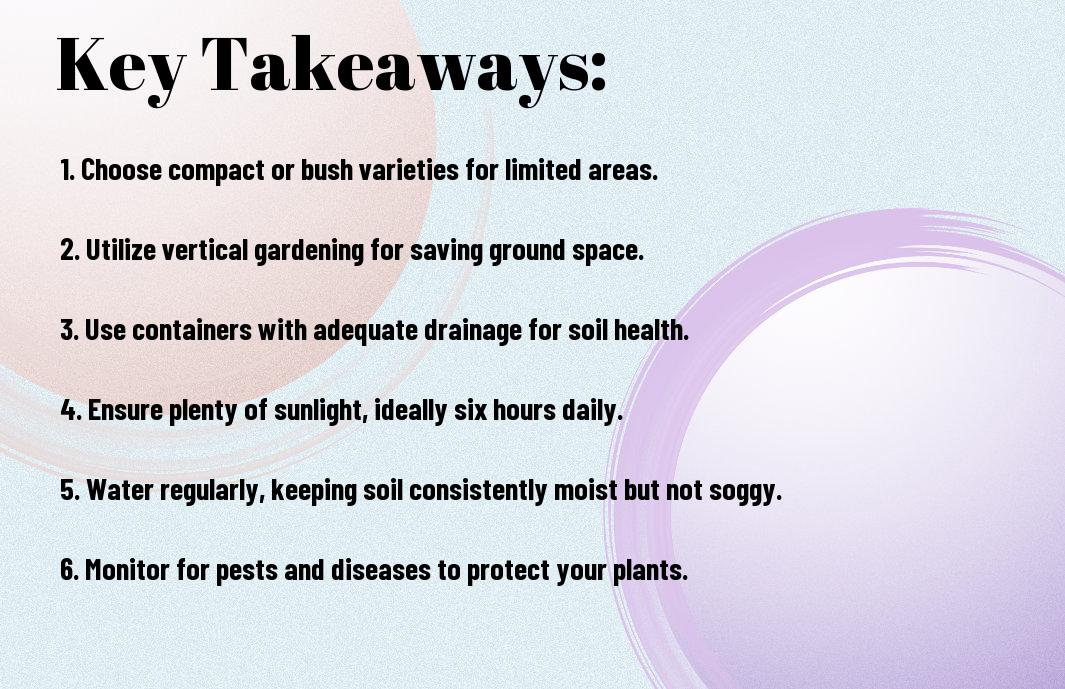
To achieve success in growing zucchini in small spaces, consider the following points:
- Choose a container that is at least 5-7 gallons to provide enough room for the zucchini roots to grow, and make sure it has drainage holes to prevent waterlogged soil.
- Provide your zucchini plants with full sun and warm temperatures to promote healthy growth and fruit production, aiming for at least 6 hours of direct sunlight per day.
- Use a trellis or cage to support the zucchini plants as they grow, keeping them upright and maximizing space, while also making it easier to harvest the fruit when it’s ready.
Choosing the Right Variety
A key factor in growing zucchini in small spaces is selecting a variety that thrives in tight conditions. You’ll want to look for varieties that are compact, produce smaller fruits, and have a bushy growth habit.
Selecting compact varieties
By opting for compact varieties, you can make the most of your limited space. You’ll find that these varieties are bred specifically for small gardens and containers, allowing you to grow delicious zucchini without sacrificing too much space.
Considering bush-type zucchinis
Bushtype zucchinis are an excellent choice for small spaces, as they spread less than traditional vining varieties. You can train them to grow upright or use a trellis to maximize space.
Hence, when considering bush-type zucchinis, you should also think about the specific growing conditions they require. You’ll want to provide your zucchinis with well-draining soil, full sun, and adequate water to ensure a bountiful harvest, and with the right care, you can enjoy a plentiful crop of delicious zucchinis even in the smallest of spaces.
Preparing the Soil
Now that you’re ready to grow zucchini in your small space, it’s time to focus on preparing the soil. You’ll want to ensure it’s well-draining and rich in nutrients to support healthy plant growth.
Testing soil pH levels
Alike other plants, zucchini prefers a slightly acidic to neutral soil pH, so you’ll want to test your soil to determine its pH level, adjusting it if necessary to create an optimal growing environment for your zucchini.
Adding organic matter
Along with testing your soil, you’ll also want to add organic matter such as compost or well-rotted manure to improve its structure and fertility, which will help your zucchini plants thrive in your small space.
It is vital to incorporate a 2-3 inch layer of organic matter into your soil, as this will not only improve its drainage but also provide your zucchini plants with the necessary nutrients for healthy growth and development, allowing you to enjoy a bountiful harvest from your small space.
Creating a Suitable Environment
All you need to do is provide your zucchini plants with the right conditions to thrive. Check out How to Grow Zucchini: You’ve Been Doing It All Wrong for more tips on creating an ideal environment.
Providing adequate sunlight
Suitable lighting is crucial for zucchini growth, and you should ensure your plants receive at least 6 hours of direct sunlight daily.
Ensuring good air circulation
Ensuring adequate space between plants is vital for healthy growth, as it allows for good air circulation and helps prevent disease.
This is especially important in small spaces, as poor air circulation can lead to fungal diseases that can quickly spread and damage your zucchini plants, so make sure to leave enough space between each plant to allow for good airflow, and consider using fans or other ventilation methods to improve circulation if necessary.
Container Gardening
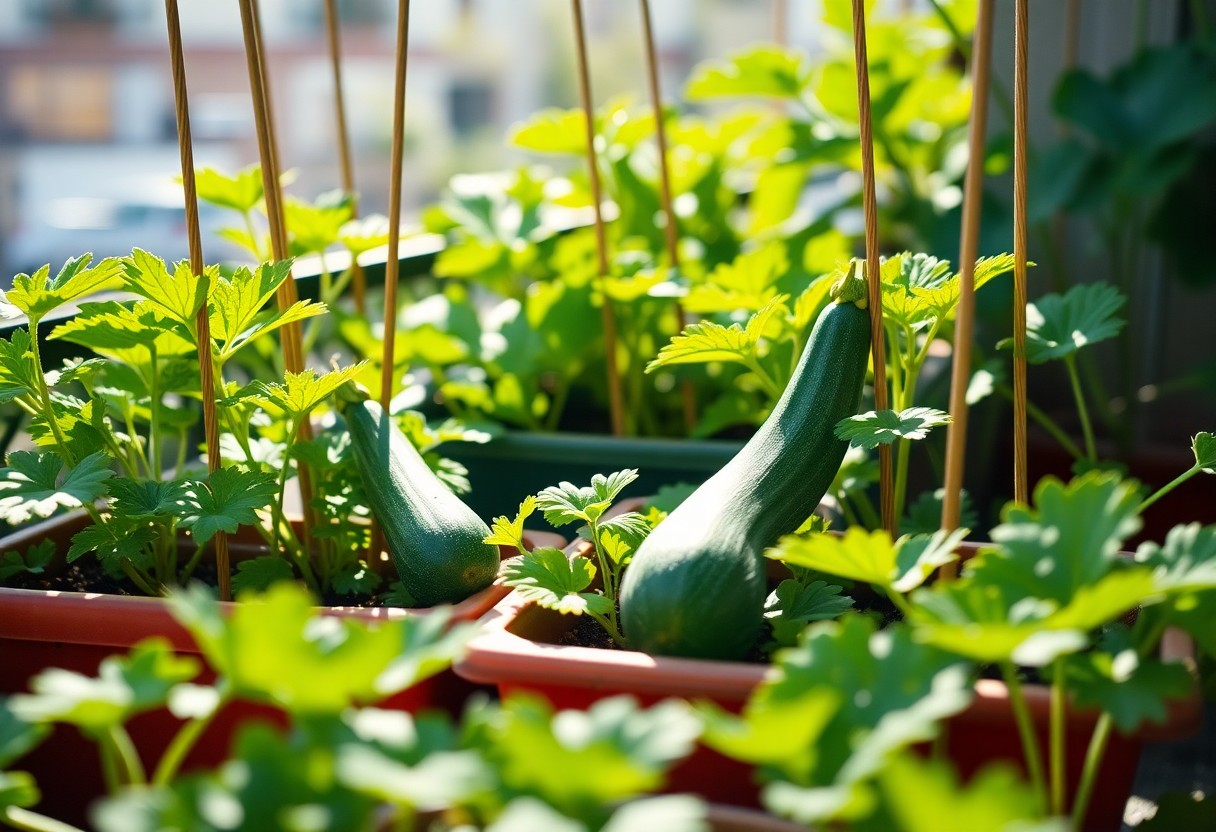
For growing zucchini in small spaces, container gardening is an excellent option. You can use large pots or containers with good drainage to plant your zucchini seeds.
Selecting the right containers
Right from the start, you’ll want to choose containers that are at least 12-14 inches deep to accommodate your zucchini plant’s root system. Your container should also have drainage holes to prevent waterlogged soil.
Using trellises for support
On top of providing enough space, you’ll need to consider support for your zucchini plants as they grow. You can use trellises or cages to keep them upright and organized.
Selecting the right trellis for your zucchini plant is important, as it will help keep the plant upright and encourage vertical growth. You can use a tomato cage or a teepee trellis, and place it in the container when you plant your zucchini seeds, so the plant can grow up the trellis as it matures, making the most of your small space.
Watering and Maintenance
To grow healthy zucchini in small spaces, you need to focus on proper watering and maintenance techniques. This includes providing your plants with adequate water and nutrients, while also taking steps to prevent common issues like pests and diseases.
Watering deeply but infrequently
Maintenance of your zucchini plants’ watering schedule is key, as you want to water them deeply but infrequently to encourage deep root growth and make them more drought-resistant, allowing you to enjoy a bountiful harvest.
Mulching to retain moisture
Mulching around your zucchini plants helps to retain moisture in the soil, reducing the need for frequent watering and keeping your plants happy and healthy, as you work to create an ideal growing environment.
It is vital to use a layer of organic mulch, such as straw or wood chips, to retain moisture and suppress weeds, allowing you to direct your attention to other aspects of your zucchini’s care, like providing support and pruning, as you strive to get the most out of your small space garden.
Common Challenges
After starting to grow zucchini in small spaces, you may encounter some difficulties. For more information, you can visit Growing Zucchini in Small Spaces – Clever, Crafty, Cookin’ Mama to learn more about overcoming them.
Dealing with pests and diseases
Beneath the surface of your zucchini plants, pests and diseases can be lurking, so you need to be vigilant and take action quickly if you notice any issues.
Managing harvest and storage
Across the board, managing your zucchini harvest and storage effectively is key to enjoying your crop, so consider how you will use and preserve your zucchini to get the most out of your plants.
With a little planning, you can efficiently manage your zucchini harvest and storage, allowing you to make the most of your crop and enjoy it for a longer period, you can start by checking your plants daily for ripe zucchini and harvest them when they are at their peak freshness.
Conclusion
On the whole, you can successfully grow zucchini in small spaces by implementing a few key strategies. You will be able to enjoy a bountiful harvest by selecting compact varieties, utilizing vertical space, and providing your plants with sufficient light and care. With these tips, you can maximize your yield and make the most of your limited space, allowing you to enjoy your homegrown zucchini all season long.
FAQ
Q: What are the best containers to use for growing zucchini in small spaces?
A: When growing zucchini in small spaces, it’s best to use large containers that are at least 12-18 inches deep and have good drainage holes. Containers such as wooden planters, plastic pots, or even grow bags can be used, as long as they provide enough room for the zucchini plant’s roots to grow. Make sure to choose a container that is also wide enough to accommodate the plant’s sprawling habit, at least 2-3 feet in diameter.
Q: How much sunlight does zucchini need to grow in small spaces?
A: Zucchini plants require full sun to produce well, so choose a location that receives direct sunlight for at least 6 hours a day. If you’re growing zucchini in a small space with limited sunlight, consider using mirrors or reflective surfaces to reflect sunlight onto the plants. You can also use grow lights to supplement the natural light, especially during the winter months or in areas with limited sunlight.
Q: What is the best way to support zucchini plants in small spaces?
A: Zucchini plants can spread out quite a bit, so providing support is necessary to keep them upright and organized in small spaces. You can use tomato cages, trellises, or even a simple stake to provide support for the plants. Another option is to use a teepee or a pyramid trellis, which can help to keep the plants upright and make the most of the available space.
Q: How often should I water zucchini plants in small spaces?
A: Zucchini plants need consistent moisture, especially when they’re producing fruit. Water the plants when the top 1-2 inches of soil feels dry to the touch, and avoid overwatering, which can lead to root rot and other problems. Check the soil daily, and water every 2-3 days during hot weather, and every 4-5 days during cooler weather. Make sure to also fertilize the plants regularly, using a balanced fertilizer that is high in phosphorus to promote fruit production.
Q: How can I prevent pests and diseases from affecting my zucchini plants in small spaces?
A: To prevent pests and diseases from affecting your zucchini plants in small spaces, make sure to keep the area clean and well-ventilated. Remove any weeds or debris that can attract pests, and avoid overcrowding the plants, which can lead to disease. Use organic pest control methods whenever possible, such as neem oil or insecticidal soap, and treat fungal diseases promptly with a fungicide. Regularly inspect the plants for signs of pests or diseases, and take action quickly to prevent the problem from spreading.
