As you launch on cultivating the fragrant and versatile mint plant, you may find yourself entwined in a delicate dance of nurturing and restraint. Your intentions, no doubt, are to harness the herb’s cooling essence, but its propensity for unbridled growth can be overwhelming. You need not succumb to its invasive tendencies, for with the right approach, you can coax mint into a lush, yet contained, beauty, allowing you to savor its delights without sacrificing your garden’s serenity.

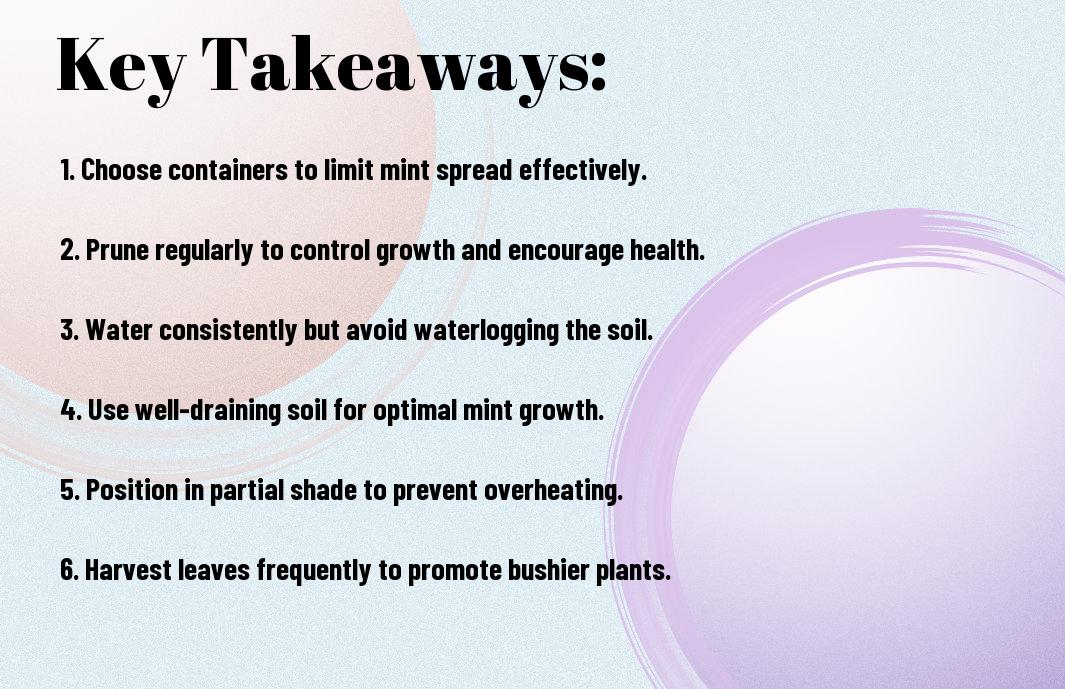
Key Takeaways:
To effectively manage mint growth, consider the following points:
- Controlling the spread of mint is important to prevent it from overtaking other plants in the garden. This can be achieved by planting mint in containers or boundaries that restrict its root growth.
- Regular pruning is necessary to maintain the health and shape of mint plants. This involves cutting back stems to encourage new growth and prevent the plant from becoming leggy.
- Providing the right environment for mint growth, including ample moisture and light, will help to promote healthy growth without leading to overgrowth. This can be balanced by ensuring the soil is not too fertile, as this can cause the plant to grow excessively.
Preparing the Soil
The initial step in growing mint is preparing the soil, and for a comprehensive approach, you can consult A Complete Guide To Growing Your Own Mint for expert advice. As you commence on this journey, you’ll find that the right foundation is necessary for your mint plants to thrive.
Choosing the Right Location
Similarly, selecting a spot with partial shade to full sun is vital, as mint prefers well-drained areas with ample sunlight to flourish, allowing you to make the most of your mint plants.
Soil Requirements for Mint Growth
Among the key factors influencing mint growth, the soil’s pH level and composition play a significant role, and you should aim for a slightly acidic to neutral soil pH, ranging from 6.0 to 7.0, to create an ideal environment for your mint.
Considering the specific needs of mint, you will want to ensure your soil is rich in organic matter, which helps retain moisture and suppress weeds, thereby facilitating healthy growth and minimizing maintenance, as you nurture your mint plants to achieve optimal flavor and aroma, allowing you to fully appreciate the rewards of your careful preparation and attention to detail.
Selecting the Right Mint Variety
You will find that choosing the right mint variety is imperative for a harmonious growth experience, as different types have unique characteristics that may suit your needs and preferences. Consider the intended use of your mint, whether it be for cooking, tea, or ornamental purposes.
Peppermint vs Spearmint
Above all, the decision between peppermint and spearmint often comes down to personal taste, as peppermint has a stronger flavor and spearmint a more delicate one, allowing you to decide which suits your palate and uses.
Other Mint Varieties to Consider
Right from the start, you may want to explore other mint varieties, such as chocolate mint or apple mint, which offer distinct flavors and aromas that can add depth to your recipes and gardens.
Varieties like pineapple mint or ginger mint can also be quite intriguing, and as you examine into the world of mint, you will discover that each type has its own set of advantages, whether it be a more compact growth habit or a unique fragrant oil profile, allowing you to tailor your selection to your specific needs and preferences, and ultimately, to cultivate a mint garden that is truly your own.
Planting and Care
Keep your mint plants thriving by providing them with the right conditions. You will want to tend to their needs with diligence, as they can quickly take over your garden if left unattended.
How to Plant Mint
Along with a container that provides good drainage, you will need to select a location with partial shade to full sun, depending on your climate. You can plant mint in the ground or in a pot, making sure the soil is moist and fertile.
Watering and Sunlight Requirements
Above all, mint requires consistent moisture, so you will need to water your plants regularly, taking care not to overwater. You should also ensure they receive at least four to six hours of direct sunlight per day, which will promote healthy growth.
Further, as you tend to your mint plants’ watering and sunlight needs, you will begin to notice the subtle nuances of their development, and adjust your care accordingly, you will find that the right balance of water and light will yield a lush and fragrant harvest, perfect for adding a burst of freshness to your favorite dishes and drinks, and you will be able to appreciate the simple joys of nurturing your own mint plants.
Preventing Overgrowth
All gardeners know that mint can quickly take over a garden if not properly managed. You will need to take steps to prevent your mint from spreading and overtaking other plants in your garden.
Pruning and Trimming Techniques
Practically speaking, pruning your mint regularly is important to maintaining control. You can trim back your mint plants to encourage bushy growth and prevent them from becoming leggy.
Containing Mint Spread
Preemptively, you should consider containing your mint to prevent it from spreading. You can plant your mint in containers or boundaries to keep it from invading other parts of your garden.
Due to mint’s tendency to spread quickly, you will need to take extra precautions to keep it under control. You can use physical barriers, such as containers or edging, to contain your mint and prevent it from spreading to other parts of your garden, allowing you to enjoy its beauty and fragrance without the hassle of overgrowth.
Common Mistakes to Avoid
Despite your best intentions, growing mint can be a daunting task. You may find yourself struggling to control its spread, and your garden may become overrun. To avoid this, it’s important to be aware of the common pitfalls that can lead to overgrowth.
Overwatering and Underwatering
One of the most significant errors you can make is inconsistent watering. If you water your mint too much or too little, it can lead to weak and leggy growth, making it more prone to spreading.
Not Providing Enough Light
Around the time you plant your mint, you should consider the amount of light it will receive. You need to ensure your mint plant gets enough sunlight to thrive, as lack of light can cause it to become leggy and spread out.
Also, as you plan the lighting for your mint plant, you’ll want to place it in a spot that receives partial shade to full sun, depending on your climate. By doing so, you’ll be able to control the growth of your mint and encourage it to grow lush and healthy, without becoming invasive, allowing you to enjoy its fragrance and beauty in your garden.
Harvesting and Using Mint
Many of the challenges associated with growing mint can be mitigated by adopting a thoughtful approach to harvesting and using this versatile herb. As you tend to your mint plants, you will begin to notice the abundance of leaves and stems, and you will need to consider how to make the most of your bounty.
When to Harvest Mint
Against the tendency to let your mint plants grow unchecked, you should harvest them regularly to encourage new growth and prevent overgrowth. You can start harvesting your mint leaves as soon as the plant has multiple sets of leaves, and you can continue to harvest them throughout the growing season.
Creative Ways to Use Fresh Mint
Fresh from the garden, your mint leaves can be used in a variety of ways, from adding them to salads and drinks to using them in beauty treatments and crafts. You can use your fresh mint to make teas, cocktails, and desserts, and you can also use it to add fragrance to your home and garden.
Considering the many uses of fresh mint, you may find that you want to experiment with different recipes and projects. As you explore the possibilities of using fresh mint, you will discover that it can add a brightness and freshness to many aspects of your life, from your cooking and grooming to your decor and entertainment. You can use your mint to make delicious chutneys and sauces, or to create beautiful arrangements and wreaths, and you can also use it to make thoughtful gifts and favors for your friends and family.
To wrap up
With these considerations, you will be well on your way to cultivating a lush and thriving mint plant, all while maintaining the delicate balance of your garden’s ecosystem. As you tend to your mint, you will find that your efforts yield a bountiful harvest, and your garden becomes a haven of freshness and vitality, with your carefully controlled mint plant adding its unique charm to your outdoor space, allowing you to enjoy its beauty and fragrance, and savor the rewards of your thoughtful gardening approach.
FAQ
Q: What are the benefits of growing mint in containers to prevent overgrowth?
A: Growing mint in containers is an excellent way to control its spread and prevent overgrowth. By containing the roots, you can limit the mint’s ability to spread and take over your garden. This method also allows for better soil quality control, watering, and fertilization, resulting in healthier and more flavorful mint plants. Additionally, container-grown mint is easier to harvest and prune, making it a great option for backyard gardeners.
Q: How often should I water my mint plants to promote healthy growth without overwatering?
A: Mint plants prefer moist soil, but overwatering can lead to root rot and other problems. To avoid this, water your mint plants when the top inch of soil feels dry to the touch. Make sure the pot has good drainage holes to prevent waterlogged soil. In hot weather, you may need to water your mint plants daily, while in cooler weather, watering every other day should suffice. It’s also imperative to avoid getting water on the leaves to prevent fungal diseases.
Q: What are some effective ways to prune mint plants to prevent overgrowth and encourage bushy growth?
A: Pruning is imperative to control mint’s aggressive growth and promote bushy, healthy plants. Pinch off flower buds as they form to encourage leaf growth and prevent the plant from seeding. Regularly trim back long stems to about one-third of their length, and cut back leggy growth to encourage branching. You can also harvest individual leaves or stems as needed to use in cooking and herbal remedies. Prune your mint plants regularly to maintain shape, promote new growth, and prevent them from becoming leggy.
Q: Can I grow mint in shady areas, or does it require full sun to prevent overgrowth?
A: While mint can grow in partial shade, it prefers full sun to partial shade, depending on the variety. If you’re growing mint in a shady area, make sure it receives at least 4-6 hours of direct sunlight per day. However, if you live in a hot climate, providing some afternoon shade can help prevent scorching and promote healthier growth. Keep in mind that mint grown in shady areas may be more prone to overgrowth, so regular pruning is necessary to maintain its shape and size.
Q: Are there any specific mint varieties that are less prone to overgrowth and easier to manage?
A: Yes, some mint varieties are naturally more compact or less aggressive than others. For example, ‘Bowles’ mint, ‘Pineapple’ mint, and ‘Chocolate’ mint are known for their smaller growth habits and are less likely to take over your garden. These varieties are perfect for container gardens or small spaces. Other varieties, like peppermint and spearmint, can be more aggressive and may require more frequent pruning to control their spread. Choose a variety that suits your needs and provides the desired level of maintenance.

