As you consider growing your own garlic, you’re likely looking for ways to ensure a successful harvest. You can start by learning from experts and experienced gardeners. For a comprehensive guide, you can visit 6 Top Tips for Growing Garlic to get started. By following the right techniques, you’ll be able to grow delicious and healthy garlic in your own home, and enjoy the numerous benefits that come with it, including fresh flavors and improved health.
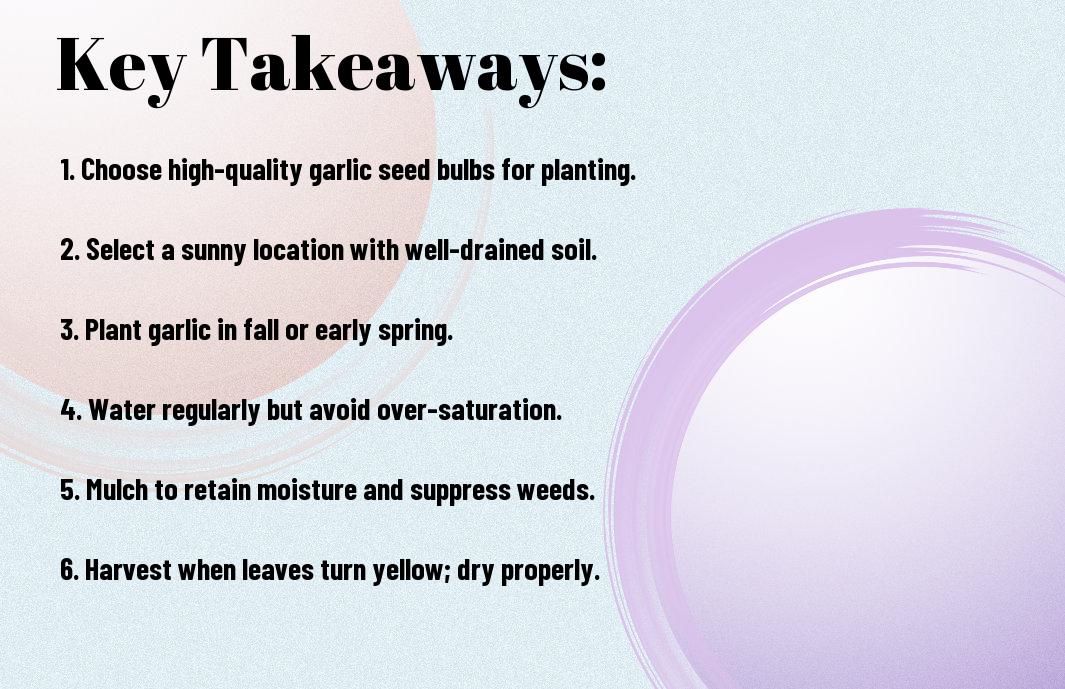
Key Takeaways:
To achieve success in growing garlic at home, consider the following points:
- Choose the right variety of garlic for your climate and desired flavor profile, as different types of garlic have varying hardiness levels and maturity dates.
- Prepare the soil by adding organic matter and ensuring it has good drainage, as garlic prefers well-draining soil with a pH between 6.0 and 7.0.
- Plant individual cloves 4-6 inches apart and 2-3 inches deep, with the basal plate facing down, to give the garlic roots room to grow and develop properly.
Preparation
While getting started with growing garlic at home, you’ll want to explore resources to ensure you’re doing it right. Check out discussions like Garlic decided it wanted to grow, can I bury it and maybe get some actual garlic? for insights from experienced gardeners.
Choosing the Right Garlic Variety
About the type of garlic you want to grow, you should consider factors like climate, flavor, and storage life to select the best variety for your needs, allowing you to make an informed decision for your garden.
Preparing the Soil
Preparing the soil for garlic involves testing its pH level and adjusting it if necessary, as garlic prefers a slightly acidic to neutral soil pH, and you should also add organic matter like compost to improve soil structure and fertility, which will help your garlic grow strong and healthy, allowing you to achieve a bountiful harvest.
Planting
If you want to grow garlic at home, you’ll need to start by planting individual cloves. This process is relatively straightforward and can be done in the fall or early spring, depending on your climate.
When to Plant Garlic
For optimal growth, you should plant garlic when the weather is cool, as this will help the cloves establish a strong root system before the heat of summer. Typically, this means planting in late summer or early fall, about 6-8 weeks before the first frost.
How to Plant Garlic
Generally, garlic planting involves separating the individual cloves from the bulb and planting them in well-draining soil, with the pointed end facing upwards. You’ll want to space them about 4-6 inches apart, and plant them at a depth of about 2-3 inches.
Understanding the specifics of how to plant garlic is key to a successful harvest. As you prepare to plant, make sure your soil is loose and well-draining, with a pH between 6.0 and 7.0. You should also consider adding compost or well-rotted manure to the soil to provide your garlic with imperative nutrients. By following these steps, you’ll be well on your way to growing healthy, flavorful garlic that you can enjoy for months to come.
Care and Maintenance
Not much is needed to keep your garlic healthy, but regular care will ensure a bountiful harvest. You’ll need to provide your garlic with the right conditions to thrive.
Watering and Mulching
Betwixt the planting and harvesting seasons, you should maintain a consistent moisture level in your soil, and apply a layer of mulch to retain water and suppress weeds, which will help your garlic grow.
Dealing with Pests and Diseases
Along with proper care, you’ll need to watch out for signs of pests and diseases, such as yellowing leaves or black spots, which can damage your garlic crop if left unchecked.
Indeed, dealing with pests and diseases requires swift action, and you should inspect your garlic plants regularly to catch any issues early, treating them with organic or chemical solutions as needed to prevent the problem from spreading and to protect your harvest.
Harvesting
To ensure a successful garlic harvest, you’ll want to check out expert advice, such as How to Grow Garlic Indoors the Right Way, for valuable insights.
Knowing When to Harvest
One of the most important steps in harvesting garlic is determining when the time is right, typically when the tops of the plants begin to yellow and fall over, indicating that the bulbs are ready to be dug up.
How to Harvest and Store Garlic
The process of harvesting and storing garlic requires care, as you’ll need to gently dig up the bulbs, being careful not to damage them, and then dry them in a cool, dry place to preserve for future use.
Hence, you will be able to enjoy your homegrown garlic for months to come, adding flavor to a variety of dishes, from soups to salads, and you can also share your bounty with friends and family, or store it for later use, allowing you to savor the fruits of your labor.
Common Mistakes to Avoid
Unlike other plants, growing garlic requires attention to detail to achieve a successful harvest. You need to be aware of the common pitfalls that can affect your garlic crop, such as overwatering, underwatering, and inadequate sunlight, to ensure your garlic grows healthy and strong.
Overwatering and Underwatering
Any inconsistency in watering can be detrimental to your garlic plants, so you should aim to find a balance that keeps the soil moist but not waterlogged, as this can lead to rot and poor growth.
Not Providing Enough Sunlight
Between planting and harvesting, your garlic needs sufficient sunlight to photosynthesize and grow, so you should choose a location that receives plenty of direct sunlight for most of the day.
Overwatering can be a problem, but not providing enough sunlight can also stunt the growth of your garlic plants, so you should ensure that your garlic receives at least 6 hours of direct sunlight per day, as this will help to promote healthy growth and development, and you will be rewarded with a bountiful harvest.
Tips for Success
After establishing your garlic garden, you’ll want to ensure its success. Consider the following:
- Choose the right variety
- Plant at the right time
. Knowing these tips will help you achieve a bountiful harvest.
Rotating Crops
Around the same time, you’ll need to think about rotating your crops to avoid depleting the soil of nutrients. This will help maintain the health of your garlic plants and prevent disease.
Composting and Fertilizing
Often, you’ll find that composting and fertilizing are necessary for promoting healthy growth. You can use natural fertilizers to enrich the soil and support your garlic plants.
Even if you’re new to gardening, you can easily start composting and fertilizing your garlic plants. You can create your own compost using kitchen scraps and yard waste, or purchase organic fertilizers from a gardening store. As you add these nutrients to the soil, you’ll begin to notice improvements in your garlic plants’ growth and flavor, and you’ll be able to enjoy a successful harvest from your home garden.
Summing up
On the whole, you now have the necessary knowledge to grow garlic at home. You can successfully cultivate your own garlic by following the tips outlined, from selecting the right variety to harvesting at the optimal time. With your newfound understanding, you will be able to enjoy your homegrown garlic and appreciate the benefits of having this flavorful ingredient in your kitchen, enhancing your cooking with your own fresh produce.
FAQ
Q: What are the best conditions for growing garlic at home?
A: Garlic prefers well-draining soil and full sun to partial shade. It thrives in areas with rich, fertile soil that has a pH between 6.0 and 7.0. Additionally, garlic needs adequate moisture, especially when the bulbs are forming. Aim to provide about 1 inch of water per week, either through rainfall or irrigation.
Q: How do I prepare the soil for planting garlic?
A: To prepare the soil for planting garlic, start by loosening the soil to a depth of about 12 inches. Then, mix in a 2-inch layer of compost or well-rotted manure to improve soil fertility and drainage. It’s also a good idea to add a balanced fertilizer according to the manufacturer’s instructions. Avoid using fresh manure, as it can burn the garlic’s roots.
Q: When is the best time to plant garlic at home?
A: In most regions, the best time to plant garlic is in the fall, about 6-8 weeks before the first frost. This allows the garlic to establish itself over the winter and produces a larger harvest. If you live in a warmer climate, you can also plant garlic in late winter or early spring, as soon as the soil can be worked. Avoid planting garlic in the summer, as the heat can cause the bulbs to rot.
Q: How do I care for garlic plants as they grow?
A: To care for garlic plants, keep the soil consistently moist during the first few weeks after planting. As the plants grow, you can reduce watering to about 1 inch per week. It’s also crucial to keep the area around the garlic plants weed-free, as weeds can compete for water and nutrients. You can use a layer of mulch to suppress weeds and retain moisture in the soil.
Q: How do I know when my garlic is ready to harvest?
A: Garlic is typically ready to harvest when the tops of the plants begin to yellow and fall over. This usually occurs about 3-4 months after planting, depending on the variety. Check the bulbs by carefully digging around the plant with a fork, being careful not to damage the bulbs. If the bulbs are divided into separate cloves and the necks have started to dry, it’s time to harvest. Use a garden fork to carefully lift the bulbs out of the ground, and then let them dry in a warm, dry place for a few weeks before storing.

