You’re about to uncover the secrets to cultivating a thriving basil plant in the comfort of your own home. Your indoor space can be a perfect spot to grow this fragrant herb, and with the right approach, you’ll be enjoying fresh basil in no time. You’ll learn how to provide your basil with the right conditions, from lighting to watering, and harvest it like a pro, bringing a touch of freshness to your cooking.
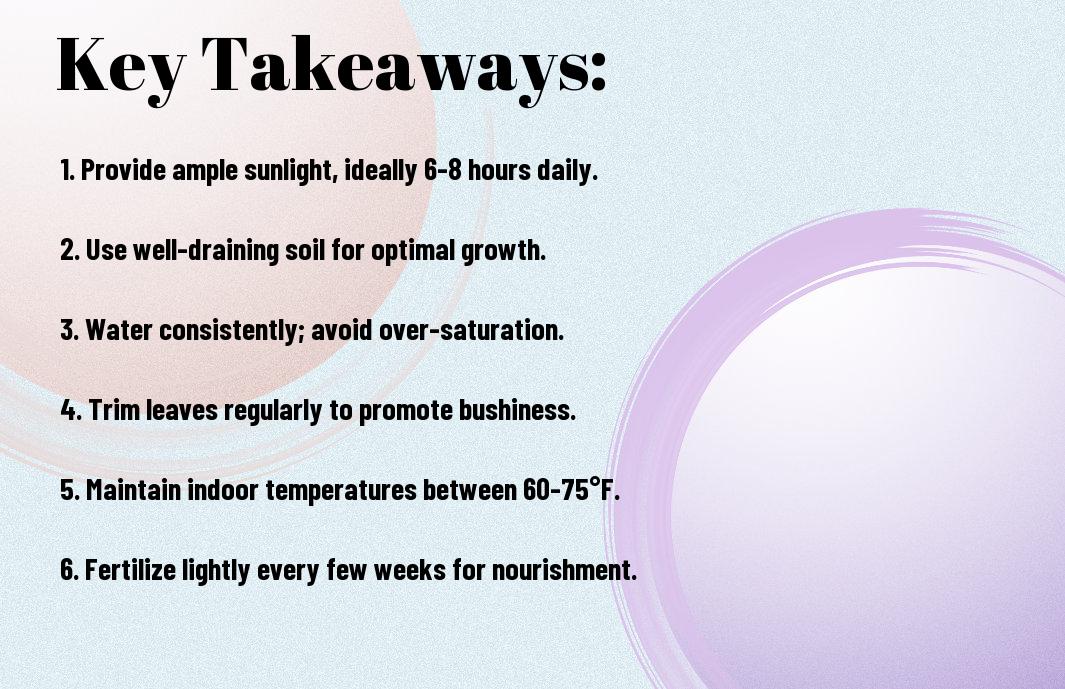
Key Takeaways:
To achieve success in growing basil indoors, consider the following points:
- Provide adequate lighting for your basil plants, as they require a significant amount of light to photosynthesize and grow. Place them near a sunny window or use grow lights to supplement the natural light.
- Ensure optimal temperature and humidity levels for your basil plants. They thrive in temperatures between 65-75°F (18-24°C) and a relatively high humidity, which can be achieved by placing the pot on a tray filled with water and pebbles.
- Use well-draining soil and fertilize your basil plants regularly to promote healthy growth. A balanced fertilizer will provide the necessary nutrients for your basil to flourish, and a well-draining soil will prevent waterlogged soil and root rot.
Preparing the Environment
A well-prepared environment is vital for growing basil indoors. You will need to consider the container, location, and lighting to create an ideal space for your basil to thrive.
Choosing the Right Container
Along with the quality of the soil, a suitable container is vital for your basil’s growth. You should look for a container that is at least 6-8 inches deep and has good drainage holes to prevent waterlogged soil.
Selecting the Ideal Location
Similar to other plants, selecting the right location for your basil is key. You want to place your basil in a spot that gets plenty of sunlight, ideally 4-6 hours of direct sunlight per day.
Considering the amount of sunlight your space receives, you may need to supplement with grow lights to ensure your basil gets enough light to photosynthesize. You should also keep your basil away from drafts and extreme temperatures to promote healthy growth.
Soil and Nutrition
There’s no substitute for good soil when growing basil indoors. You can find valuable advice on caring for your basil plant by checking out threads like Any tips on how to take care of a basil plant inside a condo?
Using High-Quality Potting Soil
Anything less than the best potting soil can hinder your basil’s growth. You should opt for a well-draining mix specifically designed for indoor plants to give your basil the best chance to thrive.
Fertilizing for Optimal Growth
The key to a healthy basil plant is balanced fertilization. You will need to fertilize your plant regularly, using a fertilizer that is high in nutrients, to promote healthy growth and flavor.
Understanding how to fertilize your basil properly is vital to its success. You need to strike a balance, as over-fertilization can be just as harmful as under-fertilization, so you should follow the instructions on the fertilizer package carefully and monitor your plant’s response to the fertilizer, adjusting as necessary to ensure your basil receives the nutrients it needs to flourish.
Watering and Humidity
Once again, you’ll find that growing basil indoors requires attention to detail, and you can learn more about How to Grow and Care for Basil Indoors to master the technique.
Watering Techniques for Indoor Basil
Along with providing sufficient light, you need to water your basil plant carefully, making sure not to overwater or underwater, as this can lead to root rot or weak growth.
Maintaining the Right Humidity Level
The right humidity level is necessary for your basil plant to thrive, and you should aim to keep it between 40-60% to promote healthy growth.
Maintaining this level can be achieved by placing the pot on a tray filled with water and pebbles or using a humidifier, allowing you to create an ideal environment for your basil plant to flourish, and you can enjoy the benefits of fresh, fragrant basil all year round.
Lighting and Temperature
Now, you’ll want to consider the lighting and temperature for your indoor basil. The ideal conditions are outlined in the following table:
| Condition | Requirement |
|---|---|
| Light | Bright, indirect light |
| Temperature | 65-75°F (18-24°C) |
Providing Adequate Light for Basil
To give your basil the best chance, place it near a sunny window or use grow lights. This will help it thrive and produce plenty of leaves.
Keeping the Temperature Just Right
Before you settle on a spot, check the temperature. The ideal range is outlined in the following table:
| Temperature | Effect |
|---|---|
| Below 60°F (15°C) | Slow growth |
| Above 80°F (27°C) | Wilting |
Lighting and temperature are closely linked. You’ll find that the right light and temperature combination is key to healthy growth, as shown in the following table:
| Lighting | Temperature |
|---|---|
| Bright, indirect | 65-75°F (18-24°C) |
| Low, indirect | 55-65°F (13-18°C) |
You can adjust your setup to find the perfect balance for your basil, and with a little practice, you’ll be harvesting fresh leaves in no time.
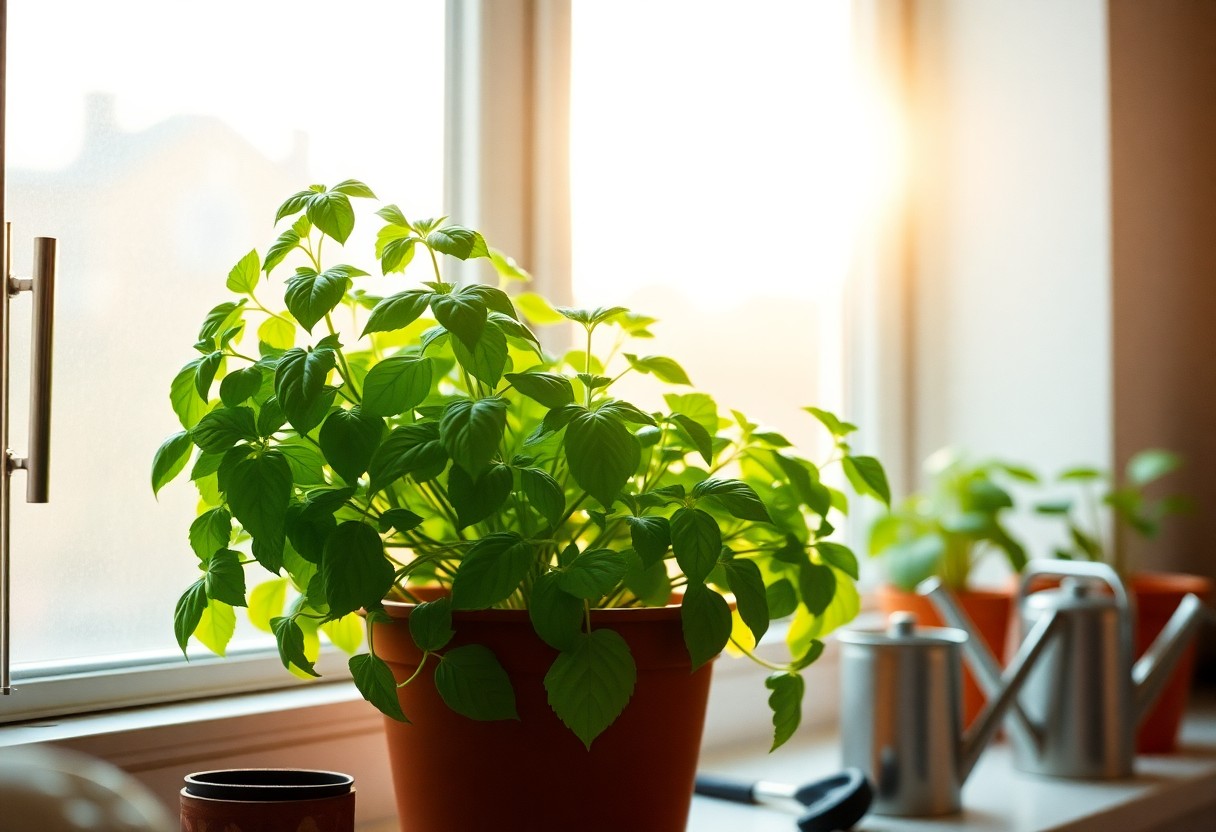
Pruning and Maintenance
Many indoor gardeners overlook the importance of pruning and maintenance when growing basil indoors. You will need to trim your basil plants regularly to promote healthy growth and prevent them from flowering.
Pruning Techniques for Healthy Growth
Around the time your basil plant reaches 6 inches tall, you should start pruning it to encourage bushy growth. You can pinch off the top leaves to direct the plant’s energy towards leaf production.
Regular Maintenance Tasks
Once you have pruned your basil, you will need to perform regular maintenance tasks to keep it thriving. You should check your plant daily to ensure it is getting enough water and light.
Indeed, checking your plant’s condition daily will help you identify any potential issues before they become major problems. You can then take action to adjust your care routine, such as increasing the frequency of watering or fertilizing your basil plant, to keep it healthy and productive. As you continue to care for your basil, you will develop a sense of what it needs to thrive, and you will be able to enjoy fresh, fragrant leaves all year round.
Common Challenges
Keep in mind that growing basil indoors comes with its own set of challenges. You’ll need to navigate issues like limited light, temperature fluctuations, and pests to keep your plants healthy.
Dealing with Pests and Diseases
About the time you notice your basil leaves turning yellow or developing black spots, you’ll know you have a problem. You’ll need to identify the issue and take action to prevent it from spreading to your other plants.
Overcoming Common Growing Issues
Overcoming the hurdles of indoor growing requires patience and attention to detail. You’ll need to monitor your plants closely, adjusting their care as needed to ensure they thrive in their indoor environment.
Common issues like root bound plants, nutrient deficiencies, and inadequate light can be solved by taking a closer look at your care routine. You can start by checking your plants’ roots, fertilizing them regularly, and making sure they’re getting enough light. By making a few simple adjustments, you can help your basil plants overcome these common growing issues and continue to produce fresh, fragrant leaves for your cooking needs.
Summing up
The key to growing basil indoors lies in your hands. You’ve learned the basics: provide your basil with sufficient light, water, and nutrients. You’ll harvest fresh leaves in no time. Keep your pots clean, prune your plants, and maintain a comfortable temperature. With these tips, you’ll enjoy your homegrown basil all year round, adding flavor to your favorite dishes with ease.
FAQ
Q: What are the best conditions for growing basil indoors?
A: To grow basil indoors, it’s best to provide it with plenty of sunlight, warm temperatures, and high humidity. Place your basil plant in a south-facing window or under grow lights, and maintain a consistent temperature between 65-75°F (18-24°C). You can also use a humidifier to maintain a humid environment, which will help your basil plant thrive.
Q: How often should I water my indoor basil plant?
A: Basil plants need consistent moisture to grow well indoors. Water your basil plant when the top inch of soil feels dry to the touch, usually every 1-2 days in the summer and less often in the winter. Make sure not to overwater, as this can lead to root rot and other problems. Check the soil daily, and adjust your watering schedule accordingly.
Q: What type of soil is best for growing basil indoors?
A: Basil plants prefer well-draining soil that is rich in organic matter. Use a high-quality potting mix that contains ingredients like peat moss, vermiculite, or perlite. Avoid using garden soil from your outdoor garden, as it can compact and prevent proper drainage. You can also add fertilizers or compost to the soil to provide your basil plant with necessary nutrients.
Q: How can I prevent pests from infesting my indoor basil plant?
A: Indoor basil plants can be susceptible to pests like aphids, whiteflies, and spider mites. To prevent infestations, inspect your plant regularly and isolate it from other plants. Use neem oil or insecticidal soap to control infestations, and make sure your plant has good air circulation. You can also introduce natural predators, like ladybugs or lacewings, to your plant to control pest populations.
Q: Can I grow basil indoors year-round, and how do I prune it to encourage new growth?
A: Yes, you can grow basil indoors year-round, as long as you provide it with the right conditions. To encourage new growth and prevent your basil plant from flowering, prune it regularly. Pinch off flower buds as soon as they form, and trim back leggy stems to encourage branching. You can also harvest individual leaves or stems to use in cooking, which will help your plant bush out and produce more foliage. Regular pruning will help you enjoy a continuous supply of fresh basil leaves throughout the year.

