As you step into your garden, you’re surrounded by the vibrant sights and scents of nature. You can elevate this experience by blending edible plants into your decorative landscaping, creating a harmonious union of beauty and functionality. To get started, consider learning How to Mix Ornamental and Edible Plants in Your Garden, and discover the joy of cultivating your own edible oasis, where your senses come alive amidst the lush foliage and thriving flora that you’ve carefully nurtured.
Key Takeaways:
To successfully incorporate edible plants into decorative landscaping, consider the following points:
- Choose edible plants that are both visually appealing and productive, such as flowering herbs like roses or lavender, to add color and texture to your landscape.
- Consider the climate and soil conditions of your area when selecting edible plants, and group them with other plants that have similar watering and sunlight requirements.
- Incorporate edible plants into your landscape design by using them as border plants, hedges, or groundcovers, and combine them with ornamental plants to create a unique and sustainable landscape.
Choosing Edible Plants
For a harmonious blend of beauty and bounty, you’ll want to select edible plants that thrive in your local climate and complement your landscape’s aesthetic. As you wander through your yard, consider the textures, colors, and growth habits of various plants, imagining how they might enhance your outdoor space.
Selecting Plants for Climate and Soil
One of the most important factors in choosing edible plants is ensuring they are well-suited to your region’s climate and soil type, allowing you to create a lush and vibrant landscape that requires minimal care.
Considering Space and Maintenance
Maintenance of your edible plants will depend on the specific varieties you choose and the space in which they are planted, so you’ll want to think carefully about how much time you can devote to tending your landscape.
It is in the quiet moments spent tending to your edible plants that you’ll come to appreciate the beauty of nature and the joy of cultivating your own food, as you watch your landscape flourish under your care, and you harvest the fruits of your labor, savoring the sweetness of your homegrown treasures.
Designing the Landscape
While designing your landscape, consider the interplay of edible plants with the existing environment, allowing you to cultivate a space that is both beautiful and bountiful, much like a lush forest that yields its secrets to the attentive eye.
Combining Edible Plants with Ornamental Plants
Besides the aesthetic appeal, combining edible plants with ornamental plants will add depth and diversity to your landscape, inviting you to meander through the vibrant tapestry of colors and textures that you have so thoughtfully woven.
Creating a Visually Appealing Layout
Behind every successful landscape lies a thoughtful design, and as you launch on this creative journey, you will find that the deliberate placement of edible plants amidst ornamental ones yields a harmonious balance that delights the senses and nourishes the soul.
Hence, as you craft your visually appealing layout, you will begin to notice the subtle dance between form and function, where the edible plants not only provide sustenance but also become an integral part of the landscape’s beauty, inspiring you to slow down and appreciate the simple joys of nature that unfold before your eyes.
Incorporating Fruits and Vegetables
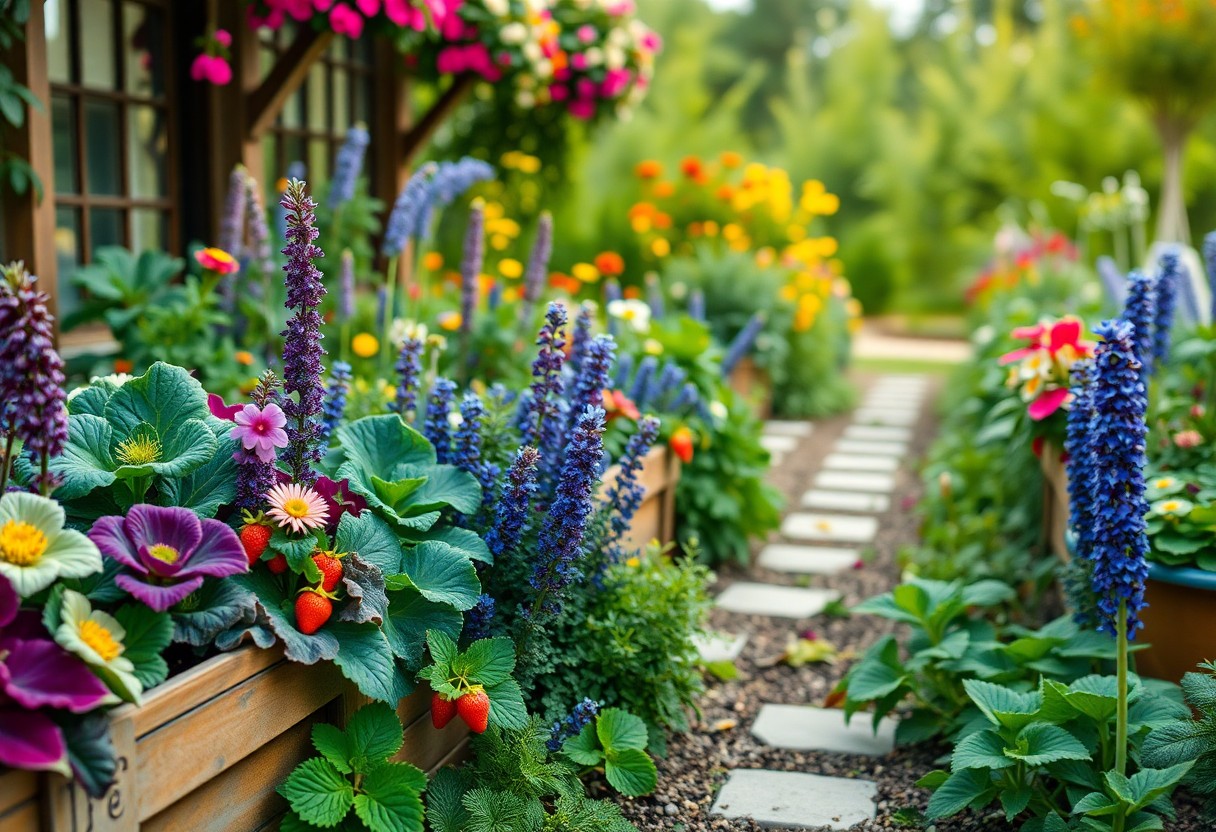
Many of the same plants that thrive in your kitchen garden can also add beauty and interest to your decorative landscaping, allowing you to harvest fresh produce right in your own yard. You can grow a variety of fruits and vegetables, such as strawberries, blueberries, and leafy greens, amidst your flowers and shrubs.
Using Vertical Space for Vines and Climbers
Akin to the way a verdant trellis can transform a blank wall, you can train vines like peas, beans, and cucumbers to climb up arbors or trellises, making the most of your space and adding a touch of whimsy to your garden.
Adding Color with Fruit-Bearing Shrubs
Comparable to the vibrant hues of a sunset, you can introduce colorful fruit-bearing shrubs like currants, gooseberries, and elderberries into your landscape, providing a pop of color and attracting pollinators to your garden.
In fact, as you wander through your garden, you’ll discover that the fruit-bearing shrubs not only add visual interest, but also provide a bounty of fresh fruit for you to enjoy, inviting you to slow down and savor the simple pleasures of nature, and encouraging you to explore the intersection of beauty and utility in your outdoor space.
Adding Herbs and Flowers
After considering the overall aesthetic you want to achieve, you can start incorporating herbs and flowers into your decorative landscaping. For inspiration, visit Creating a Permaculture-Inspired Edible Landscape to discover new ideas for your outdoor space.
Using Herbs as Border Plants
Above all, herbs like rosemary and thyme make excellent border plants, adding a fragrant and rustic touch to your landscape. You can plant them along pathways or around the perimeter of your garden, creating a beautiful and functional border.
Incorporating Edible Flowers into the Landscape
Across your landscape, edible flowers like violas and pansies can add a pop of color and whimsy. You can plant them in containers or directly in the ground, and use them to attract pollinators and add beauty to your outdoor space.
Another way to incorporate edible flowers into your landscape is to use them as a garnish for your outdoor dining area. Imagine sipping lemonade surrounded by a garden filled with fragrant herbs and colorful flowers, and being able to pick a few to add to your drink or salad. As you wander through your garden, you can harvest a few flowers to add to your meal, creating a truly immersive and delicious experience.
Maintaining the Landscape
Unlike traditional decorative landscaping, incorporating edible plants requires attention to their unique needs. As you explore the world of edible landscaping, consider visiting 6 Design Guidelines for Edible Landscaping to learn more about harmonious coexistence with nature.
Watering and Mulching Techniques
Lush landscapes demand thoughtful watering and mulching practices, allowing you to nourish your edible plants while preserving the beauty of your outdoor space.
Managing Pests and Diseases
Managing the health of your edible landscape is an ongoing process, as you observe and respond to the needs of your plants, fostering a balanced ecosystem that thrives under your care.
This mindful approach to maintaining your edible landscape allows you to cultivate a deeper connection with the natural world, as you tend to the intricate web of relationships between plants, soil, and wildlife, and you will find that your efforts yield a bountiful harvest, not just of food, but of serenity and wonder.
Benefits of Edible Landscaping
Keep in mind that incorporating edible plants into your decorative landscaping can have a significant impact on your life and the environment. You will not only enjoy the aesthetic appeal, but also reap numerous benefits.
Environmental Benefits
To truly appreciate the value of edible landscaping, consider the positive effects it has on the ecosystem. You will be supporting local biodiversity, reducing your carbon footprint, and creating a more sustainable outdoor space.
Personal and Community Benefits
Benefits such as fresh produce, savings on groceries, and a sense of accomplishment will enrich your life as you tend to your edible landscape. You will feel more connected to nature and your community as you share your harvest.
The personal and community benefits of edible landscaping extend beyond the individual, fostering a sense of community and cooperation. You will have the opportunity to share your knowledge, skills, and fresh produce with neighbors and friends, strengthening your relationships and building a stronger, more supportive community around you.
Final Words
With these considerations, you can harmoniously weave edible plants into your decorative landscaping, blending functionality and beauty. As you tend to your landscape, you’ll find that the intersection of nature and nurture fosters a deeper connection to the earth and your own well-being. Your outdoor space will flourish, inviting you to slow down and savor the simple joys of growth and abundance, surrounded by the vibrant textures and colors of the natural world.
FAQ
Q: What are some popular edible plants that can be used in decorative landscaping?
A: Some popular edible plants that can be used in decorative landscaping include herbs like rosemary, thyme, and oregano, as well as fruits like strawberries, blueberries, and raspberries. Vegetables like lettuce, kale, and carrots can also be used to add a pop of color and texture to your landscape. Additionally, flowering plants like nasturtiums and violas can add a decorative touch and are also edible.
Q: How can I incorporate edible plants into my existing landscape design?
A: To incorporate edible plants into your existing landscape design, start by assessing your yard’s conditions, including sunlight, soil type, and moisture levels. Choose edible plants that thrive in your climate and soil type, and consider using container gardens or raised beds to add visual interest. You can also mix edible plants with ornamental plants to create a unique and dynamic landscape. Consider adding a statement piece, like a beautifully crafted planter or trellis, to showcase your edible plants.
Q: What are some tips for maintaining edible plants in a decorative landscape?
A: To maintain edible plants in a decorative landscape, make sure to water them regularly, but avoid overwatering, which can lead to disease and pests. Fertilize your edible plants regularly, using organic or natural fertilizers whenever possible. Prune your edible plants regularly to keep them looking their best and to encourage healthy growth. Also, keep an eye out for pests and diseases, and take action quickly if you notice any problems. Finally, harvest your edible plants regularly to encourage continued production and to prevent them from becoming leggy or flowering.
Q: Can I use edible plants in shady areas of my landscape?
A: Yes, there are many edible plants that can thrive in shady areas of your landscape. Consider using plants like lettuce, kale, and herbs like mint and cilantro, which prefer partial shade. You can also use shade-tolerant fruits like currants and gooseberries. When planting in shady areas, make sure to choose plants that are specifically bred for shade tolerance, and consider using a mixture of plants with different textures and growth habits to add visual interest. Keep in mind that shady areas may require more frequent watering, as the soil can dry out quickly.
Q: Are there any potential drawbacks to using edible plants in decorative landscaping?
A: While edible plants can be a wonderful addition to a decorative landscape, there are some potential drawbacks to consider. For example, edible plants can be more prone to pests and diseases, which can spread to other plants in your landscape. Additionally, edible plants may require more maintenance than ornamental plants, as they need to be harvested and pruned regularly. Finally, some edible plants can be invasive, so make sure to choose plants that are well-behaved and won’t spread beyond their boundaries. With proper planning and maintenance, however, edible plants can be a beautiful and functional addition to your landscape.
