You want a garden, but space is tight. You look up, and there’s your answer. A vertical garden can thrive on any wall, given the right setup. You’ll need to choose your plants, select a suitable structure, and get your hands dirty. Your options are endless, from lush greens to vibrant blooms. You’ll learn how to bring your vision to life, step by step, and create a stunning vertical garden that showcases your style and adds life to any room.
Key Takeaways:
To create a stunning vertical garden, consider the following points:
- Choose the right plants that are suitable for vertical gardening, such as succulents, ferns, and ivy, and ensure they receive the right amount of light and water.
- Select a supporting structure that fits your space and style, such as a trellis, wall-mounted planter, or a living wall planter, and make sure it is sturdy enough to hold the weight of the plants.
- Consider the maintenance requirements of your vertical garden, including irrigation and fertilization, and plan accordingly to keep your garden thriving and looking its best.
Planning
Your vertical garden’s success starts with a solid plan, considering space, sunlight, and maintenance.
Choosing the right location
After assessing your outdoor space, choose a wall that gets sufficient sunlight and is easily accessible for maintenance.
Selecting the perfect plants
To begin, pick plants that thrive in vertical conditions, such as succulents or ferns, and consider their growth habits and needs.
Hence, you’ll want to select plants that fit your climate, lighting conditions, and the amount of care you can provide, ensuring your vertical garden flourishes and brings you joy, and by choosing the right plants, you’ll be able to enjoy the benefits of a lush, thriving garden.
Designing
The key to a stunning vertical garden is in the design. You can find inspiration for your project by checking out 30 DIY Vertical Garden Ideas to Show off Your Green Thumb, which will help you get started.
Considering the theme and style
Among the first decisions you’ll make is the theme and style of your garden. You’ll want to choose a style that fits your space and personal taste, whether it’s modern, traditional, or rustic.
Creating a balanced composition
Considering the layout of your plants is imperative. You’ll want to balance the composition of your garden by mixing plants of different textures, colors, and sizes to create visual interest.
Understanding how to create a balanced composition is vital to the success of your vertical garden. You’ll need to think about the placement of each plant, taking into account its growth habits, and how it will interact with the other plants in your garden, to create a harmonious and visually appealing whole.
Building
Not everyone has a green thumb, but with the right guidance, you can create a stunning vertical garden. You’ll need to start by preparing your space and gathering materials.
Preparing the wall or structure
Constructing a strong foundation is key. You’ll be building on this, so make sure your wall or structure can support the weight of your garden.
Installing the necessary infrastructure
On the surface, it may seem like a daunting task, but you’ll be surprised at how simple it can be. You’ll need to install a trellis or framework to support your plants.
To get started with installing the necessary infrastructure, you’ll need to assess your space and determine the best type of system for your garden. You’ll need to consider factors such as drainage, irrigation, and accessibility, and choose materials that fit your needs and budget. By taking the time to plan and install a solid infrastructure, you’ll be setting your garden up for success.
Planting
After preparing your vertical garden, it’s time to add the plants. You’ll need to choose the right ones for your space and climate.
Selecting the right soil and nutrients
On the subject of soil, you’ll want to pick a mix that drains well and holds moisture. You’ll also need to consider the nutrient needs of your plants.
Planting and arranging the greenery
Around your garden, you’ll be placing plants with varying textures and colors. You’ll arrange them in a way that creates visual appeal and balance.
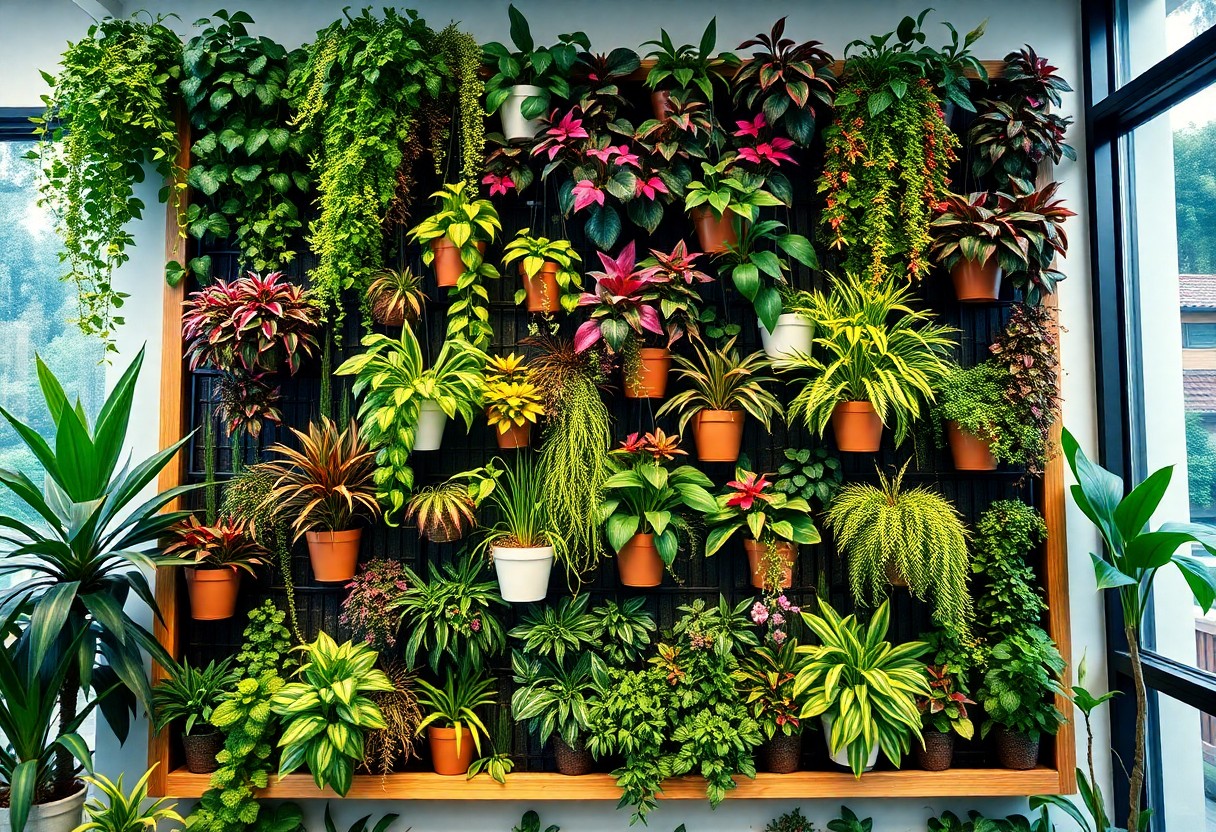
Soil quality will affect how your plants grow, so you’ll want to plant them in a way that allows for good root growth. You’ll place each plant in its spot, making sure the soil is firm around the roots, and then add more soil as needed, finishing with a layer of mulch to retain moisture and suppress weeds, allowing your garden to thrive under your care.
Maintaining
To keep your vertical garden thriving, you’ll need to establish a routine. This will ensure your plants get the care they need to grow and flourish.
Watering and irrigation systems
Afterwards, you’ll need to set up a system that delivers the right amount of water to your plants. You can use a drip irrigation system or soaker hose to minimize waste and keep your plants healthy.
Pruning and fertilizing techniques
Following fertilization, you’ll need to prune your plants to maintain shape and promote growth. This will help you achieve the desired look and keep your garden looking its best.
To master pruning and fertilizing techniques, you’ll need to observe your plants closely. You’ll learn to identify when they need a boost, and when they’re getting too much or too little of a good thing. By paying attention to your plants’ needs, you’ll be able to make adjustments and keep your vertical garden thriving.
Troubleshooting
Many issues can arise with your vertical garden, but most can be easily resolved with some troubleshooting. You’ll need to inspect your garden regularly to identify any problems early on. Check your plants for signs of stress, such as yellowing leaves or slow growth, and adjust your care routine as needed. This will help you catch any issues before they become major problems.
Common problems and solutions
Any issues you encounter can often be solved with simple adjustments to your care routine. You may need to adjust the amount of water or sunlight your plants are getting, or add more nutrients to the soil. By making a few small changes, you can get your garden back on track.
Pest control and disease management
Between pests and diseases, your vertical garden can be vulnerable to damage. You’ll need to keep an eye out for signs of trouble, such as holes in leaves or white powdery patches on stems. Take action quickly to prevent the problem from spreading.
To manage pests and diseases effectively, you’ll need to take a proactive approach. You should inspect your plants regularly, looking for any signs of trouble. If you do find a problem, take action right away – remove infected plants, treat with insecticidal soap, or apply fungicide as needed. By staying on top of pest and disease control, you can keep your vertical garden healthy and thriving. You’ll be able to enjoy the benefits of your garden, without the hassle of dealing with pesky problems.
Conclusion
Considering all points, you’ve got the basics to create a stunning vertical garden. You’ve learned to choose the right plants, build a solid structure, and maintain your garden. Now, it’s your turn to get your hands dirty and bring your vision to life. With patience and practice, your vertical garden will thrive, and you’ll enjoy the beauty and freshness it brings to your space. Your new garden will be a reflection of your hard work and dedication.
FAQ
Q: What is a vertical garden and how does it work?
A: A vertical garden, also known as a living wall or green wall, is a type of garden where plants are grown upwards using a trellis, wall, or other support system. This type of garden works by using a soilless growing medium, such as a felt or mat, that holds the plant’s roots in place, while a watering system provides the necessary nutrients and moisture for the plants to thrive. Vertical gardens can be used to add a touch of nature to any space, from small apartments to large commercial buildings.
Q: What type of plants are best suited for a vertical garden?
A: The type of plants that are best suited for a vertical garden depend on the amount of sunlight, temperature, and moisture the garden will receive. Some popular plants for vertical gardens include ferns, succulents, and flowering vines like ivy and clematis. Herb gardens and vegetable gardens can also be created vertically, using plants like basil, rosemary, and lettuce. When choosing plants, consider factors such as their mature size, growth rate, and watering requirements to ensure the best results.
Q: How do I choose the right materials for my vertical garden?
A: Choosing the right materials for your vertical garden is imperative for its success. Consider using a durable and weather-resistant frame, such as a wooden or PVC trellis, and a soilless growing medium that can hold the plant’s roots in place. A good irrigation system, such as a drip irrigation or misting system, is also necessary to provide the plants with the right amount of moisture. Additionally, consider using a waterproof backing, such as a plastic or fabric sheet, to prevent water from seeping behind the garden and causing damage.
Q: How much maintenance does a vertical garden require?
A: A vertical garden requires regular maintenance to keep it looking its best. This includes watering, fertilizing, and pruning the plants on a regular basis. The frequency of maintenance will depend on the type of plants, climate, and irrigation system used. As a general rule, vertical gardens should be watered at least once a week, and fertilized once a month. Pruning and training the plants will also be necessary to maintain their shape and promote healthy growth.
Q: Can I create a vertical garden indoors, and what are the benefits of doing so?
A: Yes, it is possible to create a vertical garden indoors, and there are many benefits to doing so. Indoor vertical gardens can help purify the air, improve the aesthetic of a room, and even boost mood and productivity. To create an indoor vertical garden, choose plants that thrive in low-light conditions, such as Chinese evergreen or peace lily, and use a hydroponic or aeroponic system to provide the plants with the necessary nutrients. Indoor vertical gardens can be placed in a living room, office, or even a kitchen, and can be a great way to bring a touch of nature indoors.


