Year-round

The Best Shrubs for Year-Round Interest

As you plan your garden, you’re likely looking for shrubs that will provide beauty and appeal throughout the year. You want your outdoor space to be vibrant and engaging, regardless of the season. With so many options available, choosing the right shrubs can be overwhelming. You’ll want to select varieties that offer a mix of flowering, foliage, and texture to keep your garden interesting all year round, and this guide will help you make informed decisions to enhance your outdoor space.

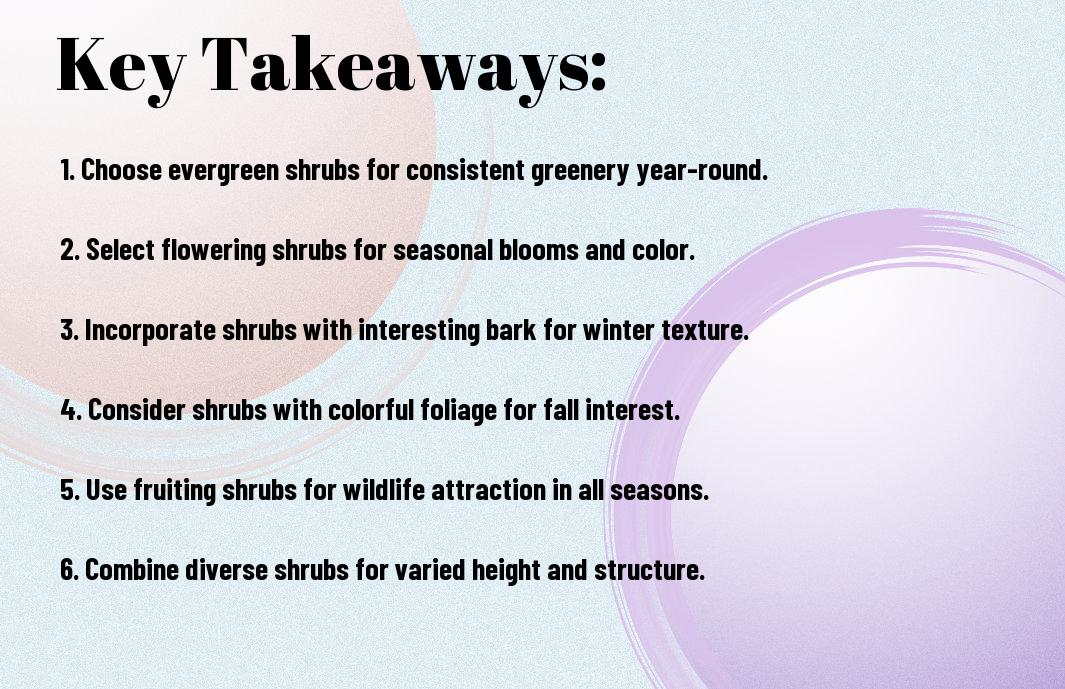
Key Takeaways:

To maintain a vibrant garden throughout the year, selecting the right shrubs is vital. Here are a few key points to consider:

  • Choose shrubs with Varied Foliage to ensure a dynamic display of colors and textures across different seasons, from the deep greens of winter to the vibrant hues of spring and summer.
  • Select shrubs that offer Seasonal Blooms, providing a constant source of flowers and fragrance that attract pollinators and add beauty to the garden during different times of the year.
  • Incorporate shrubs with Winter Interest, such as those with bright berries, interesting bark, or evergreen leaves, to keep the garden visually appealing even in the colder months.

Evergreen Shrubs

While choosing shrubs for your garden, consider evergreen options for year-round interest. These shrubs maintain their foliage throughout the year, providing a constant display of color and texture. You can select from a variety of species, each with unique characteristics to suit your garden’s needs.

Boxwood and Topiary

Below the lush canopy of larger trees, you can plant boxwood and topiary shrubs to add depth and structure to your garden. You can shape these shrubs into intricate designs, adding a touch of elegance to your outdoor space.

Holly and Yew

At the heart of a beautiful garden are shrubs like holly and yew, which provide year-round interest with their attractive foliage and colorful berries. As you plan your garden, consider incorporating these shrubs to create a stunning display of color and texture that will attract birds and other wildlife to your outdoor space, making it a haven for you to enjoy throughout the year.

Spring Flowering Shrubs

Even as the last wisps of winter’s chill dissipate, your garden can burst into vibrant life with the right spring flowering shrubs, offering a kaleidoscope of colors and fragrances that will elevate your outdoor space.

Azalea and Rhododendron

Blooming abundantly, Azalea and Rhododendron shrubs are stunning additions to your spring garden, providing a spectacle of colorful blooms that will leave you in awe.

Lilac and Forsythia

Lovely Lilac and Forsythia shrubs are among the first to herald spring’s arrival in your garden, ushering in the new season with their beautiful flowers and sweet fragrance.

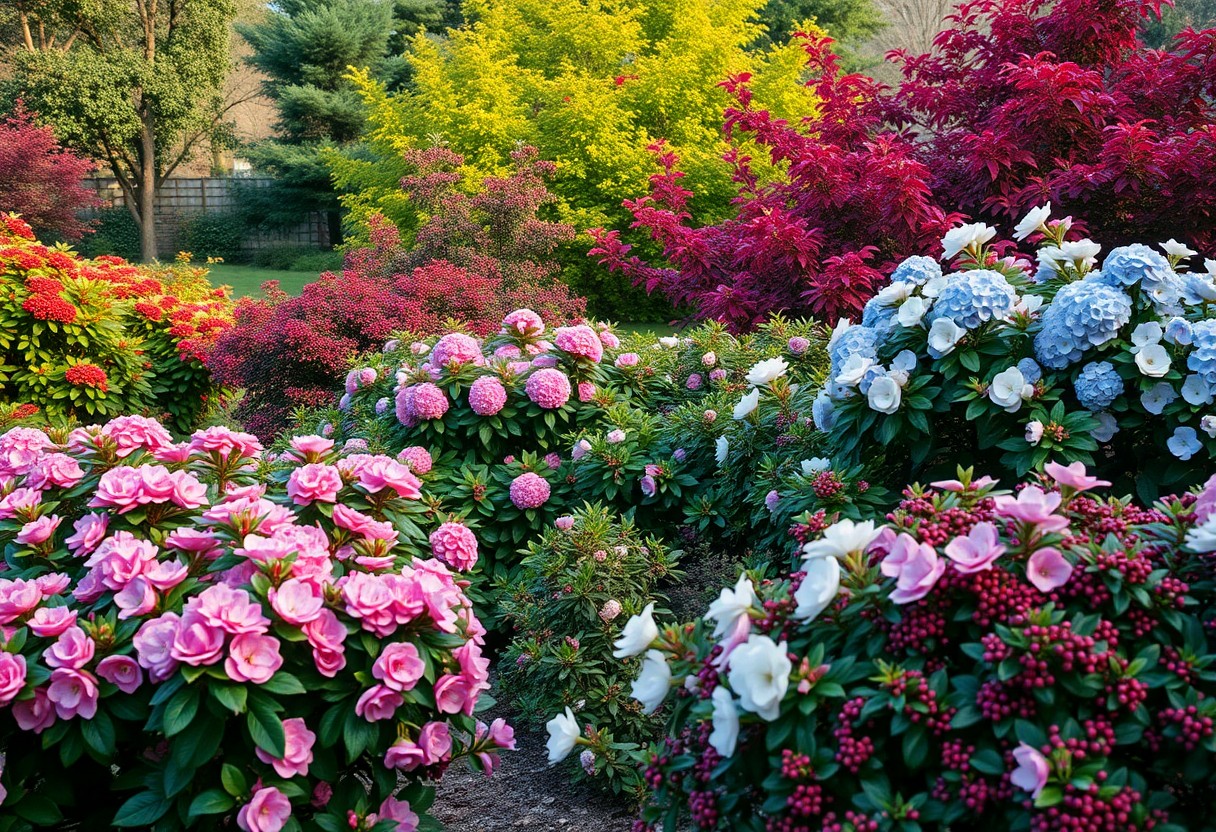
Azalea aside, when you consider Lilac and Forsythia, you’ll find that these shrubs offer more than just a fleeting display of color; they provide a structural element to your garden throughout the year, with Lilac’s conical blooms and Forsythia’s arching branches creating a striking backdrop for other plants to flourish.
Summer Interest

Despite the heat, you can still enjoy vibrant shrubs in your garden. For inspiration, check out 31 Flowering Shrubs for Year-Round Color to find the perfect fit for your garden.

Hydrangea and Viburnum

Along with other varieties, you’ll find that hydrangea and viburnum offer beautiful blooms and attractive foliage, making them great additions to your summer garden.

Rose and Lavender

The rose and lavender shrubs provide a fragrant and stunning display of color, perfect for your outdoor space, and you can choose from a variety of types to suit your taste.

Viburnum and other flowering shrubs, like rose and lavender, can add depth and interest to your garden, and as you consider your options, you’ll find that choosing the right shrubs will enhance your overall outdoor experience, allowing you to enjoy your garden throughout the summer months.

Autumn Color

Keep your garden vibrant during the autumn season with shrubs that offer striking foliage and colorful displays. You can choose from a variety of species that provide beautiful autumn color, adding depth and interest to your landscape.

Burning Bush and Maple

For a dramatic display of autumn color, consider planting Burning Bush or Maple shrubs in your garden. You will be treated to vibrant red and orange hues that will add a pop of color to your landscape during the fall season.

Oakleaf Hydrangea and Barberry

Above all, Oakleaf Hydrangea and Barberry are excellent choices for autumn interest, offering stunning fall foliage and attractive berries that will add beauty to your garden. You can enjoy the unique textures and colors they provide, making your garden a beautiful haven.

The Oakleaf Hydrangea and Barberry shrubs are great additions to your garden, as they provide year-round interest and require minimal maintenance. You can plant them in well-draining soil and enjoy their beautiful display of autumn color, as well as their attractive flowers and berries during other times of the year, making them a great choice for your landscape.

Winter Interest

Not all shrubs go dormant in winter, and you can enjoy year-round interest with the right choices. Look for shrubs with attractive bark, berries, or evergreen foliage to add winter appeal to your garden.

Snowberry and Winterberry

One of the best options for winter interest is shrubs with persistent berries, such as snowberry or winterberry, which provide a pop of color in your winter landscape, attracting birds and other wildlife to your garden.

Ornamental Grasses and Bark

Any gardener can appreciate the beauty of ornamental grasses and interesting bark, which add texture and visual interest to your winter garden, providing a unique landscape even in the coldest months.

Bark can be a stunning feature in your winter garden, with options like paperbark maple or river birch offering a beautiful, peeling bark that adds depth and character to your landscape, and when combined with ornamental grasses, creates a striking winter scene that you will enjoy from the comfort of your home.

Maintenance and Care

Your shrubs will require regular maintenance to ensure they continue to thrive and provide year-round interest, this includes pruning, fertilizing, and watering, all of which will help maintain their health and appearance.

Pruning and Deadheading

Besides regular upkeep, pruning and deadheading are important for promoting healthy growth and encouraging blooming, you will need to remove dead or damaged branches and spent flowers to keep your shrubs looking their best.

Fertilization and Watering

Deadheading aside, fertilization and watering are also vital for the health of your shrubs, you should fertilize them at the appropriate time of year and water them regularly, but avoid overwatering which can be detrimental to their health.

Plus, when it comes to fertilization and watering, you will want to consider the specific needs of each shrub, as some may require more or less of either, and you should also take into account the climate and soil type in your area to ensure you are providing your shrubs with the best possible care.
Final Words

With these considerations, you can create a stunning landscape with the best shrubs for year-round interest. You will find the perfect additions to your garden by exploring 9 Evergreen Shrubs for Year-Round Interest, enhancing your outdoor space with beauty and vibrancy throughout the year, making your yard a haven that you will enjoy all year round.

FAQ

Q: What are the best shrubs for year-round interest in my garden?

A: The best shrubs for year-round interest are those that provide a combination of beautiful flowers, attractive foliage, and interesting berries or bark. Some examples include Hydrangea, Viburnum, and Holly. These shrubs offer a dynamic display of colors and textures throughout the seasons, from vibrant blooms in the spring and summer to rich foliage and berries in the fall and winter.

Q: How do I choose the right shrubs for my climate and soil type?

A: To choose the right shrubs for your climate and soil type, consider factors such as hardiness zone, sun exposure, and soil pH. For example, if you live in a cooler climate, choose shrubs like Boxwood or Yew that are tolerant of frost and cold temperatures. If you have poor soil, consider shrubs like Lilac or Forsythia that are adaptable to a range of soil conditions. Consult with a local nursery or gardening expert to determine the best shrubs for your specific region and soil type.

Q: What are some low-maintenance shrubs for year-round interest?

A: Some low-maintenance shrubs for year-round interest include shrubs like Burning Bush, Barberry, and Russian Cypress. These shrubs are drought-tolerant, disease-resistant, and require minimal pruning, making them perfect for busy gardeners or those new to gardening. They still offer beautiful foliage, flowers, or berries, but with less upkeep and care.

Q: Can I grow shrubs in containers for year-round interest?

A: Yes, many shrubs can be grown in containers for year-round interest. Choose compact or dwarf varieties of shrubs like Azalea, Rhododendron, or Camellia, and select a container that is large enough to accommodate the mature size of the shrub. Make sure the container has good drainage and use a well-draining potting mix to prevent waterlogged soil. Container-grown shrubs may require more frequent watering and fertilization, but they can thrive with proper care.

Q: How often should I prune my shrubs to maintain year-round interest?

A: The frequency of pruning depends on the type of shrub and its growth habits. Some shrubs, like Hydrangea and Lilac, require annual pruning to maintain shape and promote blooming. Others, like Boxwood and Yew, may need regular pruning to maintain a formal shape or hedge. Prune shrubs at the right time of year, typically in late winter or early spring, and remove any dead, diseased, or damaged branches to maintain the health and appearance of the shrub. Consult with a gardening expert or check the specific pruning requirements for your shrub variety to ensure you are pruning correctly.

How can you build and maintain a backyard greenhouse for year-round food production

It’s time to bring the farm to your backyard! In this guide, you will learn how to construct and care for a backyard greenhouse that will provide you with fresh produce all year long. From selecting the right materials to maintaining the ideal growing conditions, we will walk you through each step of creating your own sustainable food source. Embrace the joy of growing your own food right outside your door, with a backyard greenhouse that will nurture both you and the environment.

Key Takeaways:

  • Choose the right location: Place your greenhouse in a spot that receives maximum sunlight throughout the day and is protected from strong winds.
  • Proper insulation is crucial: Insulate your greenhouse well to retain heat during colder months and regulate temperature fluctuations.
  • Stay on top of maintenance: Regularly clean your greenhouse, monitor for pests, check the heating system, and ensure proper ventilation to keep your plants healthy year-round.

Assessing Your Yard and Climate

Before you launch on setting up a backyard greenhouse for year-round food production, it’s vital to evaluate your yard’s suitability and understand your local climate. Start by checking out resources such as What is possible to grow in a greenhouse all year round? to get an idea of what crops thrive in greenhouse environments.

Evaluating Your Yard’s Sunlight and Wind Patterns

Sunlight is crucial for the success of your greenhouse. Observe how the sun moves across your yard throughout the day. Ideally, you want your greenhouse to receive at least 6-8 hours of direct sunlight daily for optimal plant growth. Take note of any obstacles that may cast shadows, such as trees or buildings. Additionally, consider the direction and strength of prevailing winds to protect your greenhouse from potential damage.

Determining Your Local Climate and Its Effects on Plant Growth

Any successful greenhouse operation hinges on understanding your local climate. Research the average temperatures, frost dates, and humidity levels in your area to choose plants that can thrive under these conditions. Consider investing in a thermometer to monitor internal temperatures within your greenhouse and make any necessary adjustments to create a conducive environment for your plants.

Choosing the Right Greenhouse Design

Assuming you are considering building a backyard greenhouse for year-round food production, it is imperative to choose the right design that suits your space, needs, and budget. Different greenhouse designs offer various advantages and considerations to keep in mind.

Types of Greenhouses: Hoop Houses, A-Frame, and Geodesic Domes

Pertaining to choosing the type of greenhouse for your backyard, there are several popular options to consider. Hoop houses, A-frame structures, and geodesic domes all have their unique features and benefits. Here is a comparison:

Houses Considerations
Hoop Houses – Affordable option
– Easy to assemble and disassemble
– Good for limited space
A-Frame – Aesthetically pleasing
– Good for shedding snow
– Provides more headroom
Geodesic Domes – Strong and durable structure
– Efficient air circulation
– Suitable for extreme weather conditions

Any of these greenhouse styles can be a great choice for year-round food production. Consider your climate, available space, and budget before making a decision.

Considerations for Size, Material, and Budget

Domes should be your ideal choice, considering their strength and durability. Geodesic domes are known for being stable in harsh weather conditions and providing efficient air circulation, which is beneficial for plant growth. Ensure the dome size fits your available space, choose high-quality materials for longevity, and consider your budget for construction and maintenance costs.

Building Your Greenhouse

Preparing the Site and Laying the Foundation

Not every spot in your backyard is ideal for a greenhouse. You’ll want to choose a location that receives plenty of sunlight throughout the day and is sheltered from strong winds. Once you’ve selected the perfect spot, it’s time to prepare the site. Clear the area of any debris, level the ground, and consider laying a sturdy foundation to ensure the stability and longevity of your greenhouse.

Framing and Installing the Roof and Walls

Installing the frame of your greenhouse is a crucial step in the construction process. Choose a durable material such as cedar or treated lumber for the frame to withstand the elements. As you assemble the frame, ensure it is level and square to provide a sturdy structure. Once the frame is in place, carefully install the roof and walls, making sure to secure them properly to withstand harsh weather conditions.

Roofing materials such as polycarbonate panels or glass can provide ample sunlight for your plants while insulating the greenhouse. Proper insulation will help regulate the temperature inside, creating a suitable environment for year-round food production.

Adding Doors, Vents, and Irrigation Systems

Building doors and vents into your greenhouse allow for proper airflow and temperature control. Consider adding a ventilation system with adjustable openings to regulate the internal climate. Additionally, installing an irrigation system will ensure your plants receive the water they need consistently. Drip irrigation systems are efficient and can be easily integrated into your greenhouse to keep your plants thriving.

Irrigation systems are important for maintaining a steady supply of water to your plants, especially during hot summer months or if you live in a region with erratic rainfall. By setting up a reliable watering system, you can ensure that your crops receive adequate hydration for healthy growth and abundant harvests.

Selecting the Right Crops for Year-Round Production

Cool-Season Crops for Winter and Early Spring

For year-round food production in your backyard greenhouse, it’s important to choose crops that thrive in cooler temperatures during the winter and early spring months. Any vegetable varieties such as kale, spinach, lettuce, arugula, carrots, and radishes are excellent choices for cool-season crops. These plants can withstand lower temperatures and shorter daylight hours, providing you with a bountiful harvest even in the colder months.

Warm-Season Crops for Summer and Late Spring

With the arrival of summer and late spring, you can transition to warm-season crops that thrive in higher temperatures and longer daylight hours. Any crops like tomatoes, cucumbers, peppers, eggplants, and basil are ideal for this time of year. These plants require warmer conditions to grow and produce, making them perfect for maximizing your greenhouse’s productivity during the summer months.

The key to successfully growing warm-season crops in your greenhouse is to ensure adequate ventilation and temperature control. Proper air circulation and shading will help prevent overheating and ensure optimal growing conditions for your plants.

Using Succession Planting for Continuous Harvests

The key to maximizing your greenhouse’s productivity and ensuring a continuous harvest throughout the year is to implement succession planting strategies. Cool-season crops can be followed by warm-season crops to make the most of your growing space and extend the harvest season. CoolSeason By staggering plantings and utilizing different varieties with varying maturation times, you can enjoy a steady supply of fresh produce from your greenhouse.

Another benefit of succession planting is that it helps prevent a glut of one type of crop while ensuring a diverse and balanced harvest. By planning your plantings strategically and rotating crops, you can optimize your greenhouse for year-round food production and enjoy a variety of fruits and vegetables throughout the seasons.

Soil Preparation and Management

Testing and Amending Your Soil for Optimal Health

To ensure successful year-round food production in your backyard greenhouse, it’s necessary to start with healthy soil. An important first step is to test your soil to understand its nutrient composition and pH levels. You can send a sample to a local agricultural extension office or use at-home soil testing kits. Once you have test results, amend your soil as needed by adding organic matter such as compost, aged manure, or other soil conditioners to improve its structure and fertility.

Using Compost and Mulch to Conserve Moisture and Suppress Weeds

The use of compost and mulch is key to maintaining moisture in your greenhouse soil, reducing water usage, and suppressing weed growth. Compost enriches the soil with necessary nutrients and microorganisms, promoting healthy plant growth. Mulch, such as straw, leaves, or wood chips, acts as a protective layer that retains moisture, regulates soil temperature, and helps control weed growth. By regularly adding compost and mulch to your greenhouse soil, you create a sustainable environment that supports the continuous production of fresh, healthy crops.

More about Using Compost and Mulch to Conserve Moisture and Suppress Weeds

It is important to apply a thick layer of compost and mulch around your plants to reap the full benefits of moisture conservation and weed suppression. Additionally, using organic mulch materials ensures that as the mulch decomposes, it adds organic matter to the soil, further enhancing its fertility and structure. Regular replenishment of compost and mulch throughout the year will help maintain a balanced ecosystem in your backyard greenhouse, supporting a bountiful harvest of fresh produce.

Managing Temperature, Humidity, and Light

Unlike outdoor gardening, managing temperature, humidity, and light in a backyard greenhouse requires more attention to detail and possibly the use of additional tools or systems. These factors play a crucial role in the success of your year-round food production.

Heating and Cooling Strategies for Extreme Weather Maintaining Optimal Humidity and Light Levels for Plant Growth

Cooling: Heating and Cooling Strategies for Extreme Weather

During hot summer days, your greenhouse can quickly turn into a sweltering sauna. To combat this, consider installing shade cloths to reduce the amount of direct sunlight and heat entering the greenhouse. Additionally, good ventilation is key to allowing hot air to escape. Automatic vents or fans can help regulate the temperature inside the greenhouse.

One: Maintaining Optimal Humidity and Light Levels for Plant Growth

One of the challenges in greenhouse gardening is maintaining the right balance of humidity and light for your plants. Too much or too little of either can hinder their growth. To ensure optimal conditions, monitor the humidity levels regularly using a hygrometer and adjust as needed by watering your plants strategically and using a dehumidifier if necessary. Similarly, make sure your plants are receiving adequate light by positioning them correctly in the greenhouse and considering supplemental grow lights for darker days.

Managing temperature, humidity, and light in your backyard greenhouse is a continuous process that requires observation and adjustment. By staying attentive to these factors and implementing the right strategies, you can create an ideal environment for your plants to thrive year-round.

Pest and Disease Management

All successful greenhouse gardeners know that pest and disease management is crucial for maintaining a healthy and productive growing environment. Fortunately, there are several natural methods you can implement to control pests and diseases in your backyard greenhouse.

Natural Methods for Controlling Pests and Diseases

Controlling pests and diseases in your greenhouse can be effectively achieved through natural methods such as companion planting, using physical barriers like row covers, practicing good sanitation by removing diseased plants promptly, and maintaining proper air circulation to reduce humidity levels that can promote fungal growth.

Furthermore, you can make your own organic pesticides and fungicides using ingredients like neem oil, garlic, or soap solutions to deter common greenhouse pests without harming beneficial insects or affecting the quality of your produce.

Integrating Beneficial Insects and Microorganisms into Your Ecosystem

Pest control in your greenhouse can also be enhanced by integrating beneficial insects like ladybugs, lacewings, and predatory mites, which naturally feed on pests like aphids, mites, and whiteflies. Additionally, introducing beneficial microorganisms such as mycorrhizal fungi and beneficial bacteria into your soil can help improve nutrient uptake and plant immune systems, reducing the likelihood of disease outbreaks.

Understanding the delicate balance of your greenhouse ecosystem and incorporating beneficial insects and microorganisms can create a harmonious environment where pests are kept in check naturally, minimizing the need for harsh chemicals and promoting sustainable gardening practices.

Summing up

On the whole, building and maintaining a backyard greenhouse for year-round food production can be a rewarding and sustainable endeavor. By following the steps outlined in this article and dedicating time and effort to care for your plants, you can enjoy a bountiful harvest throughout the year. Remember to consider factors such as location, ventilation, heating, and watering to ensure the success of your greenhouse. With proper planning and commitment, you can create a thriving ecosystem that provides fresh produce for you and your family all year long.

FAQ

Q: What materials are needed to build a backyard greenhouse for year-round food production?

A: To build a backyard greenhouse, you will need materials such as PVC pipes or metal tubing for the frame, plastic sheeting or greenhouse panels for covering, a door or entryway, ventilation system, shelving or tables for plants, and various tools such as screws, drills, and hammers to assemble the structure.

Q: How can I maintain a backyard greenhouse for year-round food production?

A: To maintain a backyard greenhouse for year-round food production, it is important to regularly monitor and control the temperature, humidity, and ventilation inside the greenhouse. You will also need to water and fertilize your plants as needed, ensure proper air circulation, and regularly inspect for pests and diseases. Additionally, pruning, trellising, and rotating crops can help optimize space and maximize production.

Q: What are some tips for maximizing year-round food production in a backyard greenhouse?

A: To maximize year-round food production in a backyard greenhouse, consider using raised beds or containers for planting, utilizing vertical space with hanging baskets or trellises, incorporating companion planting to enhance growth and deter pests, and experimenting with different varieties of crops that thrive in greenhouse conditions. Additionally, maintaining a planting schedule and researching optimal growing conditions for each crop can help ensure a bountiful harvest throughout the year.

Opaye Skip to content