lawn

Top Tips for Maintaining a Healthy Lawn

You take pride in your lawn, and you want it to thrive. To achieve this, you need to focus on proper care. You can start by learning the basics, such as mowing, watering, and fertilizing. For a more detailed guide, you can check out 5 Steps to a Healthy Lawn to get your lawn in top shape. By following these tips, you will be on your way to a lush, green lawn that you can enjoy all year round.

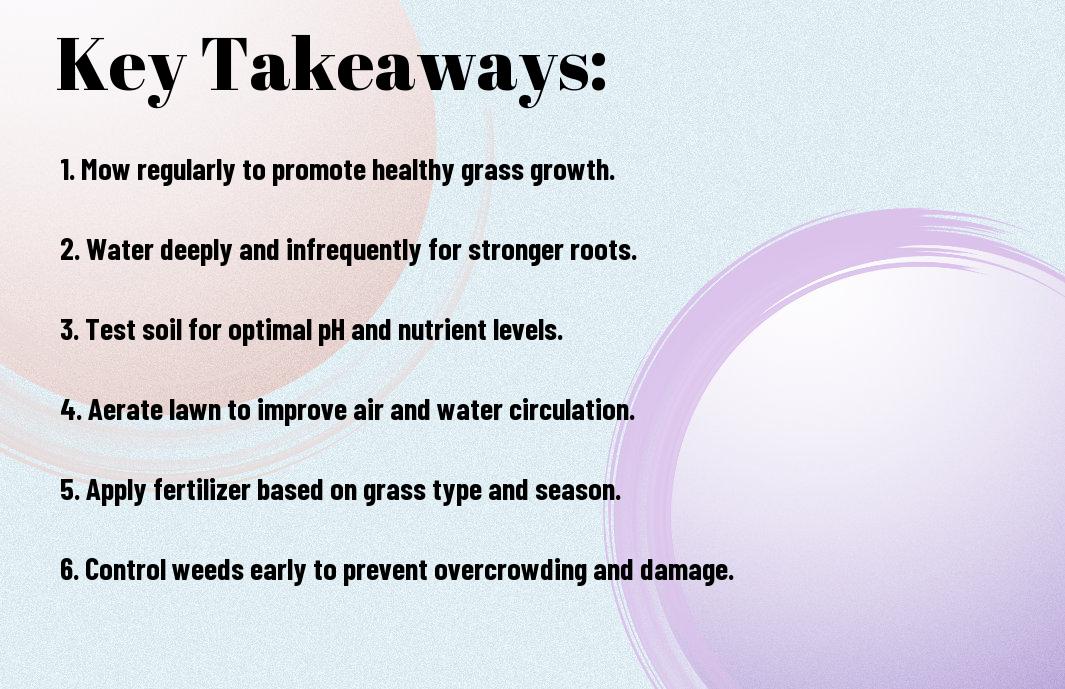
Key Takeaways:

To keep your lawn looking its best, consider the following tips:

  • Regular mowing is important for maintaining a healthy lawn, as it helps to promote even growth and prevent weeds from taking over. Aim to mow your lawn at least once a week during the growing season.
  • Proper watering techniques are vital for keeping your lawn healthy and hydrated. Avoid overwatering, which can lead to shallow root growth and make your lawn more susceptible to disease.
  • Applying fertilizer at the right time can give your lawn the nutrients it needs to thrive. Choose a fertilizer that is high in nitrogen, phosphorus, and potassium, and apply it during the growing season for optimal results.

Lawn Care Essentials

While a healthy lawn requires regular attention, you can achieve it with the right techniques. You’ll need to focus on basic care practices to keep your lawn thriving.

Mowing and Watering

Above all, proper mowing and watering habits are vital. You should mow your lawn regularly and water it deeply to promote healthy growth.

Fertilization and Pest Control

Controlling weeds and pests is key to a healthy lawn. You must apply fertilizers and pesticides at the right time to prevent damage to your grass.

But as you research deeper into fertilization and pest control, you’ll find that it’s not just about applying products. You need to consider your lawn’s specific needs, including the type of grass, climate, and soil conditions, to choose the right fertilizers and pest control methods, and apply them in a way that minimizes harm to the environment and your family.
Soil Quality

There’s no healthy lawn without good soil. You need to assess your soil type and adjust your care routine accordingly. Your soil’s composition and pH level will determine the right fertilizers and amendments to use.

pH Balance and Testing

Similar to soil composition, pH balance is vital for your lawn’s health. You should test your soil’s pH level regularly to ensure it’s optimal for your grass type.

Soil Amendments and Aeration

Soil structure can be improved with amendments like compost or manure. You can also aerate your soil to increase air and water circulation, promoting healthy root growth.

Another key aspect of soil care is maintaining proper nutrient levels. You can add fertilizers or organic matter to enrich your soil, but be careful not to overdo it, as this can harm your lawn. By monitoring your soil’s condition and making adjustments as needed, you’ll be on your way to a lush, thriving lawn.

Weed and Pest Management

Once again, you’ll need to take action to keep your lawn healthy. You must manage weeds and pests to prevent damage.

Identification and Removal

The key to a healthy lawn is identifying and removing weeds and pests. You can hand-pull weeds or use an herbicide, and pick off pests like white grubs and chinch bugs.

Prevention and Control Methods

Above all, preventing weeds and pests is better than treating them. You can use physical barriers, like mulch, or cultural controls, like proper mowing and watering, to prevent them.

Control methods include using targeted herbicides or insecticides, introducing beneficial insects, or practicing good sanitation. You can also use organic methods, like neem oil or diatomaceous earth, to control pests and weeds, keeping your lawn healthy and lush, with minimal effort from you.

Lawn Aesthetics

All lawns require attention to detail to maintain their visual appeal. You can achieve this by keeping your lawn well-manicured and incorporating decorative elements.

Gardening and Landscaping

Growing beautiful plants and flowers around your lawn enhances its beauty. You can add trees, shrubs, and flower beds to create a unique landscape.

Outdoor Lighting and Decor

Across your lawn, you can add lighting and decorations to create ambiance. You can use solar-powered lights and decorative items like bird baths and sculptures.

Another aspect of outdoor lighting and decor is highlighting your lawn’s best features. You can use spotlights to accentuate certain areas, like a garden or water feature, making your lawn more inviting and visually appealing to you and your guests.

Seasonal Maintenance

For a healthy lawn, you’ll need to adapt your maintenance routine to the changing seasons. This means adjusting your mowing, watering, and fertilizing schedule to match the time of year.

Spring and Summer Care

Above all, your lawn needs regular mowing and watering during spring and summer. You’ll want to keep your grass at a moderate height and ensure it gets enough moisture to withstand the heat.

Autumn and Winter Preparation

Autumnally, your lawn will start to prepare for dormancy, and you’ll need to adjust your care accordingly. You’ll want to reduce mowing and fertilizing, and focus on cleaning up leaves and debris.

Considering the colder months ahead, you’ll want to take steps to protect your lawn from damage. You’ll need to aerate the soil, apply a winterizer fertilizer, and keep an eye out for disease and pests that can damage your lawn during this time. By taking these steps, you can help your lawn stay healthy and strong until the growing season starts again.

Common Lawn Problems

Now that you’ve taken steps to maintain your lawn, you’ll need to identify potential issues. Your lawn can be affected by various problems, including disease, pests, and environmental factors. You’ll need to monitor your lawn regularly to catch these issues early.

Disease and Fungal Issues

For healthy grass, you’ll want to watch out for diseases like powdery mildew and rust. These can spread quickly, damaging your lawn. You can prevent them by improving air circulation and reducing moisture.

Insect and Pest Infestations

Frequently, your lawn may be invaded by insects like white grubs and chinch bugs. These pests can cause significant damage, so you’ll need to take action quickly. You can use natural methods or pesticides to control infestations.

For instance, if you notice unusual damage or discoloration, you may have an insect or pest problem. You can inspect your lawn carefully to identify the issue and choose the best solution. You’ll need to consider the type of pest, the size of the infestation, and the best treatment method to protect your lawn.
Conclusion

Taking this into account, you’ve learned what it takes to keep your lawn healthy. You now know the basics to make your yard thrive. With these tips, you can create a lush outdoor space that brings you peace and satisfaction. Your lawn will be the envy of the neighborhood, and you’ll enjoy the fruits of your labor. You’ve got the tools, now get to work and make your lawn the best it can be.

FAQ

Q: What is the best way to water my lawn to keep it healthy?

A: The best way to water your lawn is to do it deeply but infrequently. This encourages the roots of the grass to grow deeper, making the lawn more resistant to drought and disease. Aim to provide about 1-2 inches of water per week, either from rain or irrigation. It’s also best to water your lawn in the early morning or late evening to minimize evaporation and reduce the risk of fungal diseases.

Q: How often should I mow my lawn to maintain its health?

A: The frequency of mowing depends on the type of grass and the growth rate. As a general rule, it’s best to maintain your lawn at a height of 2.5-3 inches. For most grass types, this means mowing about once a week during the growing season. However, it’s also important not to cut more than one-third of the grass blade in a single mowing, as this can stress the lawn. Adjust your mowing schedule according to the growth rate of your lawn and the season.

Q: What type of fertilizer is best for my lawn, and when should I apply it?

A: The best type of fertilizer for your lawn depends on the type of grass, the soil pH, and the time of year. A balanced, slow-release fertilizer (e.g., 10-10-10 NPK) is a good choice for most lawns. For cool-season grasses, apply fertilizer in the fall to promote root growth and prepare the lawn for the next growing season. For warm-season grasses, apply fertilizer in the late spring to early summer to promote growth during the active growing season. Always follow the instructions on the fertilizer package and perform a soil test to determine the specific needs of your lawn.

Q: How can I control weeds in my lawn without using chemical herbicides?

A: Controlling weeds without chemical herbicides requires a combination of cultural, mechanical, and organic methods. Improving the overall health and density of your lawn through proper mowing, watering, and fertilization can help suppress weeds. Mechanical methods include hand-weeding, using a tool like a hoe for larger areas, and applying mulch or landscaping fabric to prevent weed seeds from germinating. Organic herbicides, such as those based on vinegar or soap, can also be effective. Regularly maintaining your lawn and addressing weeds as soon as they appear can prevent them from becoming a major issue.

Q: How often should I aerate my lawn to maintain its health and appearance?

A: Lawn aeration is an necessary maintenance practice that helps improve air, water, and nutrient circulation to the roots of the grass. For most lawns, aeration is needed once a year. The best time to aerate depends on the type of grass: for cool-season grasses, aerate in the fall, while for warm-season grasses, aerate in the late spring to early summer. Aeration can be done manually with a fork for small lawns or with a mechanical aerator for larger areas. It’s also a good idea to combine aeration with other lawn care practices, such as applying fertilizer or overseeding, to maximize the benefits.

How to Keep Your Lawn Lush Without Overwatering

As you stroll through your garden, you desire a lush, vibrant lawn that is the envy of your neighbors. You wish to nurture your grass with precision, avoiding the pitfalls of overwatering that can lead to unsightly brown patches and wasting precious resources. In this guide, you will discover the secrets to maintaining a thriving lawn, with just the right amount of moisture to keep your grass healthy and resilient, ensuring your outdoor space remains a haven of beauty and serenity throughout the year.

Key Takeaways:

To maintain a healthy and lush lawn without overwatering, consider the following points:

  • Use efficient irrigation systems that deliver water directly to the roots of the plants, reducing evaporation and runoff, and allowing you to conserve water while keeping your lawn healthy.
  • Implement smart watering schedules that take into account weather conditions, soil type, and the specific needs of your lawn, to avoid overwatering and prevent waste.
  • Monitor your lawn’s moisture levels regularly and adjust your watering habits accordingly, using techniques such as soil testing to determine the optimal amount of water for your lawn to thrive.

Preparing Your Lawn

While tending to your lawn, you must consider the foundational elements that contribute to its health and vitality. Your actions will have a significant impact on the overall appearance and resilience of your lawn.

Assessing Soil Type

Evaluating the composition of your soil is crucial, as it will inform your decisions regarding watering and fertilization, allowing you to tailor your approach to meet the specific needs of your lawn, thus ensuring its optimal condition.

Choosing the Right Grass

Analyzing the various types of grass available will help you select the most suitable variety for your climate and soil, enabling you to create a lush and vibrant landscape that thrives under your care.

At this stage, you will need to explore deeper into the characteristics of different grass species, considering factors such as drought tolerance, shade tolerance, and maintenance requirements, to make an informed decision that suits your lifestyle and the unique conditions of your lawn, ultimately leading to a beautiful and sustainable outdoor space that you can enjoy for years to come.

Watering Strategies

Some of the most effective methods for maintaining a lush lawn involve adopting a thoughtful approach to watering, whereby you carefully consider the needs of your grass and the environment in which it grows, adjusting your watering schedule accordingly to prevent overwatering.

Measuring Rainfall

Around the time of year when rainfall is plentiful, you will find that your lawn requires less supplemental watering, and by monitoring the amount of rainfall your lawn receives, you can adjust your watering schedule to ensure your lawn stays healthy and thriving.

Installing a Rain Sensor

Watering your lawn with precision can be achieved by installing a rain sensor, which will automatically adjust your irrigation system to account for rainfall, thereby preventing overwatering and ensuring your lawn receives just the right amount of moisture.

Sensor technology can be a valuable tool in your quest to maintain a lush, vibrant lawn, as it allows you to customize your watering schedule to meet the unique needs of your lawn, taking into account factors such as soil type, climate, and grass species, and with proper installation and maintenance, a rain sensor can help you achieve a beautiful, healthy lawn while also conserving water.

Maintaining Optimal Moisture

Your lawn’s moisture levels are vital to its health, and you must take great care to ensure it is not too dry or too wet, for this can lead to a multitude of problems, including disease and pests.

Mowing and Aeration

Akin to a gentle summer breeze, after the initial watering, you should consider mowing and aerating your lawn to promote healthy growth and prevent thatch buildup, allowing your lawn to breathe and absorb moisture more efficiently.

Controlling Weeds and Pests

Much like a meticulous gardener, mowing your lawn regularly will help prevent weeds from taking hold, and by using natural methods to control pests, you can maintain a balance that will keep your lawn lush and healthy, free from the ravages of unwanted invaders.

Understanding the types of weeds and pests that can afflict your lawn is key to controlling them, and you will find that by using a combination of physical barriers, organic pest control methods, and careful observation, you can keep these unwanted visitors at bay, allowing your lawn to flourish under your tender care.

Monitoring and Adjusting

Despite your best efforts, your lawn’s watering needs may change over time. You must be vigilant and adapt your strategy to ensure your lawn remains lush and healthy.

Tracking Weather Patterns

Beneath the surface of your daily routine, you should keep an eye on the weather forecast to anticipate and prepare for extreme weather conditions that may affect your lawn’s hydration needs.

Soil Moisture Testing

Alongside your regular lawn care routine, you will need to test the moisture levels in your soil to determine if your lawn is receiving the right amount of water, and you can do this by inserting a finger into the soil or using a soil moisture probe.

Another aspect of soil moisture testing involves observing your lawn’s appearance, as a healthy lawn will have a vibrant color and springy texture, while a lawn that is overwatered or underwatered will appear wilted and discolored, allowing you to adjust your watering schedule accordingly to achieve the perfect balance for your lawn’s optimal health.

Efficient Irrigation Systems

Once again, you find yourself pondering the secrets to a lush lawn, and efficient irrigation systems hold the key. You can discover more about maintaining a healthy lawn by visiting 7 Lawn Care Tips for A Lush Green Lawn, a treasure trove of advice for the discerning homeowner.

Drip Irrigation and Soaker Hoses

With the aid of drip irrigation and soaker hoses, you can deliver water directly to the roots of your plants, minimizing waste and ensuring your lawn receives the perfect amount of moisture.

Smart Watering Controllers

Among the innovative solutions available, smart watering controllers stand out as a viable option, allowing you to tailor your irrigation schedule to the unique needs of your lawn.

It is worth noting that these controllers can be programmed to adjust watering times based on weather conditions, soil moisture levels, and other factors, ensuring your lawn receives the right amount of water, every time, and helping you to maintain a lush, vibrant exterior that is the envy of all who lay eyes on it, as you work to keep your lawn healthy and thriving, with your careful attention to its needs.

Seasonal Considerations

All lawns require tailored care, and you can find tips on How to get a lush green lawn to achieve the desired look.

Summer and Drought Management

To maintain a lush lawn during summer, you should adjust your watering schedule to accommodate the increased heat, ensuring your lawn stays healthy and vibrant.

Winter and Freeze Protection

Before the first frost, you must take steps to protect your lawn from the harsh winter conditions, applying a suitable fertilizer to promote root growth during the dormant season.

It is especially important, as you prepare your lawn for the cold months ahead, to choose the right type of protection, considering factors such as temperature fluctuations and potential snowfall, to ensure your lawn remains lush and resilient when spring arrives, and you can once again enjoy its beauty.

Summing up

On the whole, you have now garnered the important knowledge to tend to your lawn with precision, thereby keeping it lush without overwatering. You will monitor your lawn’s moisture levels, adjust your watering schedule accordingly, and perhaps implement more efficient irrigation systems. By heeding these guidelines, you will be able to nurture a vibrant and thriving lawn, one that brings you joy and serenity, while also conserving this precious resource, water, for your own benefit and that of your surroundings. Your lawn will flourish under your diligent care.

FAQ

Q: What is the best way to determine if my lawn needs watering?

A: Check your lawn by walking on it – if the grass springs back up after you step on it, it’s likely fine. But if it stays flat, it’s time to water. You can also check the soil moisture by inserting a finger into the soil up to the knuckle. If the soil feels dry, it’s time to water. Additionally, consider using a rain sensor or smart watering controller to help you determine the optimal watering schedule for your lawn.

Q: How often should I water my lawn to keep it lush without overwatering?

A: The frequency of watering depends on the type of grass, climate, and soil type. As a general rule, most lawns need about 1-2 inches of water per week, either from rain or irrigation. It’s best to water deeply but infrequently to encourage deep root growth and make your lawn more drought-resistant. For example, watering your lawn once or twice a week for 20-30 minutes is better than watering it every day for 5-10 minutes.

Q: What are some signs of overwatering that I should look out for?

A: Some common signs of overwatering include: yellowing or browning of the grass, spongy or soft soil, shallow roots, and an increased risk of pests and diseases. If you notice any of these signs, it’s likely that you’re overwatering your lawn. To avoid overwatering, make sure to check the soil moisture before watering, and avoid watering during peak sun hours or when the soil is already saturated.

Q: Can I use drought-tolerant grass species to reduce watering needs?

A: Yes, using drought-tolerant grass species can significantly reduce watering needs. Some popular drought-tolerant grass species include buffalo grass, blue grama grass, and Bermuda grass. These grasses have deeper roots and are more efficient at using water, making them ideal for areas with low rainfall or water restrictions. Additionally, consider using a mix of grass species to create a more resilient and adaptable lawn.

Q: Are there any additional tips for keeping my lawn lush without overwatering?

A: Yes, here are a few additional tips: maintain your lawn mower at a height of 2.5-3 inches to promote deep root growth, leave grass clippings on the lawn to act as a natural fertilizer, and use organic fertilizers or compost to promote healthy soil biota. Additionally, consider aerating your lawn once a year to improve soil drainage and reduce soil compaction. By following these tips and being mindful of your watering schedule, you can keep your lawn lush and healthy without overwatering.

Opaye Skip to content