As you bring succulents into your home, you’ll want to ensure you’re providing the best environment for them to thrive. You can start by learning about the specific needs of your plants. For a comprehensive understanding, you can visit a Complete guide to succulent care to understand what your succulents require to stay healthy and flourish under your care, allowing you to enjoy their unique beauty for years to come.
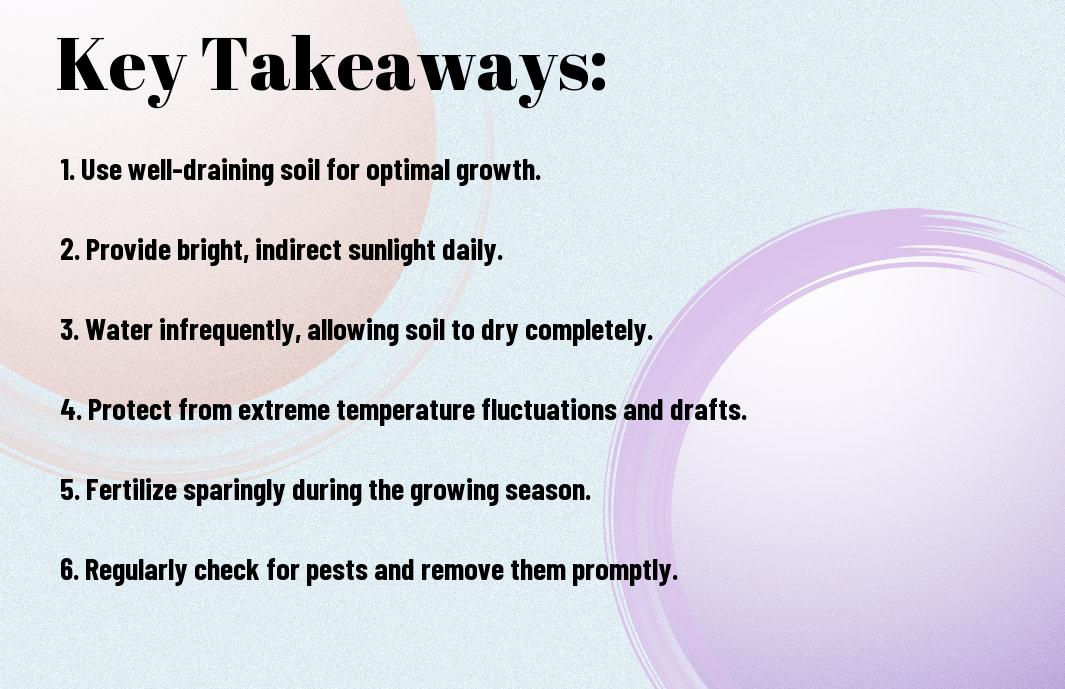
Key Takeaways:
To keep your succulents happy and thriving indoors, consider the following points:
- Provide Bright Light: Most succulents need direct sunlight to photosynthesize and grow, so place them near a sunny window or under grow lights.
- Water Sparingly: Succulents are prone to overwatering, so make sure to water them only when the soil is dry to the touch, and avoid getting water on the leaves to prevent rot.
- Maintain Good Air Circulation: Succulents need airflow to prevent fungus and pests, so keep them at least 6-8 inches away from any walls or other plants, and avoid humid environments.
Choosing the Right Succulents
While selecting succulents for indoor care, you need to consider several factors, including your lifestyle and the environment you can provide for your plants. You should think about the amount of time you have to dedicate to caring for your succulents and the conditions in your home.
Selecting Low-Maintenance Species
Around the globe, there are numerous low-maintenance succulent species that are perfect for indoor care, and you can choose ones that fit your needs and preferences. You can opt for species like aloe, echeveria, or crassula, which are known for their ease of care.
Considering Lighting Requirements
Along with choosing the right species, you also need to consider the lighting requirements for your succulents, as you want to ensure they receive the right amount of light to thrive. You should assess the lighting in your home and choose succulents that can tolerate the conditions you can provide.
Due to the varying lighting needs of different succulent species, you need to research the specific requirements of the plants you’re interested in. You can place succulents that require bright light near a sunny window, while those that prefer low light can be placed in a shaded area, allowing you to create a thriving environment for your plants.
Soil and Watering
One of the most important aspects of caring for succulents indoors is understanding their soil and watering needs. You will need to provide your succulents with a well-draining soil mix and water them appropriately to ensure they thrive.
Using Well-Draining Soil Mix
Against all odds, succulents can be finicky when it comes to soil, and using a well-draining mix is important to prevent root rot. You can purchase a pre-made mix or create your own using a combination of sand, perlite, and potting soil.
Watering Techniques for Succulents
Above all, you should water your succulents sparingly, as they are prone to overwatering. You can water your succulents when the soil feels dry to the touch, usually once a week in the summer and less often in the winter.
Even if you think you have mastered the art of watering your succulents, it’s always a good idea to check the soil moisture by sticking your finger into the soil up to the first knuckle. If the soil feels dry, it’s time to water your succulents, but if it’s already moist, you can wait a few more days before watering again, and you will be able to enjoy your thriving succulents.
Lighting and Temperature
Your succulent’s environment is key to its survival. The following table outlines the ideal conditions:
| Factor | Conditions |
|---|---|
| Lighting | Bright, indirect light |
| Temperature | 65-75°F (18-24°C) |
Providing Optimal Light Conditions
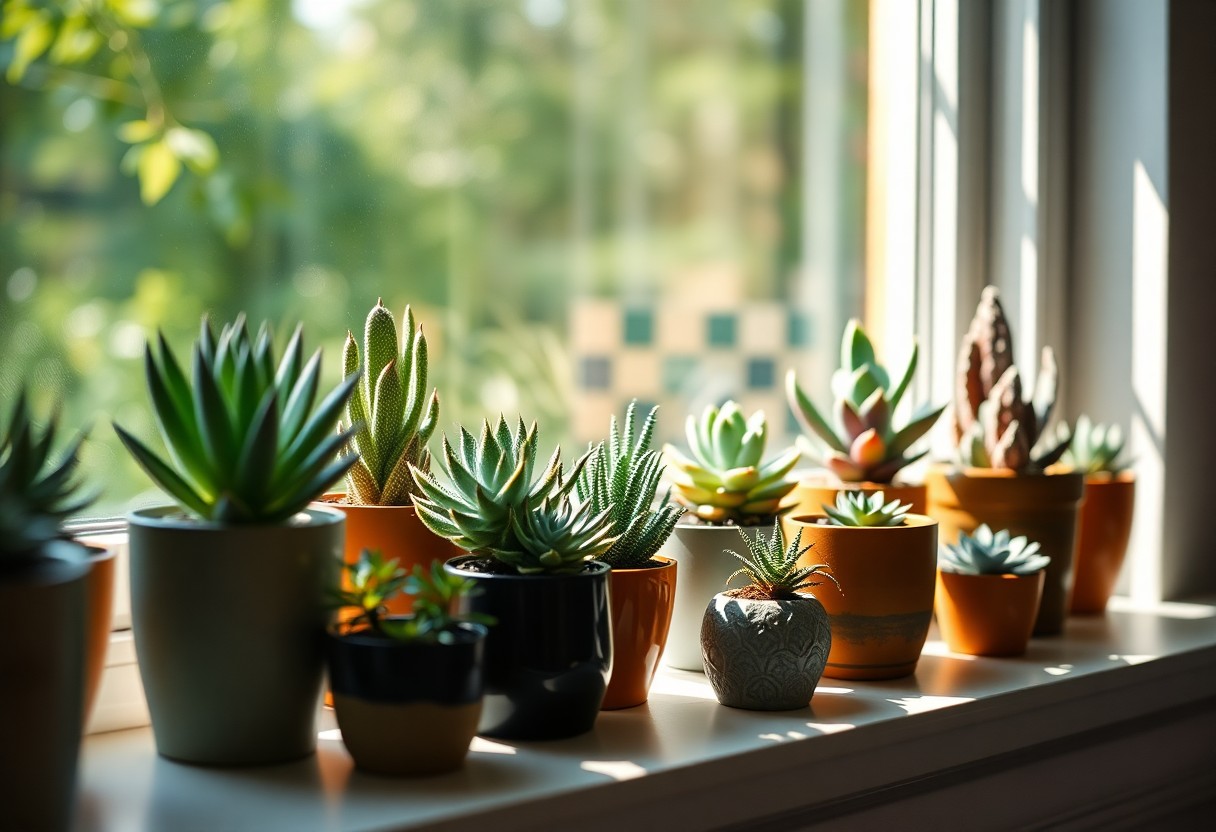
Above all, you’ll want to place your succulent near a sunny window with a sheer curtain to filter the light, as direct sunlight can cause burning.
Maintaining a Stable Temperature Range
On average, you’ll need to keep your succulent in an area with a consistent temperature, as outlined in the following table:
| Time | Temperature |
|---|---|
| Day | 65-75°F (18-24°C) |
| Night | 55-65°F (13-18°C) |
Providing the right temperature range is vital for your succulent’s growth. The following table outlines the ideal temperature fluctuations:
| Season | Temperature Adjustment |
|---|---|
| Summer | 75°F (24°C) maximum |
| Winter | 55°F (13°C) minimum |
Fertilization and Pruning
Despite their low-maintenance reputation, your succulents still require some TLC. For more information on succulent care, you can visit How to Care for Succulents (And Not Kill Them): 9 Plant Experts Weigh In to learn more about keeping your plants thriving.
Feeding Your Succulents
At this point, you’re probably wondering how to feed your succulents. You’ll want to use a balanced fertilizer during the growing season to promote healthy growth and development.
Pruning for Shape and Size
Around the time your succulents start to outgrow their containers, you’ll need to prune them to maintain their shape and size. You can remove any dead or damaged leaves to keep your plants looking their best.
For instance, when pruning your succulents, you can use a pair of clean scissors or pruning shears to carefully remove any unwanted growth. This will help prevent your plants from becoming leggy and encourage new growth, keeping your succulents full and vibrant. As you prune, you can also propagate new plants from the cuttings, allowing you to share your succulents with friends or expand your own collection.
Pest Control and Propagation
Many succulent owners face challenges with pests and propagation, but with the right techniques, you can keep your plants healthy and thriving. You’ll learn how to identify and control common pests, as well as how to propagate new plants from your existing ones.
Common Pests and How to Control Them
With regular inspections, you can catch pests early and take action to prevent infestations. You’ll be able to identify common pests like mealybugs and spider mites, and learn how to control them using gentle, effective methods.
Propagating Succulents for New Plants
Before you start propagating, you’ll need to prepare your succulent by allowing it to dry out slightly, making it easier to handle. You can then remove offsets or leaf cuttings, and plant them in well-draining soil to grow new plants.
In addition, you can experiment with different propagation methods, such as dividing your succulent or using seeds, to create new plants and share them with friends or expand your own collection. You’ll find that propagating succulents is a fun and rewarding process that allows you to enjoy your plants in new and exciting ways.
Common Mistakes to Avoid
For a thriving succulent, you’ll want to avoid common pitfalls, and learning How to Care for Succulents Indoors is key. By understanding these mistakes, you can ensure your succulents stay healthy.
Overwatering and Underwatering
Mistakes in watering can be detrimental, so be cautious not to overwater or underwater your succulents, as this can lead to root rot or dehydration.
Insufficient Light and Extreme Temperatures
Among the factors affecting your succulents’ health are light and temperature. The following table outlines the ideal conditions:
| Low Light | Weak and leggy stems |
| High Temperatures | Scorched leaves |
Also, when considering the placement of your succulents, keep in mind that insufficient light and extreme temperatures can significantly impact their well-being. The following table provides more details:
| South-facing window | 65-75°F (18-24°C) |
| East/West-facing window | 55-65°F (13-18°C) |
You can adjust the placement of your succulents according to your home’s conditions for optimal growth.
Conclusion
Conclusively, you now have the knowledge to properly care for your succulents indoors. You can provide your plants with the right amount of water, light, and nutrients to thrive. By following these tips, you will be able to enjoy your beautiful and low-maintenance succulents for a long time, and your indoor space will benefit from their air-purifying properties and unique aesthetic. Your succulents will flourish under your care.
FAQ
Q: What type of potting soil is best for succulents indoors?
A: With respect to caring for succulents indoors, using a well-draining potting soil is necessary. A mix specifically designed for cacti and succulents is ideal, as it allows for proper moisture drainage and prevents waterlogged soil. Avoid using regular potting soil, as it can retain too much water and cause root rot. Look for a potting mix that contains perlite, sand, or vermiculite, which will help to prevent water from accumulating in the soil.
Q: How often should I water my indoor succulents?
A: Overwatering is one of the most common mistakes when caring for succulents indoors. Water your succulents sparingly, allowing the soil to dry out completely between waterings. The frequency of watering will depend on the time of year, temperature, and humidity. As a general rule, water your succulents every 7-10 days during the spring and summer months, and less often during the fall and winter months. Make sure to check the soil moisture by sticking your finger into the soil up to the first knuckle, and only water if the soil feels dry.
Q: What kind of light do succulents need indoors?
A: Most succulents prefer bright, indirect light to thrive indoors. Placing them near an east- or west-facing window is ideal, as this will provide them with gentle, indirect light. Avoid placing succulents in direct sunlight, as this can cause them to become scorched or discolored. Some succulents, such as aloe and echeveria, can tolerate low light conditions, but most will require at least 4-6 hours of indirect light per day to stay healthy.
Q: How do I fertilize my indoor succulents?
A: Feeding your indoor succulents with a balanced fertilizer can promote healthy growth and flowering. During the growing season (spring and summer), fertilize your succulents with a water-soluble fertilizer that is specifically formulated for cacti and succulents. Dilute the fertilizer to half the recommended strength to avoid burning the roots. Apply the fertilizer once a month, taking care to avoid getting any on the leaves or stems to prevent burning.
Q: How can I propagate and prune my indoor succulents?
A: Propagating and pruning your indoor succulents is an excellent way to share plants with friends and maintain their shape. To propagate, simply remove the offsets or leaf cuttings from the mother plant, allowing them to dry for a few days to form a callus. Then, plant the cuttings in well-draining soil and water sparingly until they become established. Prune your succulents to maintain their shape and encourage new growth. Use a pair of clean, sharp scissors or pruning shears to remove any dead or damaged leaves or stems, and cut back leggy stems to encourage branching.

