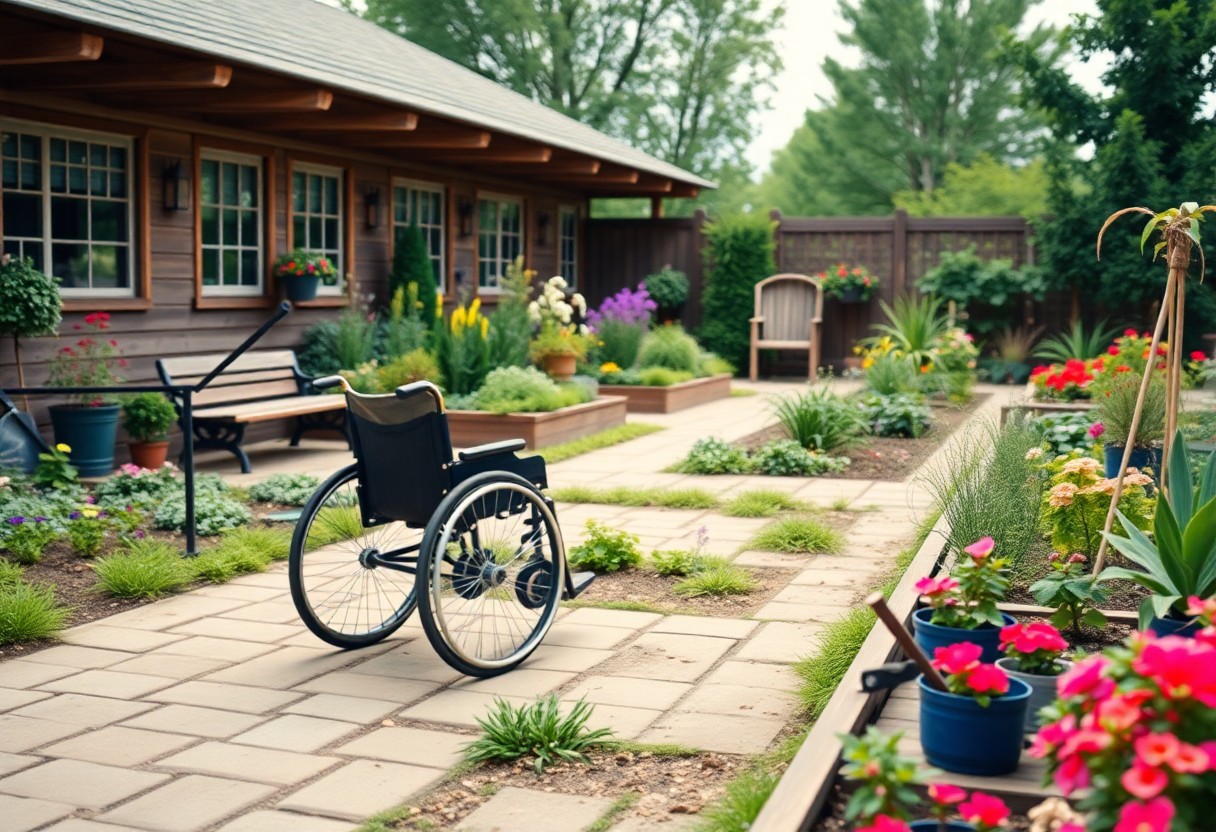
You can create a welcoming outdoor space that everyone can enjoy by making a few simple modifications to your garden. As you consider your garden’s design, you’ll want to think about the needs of all users, including those with mobility or sensory issues. By incorporating accessible features, you can ensure that your garden is a haven for everyone, regardless of age or ability, and that you can share its beauty with friends and family of all backgrounds. You’ll be glad you did.
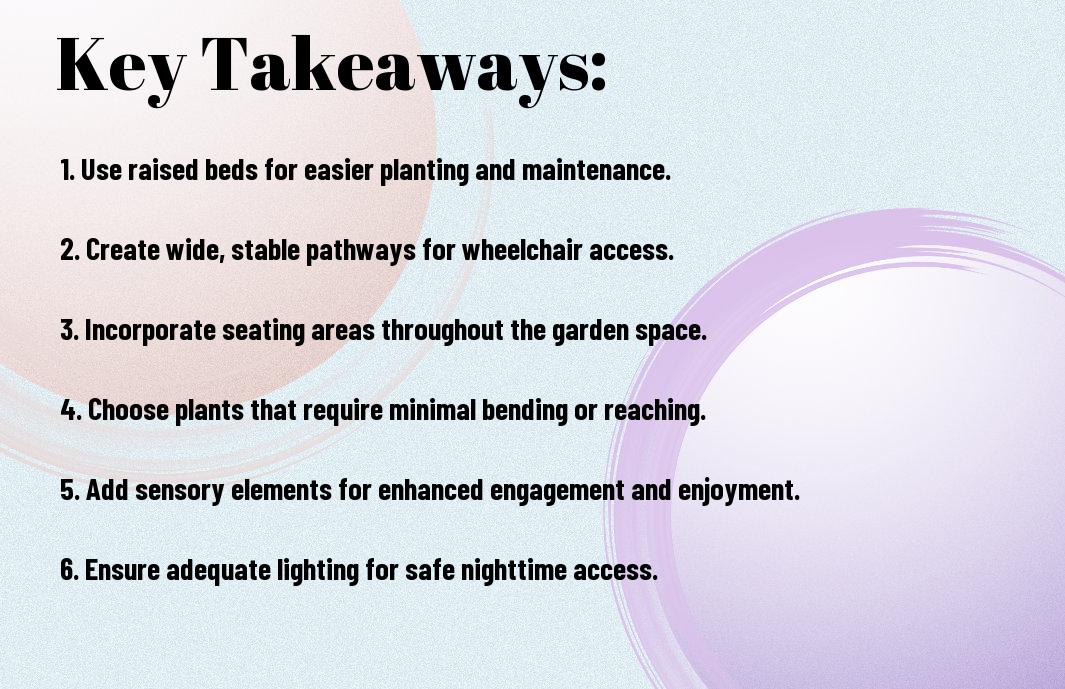
Key Takeaways:
To create a garden that is enjoyable for all, consider the following points:
- Use wheelchair-accessible pathways to ensure everyone can navigate the garden with ease, including those with mobility issues or using strollers.
- Incorporate sensory-friendly elements, such as fragrant plants, soothing water features, and tactile experiences, to cater to different abilities and preferences.
- Install adaptive gardening tools and seating areas, allowing people of all ages and abilities to participate in gardening activities and relax in the garden.
Assessing Your Garden
A thorough assessment of your garden is necessary to identify areas that need improvement. You can start by exploring resources like Accessible garden design – Thrive to get inspiration and guidance. This will help you create a more inclusive space for everyone.
Identifying Barriers
One of the first steps is to walk through your garden and note any obstacles that might hinder accessibility. You should consider the needs of all users, including those with mobility or visual impairments, to ensure your garden is welcoming to everyone.
Evaluating Pathways
On evaluating your garden’s pathways, you will need to consider the surface, width, and slope to ensure they are safe and easy to navigate. You should also think about the materials used and whether they are suitable for users with different needs.
At this stage, you can start thinking about how to improve your pathways, such as installing ramps or using smoother surfaces, to make your garden more accessible and enjoyable for all users, including yourself and your guests.
Creating Accessible Paths
Assuming you want to make your garden accessible to everyone, you’ll need to prioritize path design. You should consider the materials and layout to ensure easy navigation for all visitors.
Choosing the Right Materials
Around your garden, you’ll find various materials suitable for paths, such as concrete, brick, or wood. You can select the one that suits your needs and ensures a smooth, stable surface for your visitors.
Designing a Barrier-Free Route
About the route, you should think of a path that allows everyone to move freely, without obstacles or narrow passages. You can achieve this by designing a wide, gentle path with minimal slopes.
Plus, when designing a barrier-free route, you should also consider the path’s surface texture and lighting. You can use tactile markings and adequate lighting to guide visitors with visual impairments, making your garden more enjoyable and accessible for everyone.
Adapting Garden Features
Your garden’s features can be adapted to make it more accessible for everyone, allowing you to enjoy the outdoors with ease and comfort.
Raised Beds and Planters
Outside your traditional gardening methods, consider using raised beds and planters that are at a comfortable height, making it easier for you to plant and maintain your garden without straining your back.
Accessible Seating and Rest Areas
Between the beautiful scenery and peaceful atmosphere, you’ll want to create seating and rest areas that are accessible and comfortable for everyone, allowing you to take breaks and enjoy your garden.
Also, when designing your accessible seating and rest areas, you should consider the type of seating, such as benches or chairs with back support, and ensure that the paths leading to these areas are wide and smooth, allowing you to navigate easily and safely.
Incorporating Sensory Experiences
Unlike traditional gardens, an accessible garden offers a multisensory experience. You can find inspiration for your garden design by visiting Ten Ways to Make Your Home Garden More Accessible resources.
Visual and Auditory Elements
To create a rich sensory experience, you can incorporate visual and auditory elements, such as vibrant flowers, water features, and bird-friendly plants, into your garden design.
Tactile and Olfactory Features
An necessary aspect of sensory experiences is the inclusion of tactile and olfactory features, such as textured paths and fragrant herbs, which allow you to engage your senses in your garden.
Auditory elements can also complement tactile and olfactory features, creating a holistic experience in your garden, allowing you to fully immerse yourself in the natural environment you have created, with your senses heightened by the variety of stimuli.
Ensuring Safety and Maintenance
To create a safe and accessible garden, you can learn from experts, as seen in Gardening can be accessible to all with some adjustments, and follow simple guidelines to ensure your garden is enjoyable for everyone.
Clearing Obstacles and Debris
Cutting through clutter, you can start by removing any obstacles and debris from your garden paths to prevent tripping hazards and make it easier to navigate.
Regular Maintenance Routines
At the start of each season, you should establish a maintenance routine to keep your garden safe and accessible, including regular inspections and upkeep of paths, plants, and features.
With regular maintenance routines in place, you can prevent potential hazards, such as overgrown plants or uneven paths, and ensure your garden remains a welcoming space for everyone to enjoy, allowing you to focus on the beauty and joy it brings to your life, and the lives of your visitors.
Involving the Community
All gardens can benefit from community involvement, and making your garden accessible is no exception. You can involve your neighbors, local schools, and community groups to create a shared space that everyone can enjoy.
Collaborative Gardening Efforts
Beneath the surface of many successful community gardens lies a strong collaborative effort. You can start by reaching out to your neighbors and local gardening groups to see if they would be interested in helping you create a more accessible garden.
Towards creating a more inclusive garden, you can organize educational workshops and events that teach people about accessible gardening practices and provide hands-on experience. You can invite experts to give talks and demonstrations, and also provide opportunities for people to share their own experiences and knowledge.
Further, by hosting educational workshops and events, you can help raise awareness about the importance of accessibility in gardening and provide your community with the skills and knowledge they need to create their own accessible gardens. You can cover topics such as adaptive gardening techniques, accessible garden design, and how to use assistive technology in gardening, making your garden a valuable resource for your community.
To wrap up
Now that you have explored the various ways to make your garden more accessible, you can start implementing these changes to create a welcoming space for everyone. You will be able to enjoy your garden with family and friends, regardless of their abilities. By incorporating accessible pathways, adaptive tools, and inclusive features, you will enhance your overall gardening experience and make your outdoor space a haven for all to enjoy.
FAQ
Q: What are the benefits of making my garden more accessible for everyone?
A: Making your garden more accessible for everyone can have numerous benefits, including allowing people of all ages and abilities to enjoy the outdoor space, promoting social interaction and a sense of community, and increasing the overall usability and value of your garden. By incorporating accessible features, you can create a welcoming and inclusive environment that can be enjoyed by family, friends, and neighbors, regardless of their physical abilities.
Q: What are some simple ways to make my garden more accessible for people with mobility issues?
A: There are several simple ways to make your garden more accessible for people with mobility issues, including installing a smooth and stable pathway made of materials such as concrete, asphalt, or compacted gravel, and ensuring that the path is wide enough to accommodate wheelchairs and walkers. Additionally, you can install ramps or gentle slopes to provide easy access to different areas of the garden, and consider using raised beds or containers to reduce the need for bending and stooping.
Q: How can I make my garden more accessible for people with visual impairments?
A: To make your garden more accessible for people with visual impairments, you can incorporate a variety of sensory features, such as textured pathways, scented plants, and water features that create soothing sounds. You can also use high-contrast colors and clear signage to help visitors navigate the garden, and consider adding Braille or tactile labels to plant markers and other signs. Furthermore, you can create a audio description of the garden, which can be accessed through a mobile app or a website.
Q: What are some ways to make my garden more accessible for people with sensory sensitivities?
A: To make your garden more accessible for people with sensory sensitivities, you can create a calm and soothing environment by incorporating natural elements, such as water features, bird songs, and gentle breezes. You can also reduce noise levels by using sound-absorbing materials, and minimize strong scents and bright lights that can be overwhelming. Additionally, you can create a quiet area or a sensory garden with a variety of textures, colors, and smells that can be enjoyed at a comfortable level.
Q: Can I make my garden more accessible without breaking the bank?
A: Yes, making your garden more accessible does not have to be expensive. There are many affordable ways to create a more accessible garden, such as using recycled materials, repurposing existing structures, and incorporating low-cost features, such as mulch or gravel pathways. You can also start small and prioritize the most important features, and consider seeking advice from gardening experts or disability organizations for cost-effective solutions. Additionally, many local governments and non-profit organizations offer grants and resources to help make outdoor spaces more accessible.