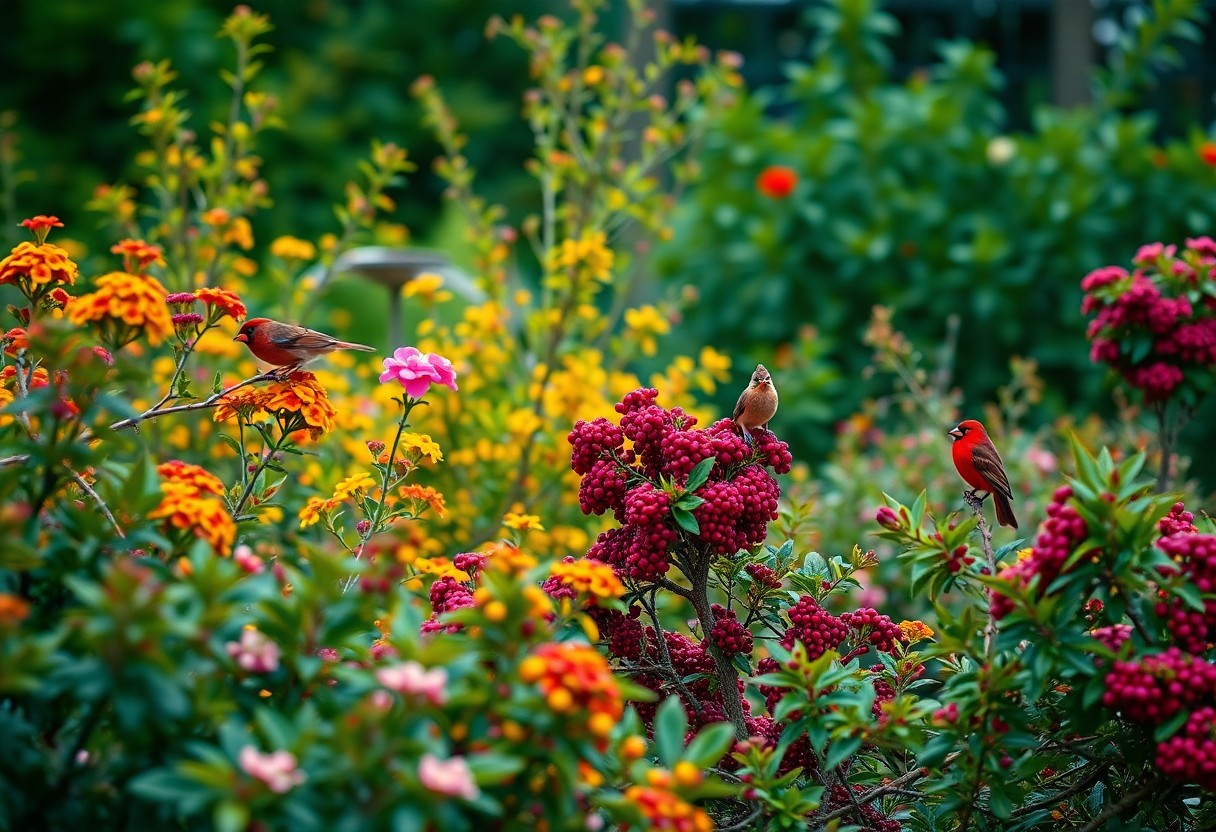
As you step into your garden, you envision a haven that welcomes the gentle songs of birds. You want to create a space where these creatures can thrive, and your outdoor sanctuary can become a haven for them. By choosing the right plants, water features, and structures, you can design a bird-friendly garden that will attract a variety of species and bring joy to your daily life. Your garden can be a peaceful retreat, teeming with life and beauty, where you can connect with nature.
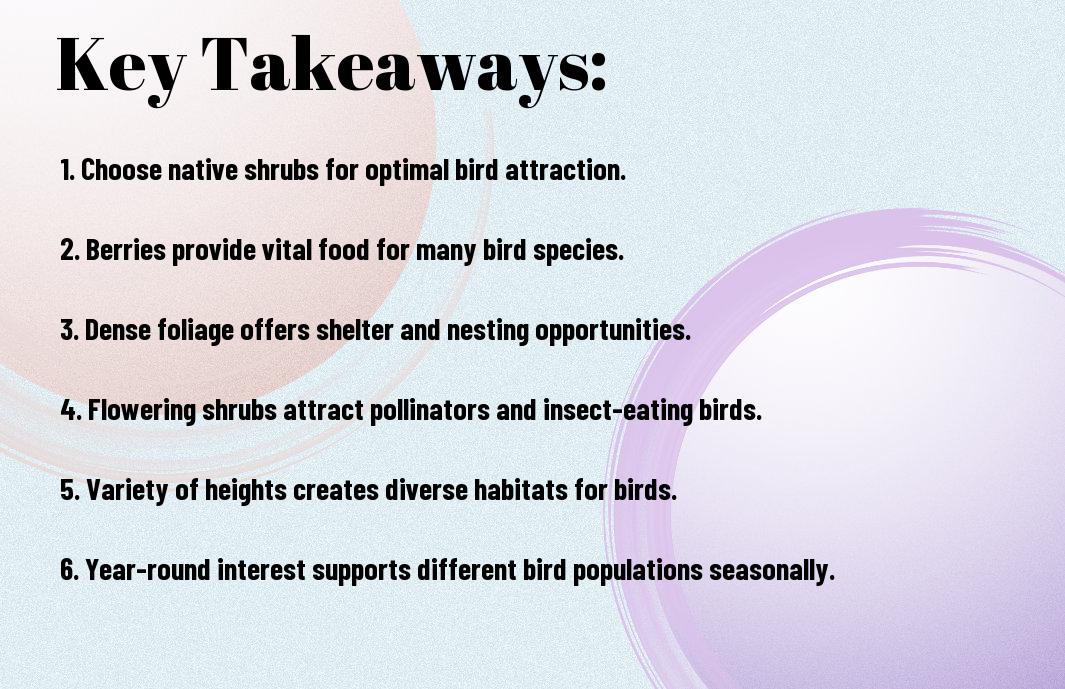
Key Takeaways:
To create a bird-friendly garden, consider the following points:
- Provide a diverse range of plants that offer food sources, such as seeds, berries, and nectar, to attract different species of birds.
- Incorporate native plants, shrubs, and trees that provide shelter and nesting sites for birds, as well as water sources like birdbaths or ponds.
- Use sustainable gardening practices, such as avoiding pesticides and creating a wildlife-friendly habitat, to support the overall health and well-being of the birds visiting your garden.
Choosing the Right Plants
The selection of plants is a vital step in designing a bird-friendly garden, as you want to create a haven that will attract a variety of bird species to your yard. Consider the types of birds you want to attract and the types of plants that will provide the necessary food and shelter for them.
Native species selection
With native plants, you can create a garden that is tailored to the specific needs of the birds in your area, providing them with the food and shelter they need to thrive. You can choose plants that are indigenous to your region, which will attract birds that are native to your area.
Flower and shrub options
After selecting native plants, you can consider adding flowers and shrubs that will provide additional food sources for the birds, such as nectar, seeds, and berries. You can choose plants with varying bloom times to ensure a constant source of food throughout the year.
Indeed, the flowers and shrubs you choose can make a significant difference in the types of birds that visit your garden. As you consider your options, think about the different types of food that various bird species need to survive, and choose plants that will provide those necessities, such as sunflowers for seeds or coneflowers for nectar, allowing you to create a garden that is a true haven for your feathered friends.
Providing Food Sources
Some of the most effective ways to attract birds to your garden involve providing them with a reliable source of food. You can learn more about how to Create a Bird-Friendly Habitat by visiting Create a Bird-Friendly Habitat guide, which offers valuable tips and insights.
Bird feeder placement
Around your garden, place bird feeders in spots that offer birds protection from strong winds and predators, allowing them to feed safely and comfortably.
Suet and seed choices
On the topic of suet and seeds, you’ll want to select options that cater to the diverse needs of your feathered visitors, offering a mix of high-energy foods and nutritious treats.
Understanding the different types of suet and seeds available will help you make informed choices for your bird-friendly garden. You’ll find that offering a variety of foods, such as black oil sunflower seeds, safflower seeds, and peanut suet, will attract a wide range of bird species to your garden, keeping them nourished and happy throughout the year.

Creating a Water Feature
Unlike other garden features, a water feature can be a simple yet effective way to attract birds to your yard. You can create a small pond or birdbath, which will provide your feathered friends with a source of water for drinking and bathing.
Birdbath design
Allying with nature, you’ll want to choose a birdbath design that complements your garden’s surroundings. You’ll find that a shallow, freshwater source with a rough surface will be perfect for birds to land and take off from.
Pond installation
Against the backdrop of your garden, a pond can be a beautiful addition. You’ll want to consider the size and depth of your pond, as well as the type of plants and features you’ll include, such as a fountain or waterfall.
Considering the specifics of your pond installation, you’ll want to think about the types of birds you’re trying to attract and the habitat you’re trying to create. You may want to include native plants, rocks, and other features that will provide shelter and food for the birds, and make your pond a welcoming oasis in your garden, allowing you to observe and appreciate the beauty of nature.
Designing a Bird-Friendly Layout
All aspects of your garden’s design should be considered when creating a haven for birds. You can find inspiration and guidance on creating a bird-friendly garden to inform your design decisions.
Tree and shrub placement
Trees and shrubs provide excellent habitats for birds, so you’ll want to place them strategically in your garden to offer shelter and food. You can plant native species that produce berries or nectar to attract a variety of bird species.
Meadow and grassland creation
For a unique and inviting space, consider creating a meadow or grassland area in your garden, complete with native wildflowers and grasses that will attract birds and other wildlife. You can choose plants that are native to your region to ensure the best results.
Considering the types of birds you want to attract, you’ll want to plant a diverse range of species in your meadow or grassland area. You can include plants with different growth habits, such as tall grasses and low-growing wildflowers, to create a layered and inviting space. By doing so, you’ll be able to attract a variety of bird species to your garden, and enjoy watching them thrive in their new habitat.
Reducing Hazards
Despite your best efforts to create a welcoming space, your bird-friendly garden may still pose risks to your feathered friends. You’ll want to take steps to minimize these dangers and ensure the well-being of your visitors.
Window collision prevention
Beneath the surface of your garden’s design, lies the potential for window collisions. You can apply decals or install netting to prevent birds from flying into your windows, saving them from injury or death.
Cat and predator control
Along the edges of your garden, predators like cats may lurk, waiting to pounce on unsuspecting birds. You can take measures to deter them, such as using physical barriers or repellents, to protect your bird population.
Hazards from cats and other predators can be particularly problematic, as they can significantly impact the bird population in your garden. You can consider taking additional steps, such as providing sheltered feeding areas or using bird-friendly plants that provide hiding spots, to help mitigate these risks and create a safer environment for your birds to thrive.
Maintenance and Enjoyment
To keep your bird-friendly garden thriving, consider the changing seasons.
Seasonal gardening tips
You’ll find that tasks like pruning and planting vary by season, so
- adapt your gardening schedule accordingly
.
The beauty of nature will unfold before your eyes as you tend to your garden.
Birdwatching and observation
On quiet mornings, you can observe the birds in your garden, learning their habits and habitats.
As you sit among the trees and flowers, you’ll notice the unique characteristics of each species, and your appreciation for these creatures will grow.
But as you explore deeper into the world of birdwatching, you’ll discover that it’s not just about observing birds, it’s also about understanding their behavior, migration patterns, and social interactions, and you’ll find that your garden has become a vibrant ecosystem, full of life and wonder, where you can connect with nature and find peace.
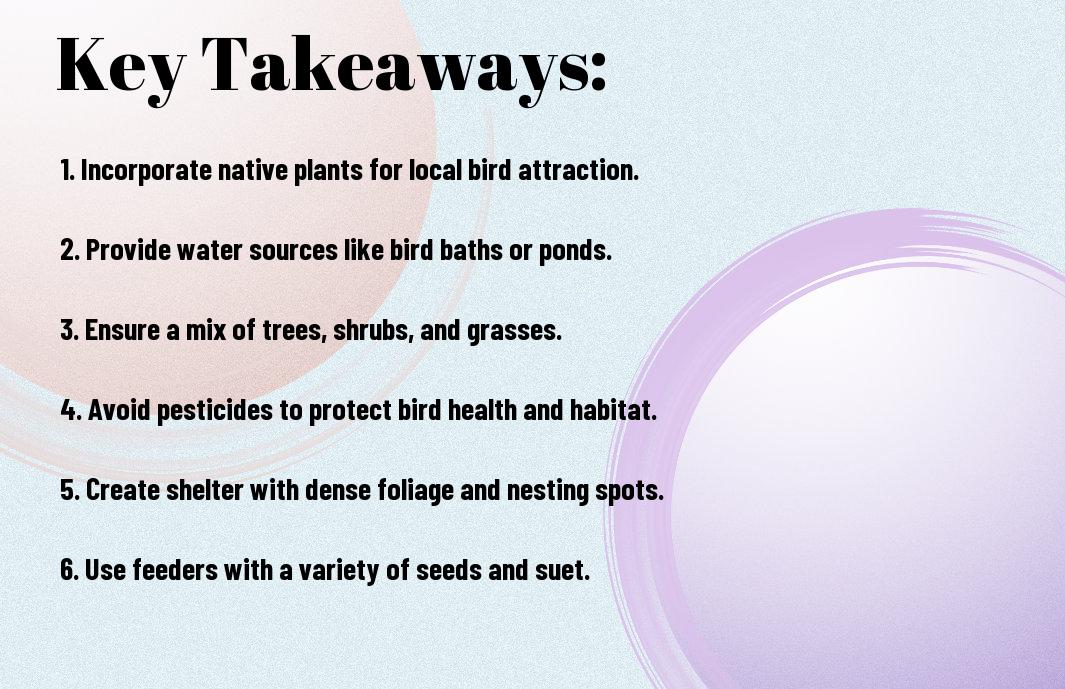
To wrap up
With these considerations, you’ll be well on your way to creating a haven for your feathered friends. As you tend to your bird-friendly garden, you’ll find joy in the simple act of nurturing nature. For more guidance, visit How to Make Your Yard Bird-Friendly | Audubon to discover the beauty of sharing your space with the natural world, and watch your yard flourish into a vibrant oasis for you and your avian companions to enjoy.
FAQ
Q: What are the key elements to consider when designing a bird-friendly garden?
A: When designing a bird-friendly garden, it’s vital to consider a variety of elements, including the types of plants, water sources, and shelter. Incorporating native plants that provide nectar, seeds, and berries will attract a diverse range of bird species. Additionally, providing a source of water, such as a birdbath or pond, and incorporating native trees and shrubs for shelter will create a welcoming environment for birds. A mix of evergreen and deciduous plants will also provide year-round interest and habitat for birds.
Q: How can I choose the right plants for my bird-friendly garden?
A: Choosing the right plants for your bird-friendly garden involves selecting a variety of plants that provide food and shelter for birds throughout the year. Consider plants that produce nectar-rich flowers, such as coneflowers and black-eyed susans, as well as plants that produce seeds and berries, like sunflowers and shrubs with berry-producing branches. Native plants are also an excellent choice, as they will attract native bird species and require less maintenance. It’s also important to choose plants that are suitable for your local climate and soil type.
Q: What types of bird feeders and watering stations are best for a bird-friendly garden?
A: Pertaining to bird feeders and watering stations, there are many options to consider. Tube feeders, hopper feeders, and platform feeders are all great options, as they allow birds to easily access food. For watering stations, consider a birdbath with fresh water and a few rocks or sticks for perching, or a small pond with a fountain or mister to create movement and sound. It’s also important to keep your feeders and watering stations clean and well-maintained to ensure the health and safety of the birds.
Q: How can I create a bird-friendly garden in a small space, such as a balcony or patio?
A: Even in small spaces, such as a balcony or patio, you can create a bird-friendly garden. Consider using container gardens or hanging baskets to grow a variety of plants that attract birds, such as herbs, flowers, and shrubs. You can also use a small birdbath or a self-contained watering station, and hang a few bird feeders from the railing or a nearby hook. Additionally, choose plants that are compact or dwarf varieties, and consider using a trellis or arbor to make the most of your space.
Q: How can I maintain my bird-friendly garden and ensure it remains a welcoming habitat for birds?
A: To maintain your bird-friendly garden and ensure it remains a welcoming habitat for birds, it’s vital to regularly inspect and maintain your plants, feeders, and watering stations. Keep your feeders and birdbaths clean, and refill them regularly to ensure a constant source of food and water. Prune your plants regularly to maintain their shape and promote healthy growth, and consider adding a layer of mulch or compost to retain moisture and suppress weeds. By following these simple steps, you can create a thriving and welcoming bird-friendly garden that will attract a variety of bird species and provide hours of enjoyment and entertainment.