The Benefits of Planting Fast-Growing Trees

As you consider enhancing your landscape, you may want to think about planting fast-growing trees. You can enjoy shade, beauty, and improved air quality in a shorter amount of time. Your property value can increase, and you can even help combat climate change. By choosing the right species, you can reap these benefits and create a thriving outdoor space that supports local wildlife and enhances your quality of life.

Key Takeaways:

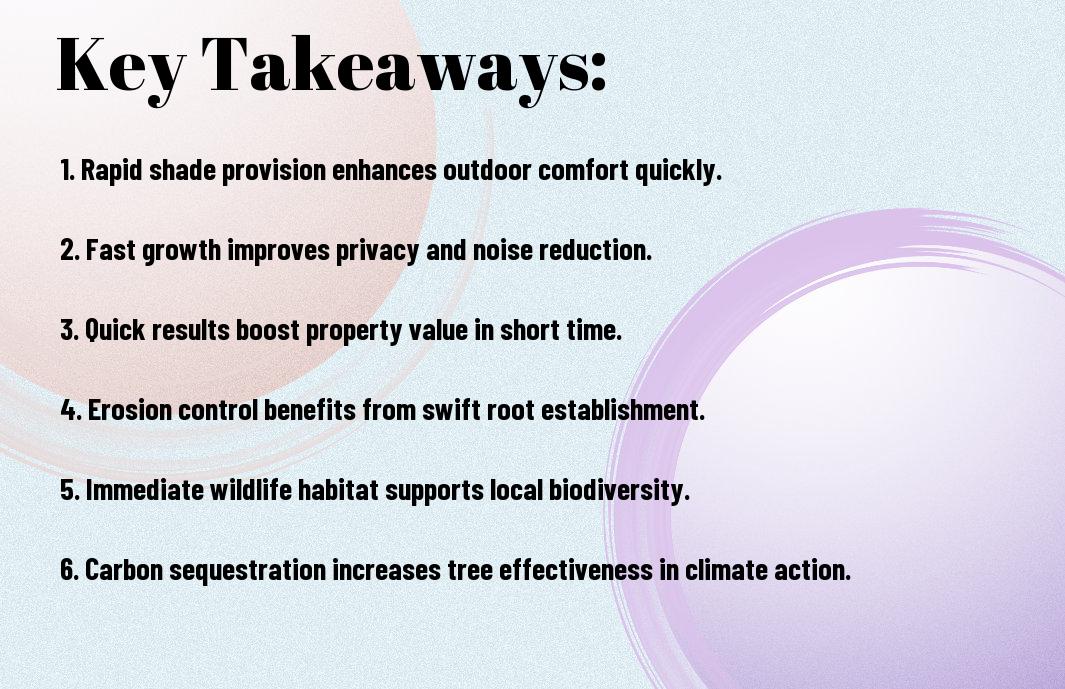
  • The environmental benefits of planting fast-growing trees are numerous, including oxygen production, soil erosion prevention, and wildlife habitat creation, making them a great addition to any landscape.
  • Fast-growing trees can provide shade and windbreaks, reducing the need for air conditioning and heating, which can lead to significant energy savings and a reduced carbon footprint.
  • Planting fast-growing trees can also increase property value and aesthetic appeal, with many species offering vibrant fall colors and beautiful spring blooms, making them a valuable investment for homeowners and landscapers alike.

    Environmental Benefits

    While planting fast-growing trees, you can significantly contribute to a healthier environment, as they quickly provide benefits such as shade, shelter, and habitat for animals, which in turn support local ecosystems and biodiversity.

    Air Purification

    With the ability to absorb pollutants and release oxygen, fast-growing trees help purify the air you breathe, improving your overall health and well-being by reducing the risk of respiratory diseases.

    Soil Erosion Prevention

    Among the many advantages of fast-growing trees, their extensive root systems help hold soil in place, preventing erosion and landslides, which can protect your property and community from damage.

    This soil stabilization also allows your landscape to maintain its integrity, preserving the natural beauty of your surroundings and supporting the local wildlife that depends on it, ultimately enhancing your quality of life and the aesthetic value of your property.

    Aesthetic Appeal

    Now, when you plant fast-growing trees, you can instantly enhance your property’s appearance. These trees quickly grow and mature, providing shade, beauty, and character to your landscape, making it more attractive and valuable.

    Landscaping Options

    Around your home or garden, you can use fast-growing trees to create a natural screen or windbreak, defining your outdoor spaces and creating a sense of seclusion, which can be beneficial for your outdoor activities and relaxation.

    Wildlife Habitat Creation

    Above all, fast-growing trees can provide a habitat for various wildlife species, attracting birds, insects, and small animals to your property, which can be a fascinating experience for you and your family to observe and learn from.

    Wildlife will thrive in the ecosystem created by your fast-growing trees, and as you watch your trees grow, you’ll notice the increased presence of birds building nests, insects pollinating flowers, and small animals finding shelter, making your property a vibrant and diverse habitat that you can enjoy and appreciate.

    Economic Advantages

    To maximize your financial gains, planting fast-growing trees can be a lucrative investment, offering a range of economic benefits that can enhance your overall wealth.

    Increased Property Value

    With well-placed trees on your property, you can increase its value, making it more attractive to potential buyers if you decide to sell, and also enhancing your quality of life.

    Timber Production

    One of the significant advantages of fast-growing trees is their potential for timber production, allowing you to harvest and sell wood products, generating a substantial income from your investment.

    Production of timber from fast-growing trees can be a significant source of revenue for you, as these trees can be harvested in a relatively short period, typically between 10 to 20 years, depending on the species and growing conditions, enabling you to reap the financial rewards of your investment in a shorter timeframe.

    Fast-Growing Tree Species

    Many fast-growing tree species can help you achieve your landscaping goals quickly. You can choose from a variety of species that thrive in different conditions, making it easy to find the perfect fit for your yard.

    Hybrid Poplar

    By selecting hybrid poplar trees, you can enjoy rapid growth and shade in a short amount of time. You will appreciate the beauty and benefits these trees bring to your landscape, making them a great choice for many homeowners.

    Eucalyptus

    Around the world, eucalyptus trees are known for their fast growth and unique characteristics. You can plant eucalyptus trees in your yard to add a touch of exotic beauty and freshness.

    A notable aspect of eucalyptus trees is their ability to absorb large amounts of water, making them a great choice for areas with high rainfall. As you consider planting eucalyptus trees, you should also think about their potential uses, such as providing shade, improving air quality, and creating a natural screen, allowing you to make the most of your new trees.

    Planting and Maintenance

    Once again, your approach to planting and maintaining fast-growing trees will significantly impact their growth and overall health. You will need to consider factors such as soil quality, watering, and pruning to ensure your trees thrive.

    Soil Preparation

    Around the time of planting, you should assess your soil type and make any necessary adjustments to optimize conditions for your trees. You can add organic matter or fertilizers to enhance soil fertility and drainage.

    Pruning Techniques

    Against the risk of disease or damage, you should develop a pruning strategy that promotes healthy growth and maintains the shape of your trees. You can prune your trees to remove dead branches or encourage new growth.

    Plus, by adopting the right pruning techniques, you can improve air circulation, increase sunlight penetration, and reduce the risk of pest infestations, all of which will contribute to the overall health and vigor of your fast-growing trees, allowing you to enjoy their benefits for years to come.

    Community Benefits

    Despite the individual benefits, you can also contribute to your community by planting fast-growing trees. You can learn more about Top 3 Reasons to Plant Fast-Growing Trees and how they improve your environment.

    Urban Forestry

    Around your neighborhood, you’ll notice the positive impact of fast-growing trees on urban forestry, as they provide shade and beauty to your community.

    Community Engagement

    Behind the scenes, community engagement is boosted by the presence of fast-growing trees, fostering a sense of unity among your neighbors.

    Even as you enjoy the benefits of fast-growing trees, you’ll notice that your community is coming together to maintain and care for these trees, promoting a sense of ownership and cooperation among your community members, which can lead to a stronger, more harmonious neighborhood for you to live in.
    To wrap up

    Upon reflecting on the benefits of planting fast-growing trees, you will find that your efforts yield numerous advantages. You can enjoy improved air quality, enhanced aesthetics, and increased property value. By incorporating these trees into your landscape, you can create a thriving environment that supports local wildlife and provides shade, making your outdoor space more enjoyable. Your decision to plant fast-growing trees will have a lasting impact on your surroundings.

    FAQ

    Q: What are the benefits of planting fast-growing trees in terms of environmental impact?

    A: Planting fast-growing trees has numerous environmental benefits, including absorbing carbon dioxide, producing oxygen, and providing habitats for wildlife. These trees can help to combat climate change by reducing the amount of greenhouse gases in the atmosphere, and their rapid growth rate allows them to achieve this more quickly than slower-growing species. Additionally, fast-growing trees can help to prevent soil erosion, reduce noise pollution, and improve air quality.

    Q: How can fast-growing trees contribute to biodiversity and ecosystem health?

    A: Fast-growing trees can significantly contribute to biodiversity and ecosystem health by providing food, shelter, and breeding grounds for various species of animals, birds, and insects. As these trees grow, they create complex ecosystems that support a wide range of flora and fauna, helping to maintain the balance of nature. Furthermore, the rapid growth of these trees allows them to quickly colonize and stabilize disturbed or degraded areas, promoting the development of new ecosystems and increasing overall biodiversity.

    Q: What are the economic benefits of planting fast-growing trees, particularly in urban areas?

    A: Planting fast-growing trees in urban areas can have numerous economic benefits, including increasing property values, reducing urban heat island effects, and providing shade, which can lower energy consumption. These trees can also help to mitigate the effects of extreme weather events, such as storms and floods, by absorbing excess water and reducing soil erosion. Moreover, fast-growing trees can be harvested for timber and other forest products, providing a source of income for landowners and supporting local economies.

    Q: How do fast-growing trees improve soil quality and structure?

    A: Fast-growing trees have a significant impact on soil quality and structure, as their extensive root systems help to hold soil in place, reducing erosion and landslides. The roots of these trees also help to break up compacted soil, improve soil aeration, and increase the infiltration of water and nutrients. Additionally, the leaves and branches of fast-growing trees contribute to the formation of humus, which enriches the soil with organic matter, supporting the growth of other plants and microorganisms. This can lead to improved soil fertility, structure, and overall health.

    Q: What are some popular species of fast-growing trees suitable for planting in different climates and regions?

    A: There are many species of fast-growing trees that are suitable for planting in different climates and regions, including the Hybrid Poplar, Eucalyptus, and Willow. The Hybrid Poplar is a popular choice for temperate climates, as it can grow up to 10 feet per year and thrive in a variety of soil conditions. The Eucalyptus is well-suited to warmer climates, as it is highly drought-tolerant and can grow rapidly in areas with mild winters. The Willow is a versatile species that can thrive in a range of climates and soil conditions, making it an excellent choice for wetland areas or riparian zones. It is imperative to choose a species that is well-suited to the local climate and soil conditions to ensure optimal growth and success.


How to Decorate Outdoor Spaces With Fairy Lights

As you commence on the enchanting task of illuminating your outdoor sanctuary, you’ll discover that fairy lights can add a whisper of magic to your evenings. With your refined taste and creative flair, you’ll weave a spell of wonder, transforming your garden, patio, or balcony into a dazzling oasis. You’ll learn the art of arranging these delicate lights to create an ambiance that is nothing short of mesmerizing, making your outdoor space a true reflection of your exquisite style and sophistication.

Key Takeaways:

To create a mesmerizing outdoor ambiance, consider the following points when decorating with fairy lights:

  • Use Fairy Light Colors that complement the natural surroundings, such as warm whites, soft blues, or vibrant greens, to create a unique and inviting atmosphere.
  • Choose the right Lighting Placement to accentuate your outdoor space’s best features, such as wrapping lights around trees, stairs, or gazebos, or hanging them from umbrellas, pergolas, or fences.
  • Select Weather-Resistant fairy lights to ensure they withstand various outdoor conditions, including rain, wind, and extreme temperatures, and can be enjoyed throughout the year.

Section

While decorating your outdoor space with fairy lights, you will undoubtedly uncover a world of whimsy and enchantment. Your outdoor area will transform into a dazzling spectacle, perfect for romantic evenings or lively gatherings.

Choosing the Right Fairy Lights

Fanciful fairy lights can add a touch of magic to your outdoor space, so select them wisely, considering color, length, and durability to ensure they complement your surroundings.

Considering the Outdoor Space

With your fairy lights in hand, you must think about the layout of your outdoor space, taking note of the areas you want to highlight, such as pathways, gardens, or seating areas, to create a harmonious ambiance.

In addition, as you ponder the specifics of your outdoor space, you will want to think about the overall aesthetic you aim to achieve, whether it be a soft, warm glow or a vibrant display, to ensure your fairy lights enhance the beauty of your surroundings, and, in turn, create an irresistible atmosphere that invites you to linger and indulge in the beauty of your outdoor oasis, much like a character in one of my own tales of wonder.

Section

You are about to commence on a delightful adventure, decorating your outdoor space with fairy lights. With a dash of creativity, your patio, garden, or yard will be transformed into a whimsical oasis.

Measuring and Planning the Layout

The first step in decorating with fairy lights is to assess your outdoor space. Take note of the dimensions, obstacles, and areas you want to highlight, and plan your layout accordingly.

Selecting a Theme or Color Scheme

Meticulously choosing a theme or color scheme will elevate your outdoor space to new heights. Consider the style of your home, the surroundings, and your personal taste to select a theme that suits your aesthetic.

Selecting the perfect theme or color scheme is an crucial part of decorating with fairy lights. As you ponder the possibilities, imagine your outdoor space as a canvas, waiting for your brushstrokes of creativity. You can opt for a classic monochromatic look, a vibrant multicolor scheme, or a whimsical theme that reflects your personality, and then choose fairy lights that complement your vision, ensuring a harmonious and enchanting ambiance in your outdoor haven.

Section

To create a mesmerizing outdoor space, you can draw inspiration from 30 Best String Lights Outdoor Ideas For A Beautiful Backyard, which will guide you in making your backyard a haven. You will find the perfect combination of style and elegance.

Hanging and Arranging the Lights

Luminous lights can make your outdoor space look enchanting, you can hang them from trees, gazebos, or any other structure to create a whimsical atmosphere, allowing you to enjoy your outdoor space even at night.

Adding Decorative Elements

Beneath the twinkling lights, you can add flowers, plants, or other decorative items to enhance the ambiance of your outdoor space, making it a perfect spot for relaxation and entertainment.

It is delightful to see your outdoor space transformed into a magical area where you can unwind and socialize with friends and family, surrounded by the soft glow of fairy lights and the beauty of nature, making your outdoor space truly unique and special, a reflection of your exquisite taste.

Section

For the sake of elegance, you will want to adorn your outdoor spaces with fairy lights in a way that exudes refinement and poise. You can achieve this by delicately draping them over trees, gazebos, or even the patio furniture, allowing the soft glow to dance across your surroundings.

Safety Precautions and Maintenance

Similarly, securing your fairy lights is of utmost importance to prevent any untoward incidents. You should ensure that your lights are placed out of reach of children and pets, and that they are not exposed to excessive moisture or heat, which could potentially cause damage or pose a fire hazard.

Troubleshooting Common Issues

After you have set up your fairy lights, you may encounter a few issues that need to be addressed. You may find that some lights are not turning on, or that the entire string has stopped working, in which case you will need to check the connections and replace any faulty bulbs.

In addition, to troubleshoot common issues with your fairy lights, you will need to inspect the wiring and connections carefully, making sure that everything is secure and functioning properly. You should also consider using a timer or smart plug to control the lights, allowing you to turn them on and off with ease, and to schedule them to turn off automatically when not in use, thereby prolonging their lifespan and saving energy.

Section

Keep in mind that decorating outdoor spaces with fairy lights is an art form, and you are the master of your domain. With a few simple steps, you can transform your outdoor space into a whimsical wonderland that delights your senses and impresses your guests.

Creating Ambiance with Fairy Lights

With whispering winds and twinkling lights, you can craft an enchanting atmosphere that beckons you to linger. Wrap fairy lights around trees, gazebos, or pergolas to create a soft, ethereal glow that sets the tone for a magical evening.

Mixing with Other Outdoor Decor

On a warm summer evening, you can combine fairy lights with other outdoor decor to create a truly unforgettable ambiance. Blend them with lanterns, flowers, and greenery to craft a unique and captivating outdoor space that reflects your personal style.

Plus, as you experiment with mixing fairy lights with other outdoor decor, you will discover that the possibilities are endless, and your outdoor space will become a true reflection of your imagination and creativity, a place where you can escape the ordinary and indulge in the beauty of the extraordinary, with you as the masterful curator of your own outdoor wonderland.

Section

Many of your outdoor spaces can be transformed with fairy lights, adding a touch of magic to your garden, patio, or porch. You can weave them through trees, wrap them around railings, or hang them from umbrellas to create a whimsical ambiance.

DIY Projects with Fairy Lights

For instance, you can create your own fairy light canopy by draping lights over a gazebo or a pergola, adding a romantic glow to your outdoor seating area. This simple project can be completed with minimal materials and effort, allowing you to enjoy your twinkling oasis in no time.

Repurposing and Upcycling Ideas

Between the traditional and modern decorative elements, fairy lights can be a beautiful addition to your outdoor space when combined with repurposed items. You can transform old jars, bottles, or lanterns into unique lighting fixtures by filling them with fairy lights, creating a one-of-a-kind ambiance that reflects your personal style.

A delightful aspect of repurposing and upcycling is the ability to experiment and get creative with your fairy lights. You can fill a vintage birdcage with fairy lights, hang them from a recycled wind chime, or wrap them around a reclaimed wooden ladder, giving your outdoor space a touch of eclectic charm and personality that is uniquely yours.

Summing up

To wrap up, you’ve now acquired the art of decorating your outdoor spaces with fairy lights, and your garden, patio, or balcony is poised to become the epitome of elegance. With your newfound expertise, you’ll weave a magical ambiance, making your outdoor oasis a haven of sophistication, where you can indulge in the beauty of twinkling lights, perfectly accentuating your unique style, and creating an atmosphere that is nothing short of enchanting, reflecting the exquisite taste that is distinctly yours.

FAQ

Q: What type of fairy lights are best suited for outdoor decoration?

A: In the context of decorating outdoor spaces with fairy lights, it’s best to use lights that are specifically designed for outdoor use. Look for lights that are waterproof, weather-resistant, and made with durable materials such as copper or stainless steel. Solar-powered fairy lights are also a great option as they are energy-efficient and environmentally friendly. Additionally, consider the color temperature of the lights, with warm white or soft blue being popular choices for creating a cozy ambiance.

Q: How can I safely hang fairy lights in my outdoor space?

A: To safely hang fairy lights in your outdoor space, start by ensuring that the lights are designed for outdoor use and follow the manufacturer’s instructions. Use clips, hooks, or stakes to secure the lights to stable structures such as trees, gazebos, or fences. Avoid hanging lights near flammable materials or in areas where they may come into contact with water. It’s also a good idea to use a timer or smart plug to turn the lights on and off, eliminating the need to physically handle the lights while they are plugged in.

Q: Can I use fairy lights to create a focal point in my outdoor space?

A: Fairy lights can be used to create a stunning focal point in your outdoor space. Consider wrapping lights around a statement piece, such as a tree or a sculpture, to draw attention to it. You can also use fairy lights to highlight a particular area, such as a seating area or a pathway. Experiment with different lighting patterns and designs to create a unique and eye-catching display. For example, you can create a canopy of lights above a seating area or use lights to create a sense of movement along a winding path.

Q: How can I incorporate fairy lights into my outdoor decor theme?

A: Fairy lights can be incorporated into a variety of outdoor decor themes, from rustic and natural to modern and sleek. Consider the style and color of your outdoor furniture and decor when choosing your fairy lights. For example, if you have a coastal-themed outdoor space, you may want to choose blue or white lights to evoke the feeling of the ocean. If you have a bohemian-themed space, you may want to choose colorful or vintage-style lights to add to the eclectic vibe. You can also use fairy lights to add a pop of color or texture to your outdoor space, making it more visually interesting and inviting.

Q: How can I maintain and store my fairy lights to ensure they last for a long time?

A: To maintain and store your fairy lights, make sure to follow the manufacturer’s instructions for cleaning and storage. Regularly inspect the lights for signs of damage or wear, and replace any damaged or worn-out lights. Store the lights in a cool, dry place, away from direct sunlight and moisture. Consider storing the lights in a protective case or bag to prevent tangling and damage. By properly maintaining and storing your fairy lights, you can enjoy them for years to come and create a beautiful and magical outdoor space that you’ll love spending time in.

The Best Ways to Repurpose Old Garden Tools

As you tidy up your garden, you often come across old tools that are still in good condition but no longer serve their original purpose. You can breathe new life into these items by repurposing them. Your old garden tools can be transformed into unique planters, decorative pieces, or even functional items for other areas of your home. By getting creative, you can reduce waste and give your old tools a new lease on life, making your garden and home more sustainable and interesting.

Key Takeaways:

To give old garden tools a new life, consider the following points:

  • Upcycle old tools into decorative pieces, such as turning an old rake into a garden trellis or using an old hose as a planter for small plants or herbs.
  • Repurpose old garden tools as storage containers, like converting an old wheelbarrow into a planter or using old buckets to store gardening supplies.
  • Transform old tools into functional items, such as turning an old garden fork into a fire poker or using an old trowel as a scoop for pet food or birdseed.

Breathing New Life into Old Tools

Your old garden tools can be given a new lease on life with a little creativity and some basic maintenance, allowing you to continue using them for years to come and reducing waste in the process.

Revamping Handles and Hafting

Behind every worn-out tool is an opportunity to replace or refurbish its handle, allowing you to give your tool a fresh look and feel, and you can choose materials that suit your needs and preferences.

Refurbishing Metal Parts

Behind the rusty exterior of your old garden tools lies the potential for a full refurbishment, and you can use techniques such as sanding, cleaning, and applying a protective coating to restore your tools to their former glory.

Further refurbishment of metal parts can involve more complex processes like welding or replacing damaged components, and you will need to assess the condition of your tools to determine the best course of action, taking into account the level of damage and the tools’ overall value to you.

Creative Repurposing Ideas

Some of the most innovative ways to breathe new life into old garden tools involve transforming them into entirely new objects. You can turn your old tools into planters, decorative items, or even functional pieces of art. This not only reduces waste but also adds a personal touch to your garden or home decor. By thinking outside the box, you can create unique and functional items that reflect your personality and style.

Transforming Tools into Planters

Into the world of gardening, old tools can be converted into planters for small plants or herbs. You can use old boots, buckets, or even toolboxes to create a unique planter that adds character to your garden. This is a great way to reuse old items and create a personalized garden feature that showcases your creativity.

Upcycling Tool Handles into Decorative Items

Into home decor, old tool handles can be upcycled into decorative items such as coat racks, shelves, or wall art. You can paint, stain, or varnish the handles to match your home’s aesthetic, creating a one-of-a-kind piece that reflects your personal style. This is a great way to add a touch of rustic charm to your home while also reducing waste.

A key aspect of upcycling tool handles into decorative items is the creative freedom it offers. You can experiment with different shapes, sizes, and materials to create a unique piece that suits your taste and decor. As you explore this creative outlet, you’ll find that the possibilities are endless, and your old tool handles can be transformed into beautiful and functional pieces that enhance your living space. You can hang them on walls, use them as coat racks, or even create a unique headboard for your bed, giving your old tools a new lease on life.

Tool-Specific Repurposing

For a more creative approach to repurposing, consider the original function of each tool. You can breathe new life into your old garden tools by reimagining their purposes.

Old Rake Repurposing

Against all odds, an old rake can become a unique planter or a decorative piece for your garden. You can hang it on a wall or use it as a base for a DIY craft project.

Former Hoe Uses

With a little creativity, your old hoe can be transformed into a tool for other tasks. You can use it to mark straight lines in your garden or as a plant label holder.

Uses for your old hoe extend beyond its original purpose as a weeding tool. You can also utilize it as a scoop for potting soil or a makeshift trowel for transplanting small plants, giving your old hoe a new life in your garden, and you can get the most out of your old tools by experimenting with different uses.

Garden Decor from Old Tools

Now that you have a collection of old garden tools, consider transforming them into unique garden decor pieces. You can hang them on a wall, use them as planters, or even create a sculpture. This will not only add a personal touch to your garden but also give new life to your old tools.

Creating a Tool-Themed Garden

From vintage rakes to old watering cans, you can use your old tools to create a charming garden theme. You can arrange them in a decorative pattern or use them as a border, adding a touch of rustic charm to your outdoor space.

Tool-Based Garden Markers

After gathering your old tools, you can use them to create garden markers that will help you identify your plants. You can attach a small plaque or a tag to each tool, making it easy for you to keep track of your garden’s layout.

In fact, tool-based garden markers can be a great way to add a personal touch to your garden. You can use old hoes, cultivators, or even broken tool handles to create markers that are both functional and decorative. As you get creative with your old tools, you’ll find that your garden becomes a unique reflection of your personality and style, making it a truly special place to spend time in.

Safety Precautions and Tips

All safety measures should be taken when repurposing old garden tools. Consider the following:

  • Wearing protective gloves and goggles
  • Working in a well-ventilated area

Any accidents can be avoided by being mindful of your surroundings and taking necessary precautions.

Handling Sharp Edges and Points

Across various garden tools, you will encounter sharp edges and points that can cause injury, so you must handle them with care, ensuring your safety while repurposing.

Proper Disinfection and Storage

Storing your garden tools properly is vital, you should disinfect and dry them before storing to prevent rust and bacterial growth.

But as you probe deeper into the process of disinfection and storage, you will find that it’s not just about preventing rust and bacterial growth, it’s also about maintaining the quality and extending the life of your garden tools, so you can continue to use them for years to come, and you should take your time to learn the best practices for your specific tools.

Getting Creative with Repurposed Tools

Once again, you can breathe new life into old garden tools by repurposing them into unique garden features, such as a DIY Garden Trellis from Vintage Garden Tools, adding a touch of personality to your outdoor space.

Making a Garden Obelisk

With a little imagination, you can create a beautiful garden obelisk using old garden tools, such as rakes, hoes, and trowels, to add a decorative element to your garden.

Constructing a Tool-Based Trellis

Between the various types of repurposed tool projects, constructing a trellis is a great way to provide support for climbing plants, and you can use old tools like pitchforks and shovels to create a unique and functional piece.

Even as you explore different designs for your tool-based trellis, you will find that the process of repurposing old garden tools can be a fun and rewarding experience, allowing you to get creative and add a personal touch to your garden, while also reducing waste and giving new life to old, worn-out tools.

Conclusion

Ultimately, you can breathe new life into your old garden tools by repurposing them into unique items. You can explore various creative ideas, such as turning them into garden art. For inspiration, you can visit 20 Ideas to Turn Old Tools into Garden Art to discover how to transform your old tools into beautiful pieces for your garden, making your outdoor space more personalized and functional.

FAQ

Q: What are some creative ways to repurpose old garden tools?

A: There are several creative ways to repurpose old garden tools, such as turning old rakes into plant markers, using old watering cans as planters, or transforming old gardening gloves into knee pads. You can also repurpose old garden tools as decorative items, like hanging them on a wall or using them as bookends. Additionally, you can donate or sell old garden tools to someone who may still find them useful.

Q: How can I clean and prepare old garden tools for repurposing?

A: To clean and prepare old garden tools for repurposing, start by removing any dirt or debris with a wire brush or hose. Then, soak the tools in a mixture of soap and water to loosen any stubborn grime. Use a scrub brush to scrub away any remaining dirt, and dry the tools thoroughly with a towel. You may also want to apply a rust-inhibiting coating or paint to protect the tools from further damage. This will help ensure your old garden tools are clean and ready for their new purpose.

Q: What are some popular materials to use for repurposing old garden tools into planters?

A: Some popular materials to use for repurposing old garden tools into planters include old boots, wooden crates, and ceramic pots. You can also use old gardening containers, such as plastic or metal buckets, or even old wheelbarrows. When choosing a material, consider the size, shape, and durability of the item, as well as its drainage capabilities. Make sure to add a layer of drainage material, such as gravel or broken pottery, to prevent waterlogged soil and root rot.

Q: Can I repurpose old garden tools into decorative items for my home or garden?

A: Yes, old garden tools can make unique and interesting decorative items for your home or garden. For example, you can hang an old garden fork or rake on a wall as a wall hanging, or use an old watering can as a vase for fresh flowers. You can also use old garden tools as bookends, coat hooks, or even as a base for a DIY wind chime. Get creative and think outside the box when it comes to repurposing old garden tools into decorative items.

Q: Are there any safety precautions I should take when repurposing old garden tools?

A: Yes, there are several safety precautions you should take when repurposing old garden tools. First, make sure the tools are clean and free of any sharp edges or points. Wear protective gloves and safety glasses when handling old tools, and avoid using any tools that are damaged or rusted beyond repair. Additionally, be mindful of any potential hazards, such as sharp points or heavy weights, and take steps to mitigate them. By taking these precautions, you can ensure a safe and successful repurposing project.

How to Attract Hummingbirds to Your Garden

As you step into your garden, you envision a haven where nature’s beauty unfolds. You imagine the gentle flutter of hummingbirds, their iridescent feathers glimmering in the sunlight. By thoughtfully selecting plants and creating a welcoming space, you can entice these mesmerizing creatures to visit your garden, bringing joy and wonder to your daily life. You can transform your outdoor space into a hummingbird paradise, and this guide will show you how to do just that, inviting you to connect with nature’s splendor.

Key Takeaways:

To create a welcoming space for these beautiful birds, consider the following:

  • Plant Nectar-Rich Flowers that are rich in sugar, such as trumpet-shaped flowers, to provide Energy for hummingbirds, as they need to eat constantly to fuel their high metabolism.
  • Use Red or Orange flowers, as hummingbirds are attracted to these Vibrant Colors, and place them in a spot that receives Full Sun to Partial Shade.
  • Install a Shallow Water source, such as a birdbath or fountain, with Fresh Water and a few Rocks for perching, to provide hummingbirds with a place to Drink and Bathe.

    Creating a Hummingbird-Friendly Environment

    Your garden can become a haven for hummingbirds by making a few simple adjustments to create an inviting space for these delicate creatures.

    Planting Nectar-Rich Flowers

    Ecologically, a well-planned garden filled with nectar-rich flowers will attract hummingbirds, providing them with the energy they need to thrive, and as you tend to your garden, you’ll find joy in watching these birds flit from bloom to bloom.

    Providing a Source of Water

    Following the installation of your nectar-rich flowers, a source of water will be necessary to quench the thirst of your new visitors, and you’ll delight in seeing them sip from the gentle trickle of a fountain or birdbath.

    Source of water is crucial for hummingbirds, as it allows them to drink and bathe, and as you provide this vital element, you’ll be rewarded with the sight of these iridescent birds sipping and splashing in the water’s edge, their feathers glistening with dew and sunlight.

    Choosing the Right Feeders

    While selecting the ideal feeders for your garden, consider visiting How to Create a Hummingbird-Friendly Yard for inspiration.

    Types of Hummingbird Feeders

    To create a haven for hummingbirds, you’ll need to choose the right feeders. Here are some types:

    • Hanging feeders
    • Window-mounted feeders
    • Ground-mounted feeders
    • Suction-cup feeders
    • Hook-mounted feeders

    The following table summarizes the key features:

    Feeder Type Description
    Hanging Convenient and easy to install
    Window-mounted Provides up-close viewing
    Ground-mounted Easy to clean and maintain
    Suction-cup Adheres to smooth surfaces
    Hook-mounted Hangs from a hook or branch

    The choice of feeder depends on your garden’s layout and your personal preference.

    Tips for Feeder Maintenance

    Above all, keeping your feeders clean is necessary for the health of the hummingbirds. You can:

    • Clean the feeders regularly
    • Replace the nectar frequently
    • Avoid using artificial sweeteners

    Thou shalt be delighted by the flurry of hummingbirds visiting your garden.

    For instance, to maintain your feeders, you should:

    • Soak the feeders in warm water
    • Use a mild soap to clean the feeders
    • Rinse the feeders thoroughly

    Thou shalt be thrilled to see the hummingbirds thriving in your well-maintained garden, filled with the sweet nectar they adore.

    Selecting Hummingbird-Friendly Trees and Shrubs

    All around your garden, you can create a haven for hummingbirds by choosing the right trees and shrubs. Consider plants that produce nectar-rich flowers, such as trumpet vines and bee balm, to attract these delicate creatures.

    Native Plants that Attract Hummingbirds

    For your region, selecting native plants is an excellent way to attract hummingbirds. You can choose plants like coral bells, cardinal flower, or salvia, which are known to draw hummingbirds with their vibrant colors and sweet nectar.

    Strategies for Planting a Hummingbird Garden

    Beside a water source, you can plant a variety of flowers and shrubs that will attract hummingbirds. You can also consider the height and spacing of your plants to create a welcoming environment for these birds.

    Hence, as you design your hummingbird garden, you will begin to notice the subtle details that make it thrive. You will observe how the sunlight filters through the leaves, and how the flowers sway gently in the breeze, creating a mesmerizing dance that will attract hummingbirds to your garden, and bring joy and wonder to your life as you watch them flit and flutter among the blooms.

    Managing Pests and Predators

    Unlike other bird species, hummingbirds have unique needs and vulnerabilities, making pest and predator management imperative for their well-being in your garden.

    Hummingbird Pest Control Methods

    On observing your garden, you’ll notice that hummingbirds are susceptible to pests like aphids and whiteflies, which can be controlled using natural methods like neem oil and insecticidal soap.

    Protecting Hummingbirds from Predators

    Along with pest control, you’ll need to safeguard your hummingbirds from predators like cats, birds, and spiders, which can be achieved by placing feeders and plants in safe locations.

    With a thoughtful approach to protecting your hummingbirds, you can create a haven that allows these delicate creatures to thrive, and as you tend to your garden, you’ll find yourself becoming more attuned to the intricate web of life that sustains them, inspiring a deeper appreciation for the natural world and your place within it.

    Observing and Enjoying Hummingbirds

    Keep in mind that observing hummingbirds can be a delightful experience, allowing you to connect with nature.

    Tips for Hummingbird Watching

    Before you start, consider the following:

    • Be patient and still
    • Use binoculars for a closer look

    Assume that with time and practice, you will become more adept at spotting these beautiful creatures.

    Photography and Journaling Ideas

    AFTER you have spent some time observing hummingbirds, you may want to capture their beauty through photography or journaling, allowing you to reflect on your experiences and cherish the memories.

    Tips for capturing the perfect photo include using a camera with good zoom capabilities and taking shots in the early morning or late afternoon when the light is soft. As you sit in your garden, surrounded by the sights and sounds of nature, you can begin to write in your journal, noting the different species you see, their behaviors, and any interesting observations you make, allowing you to slow down and appreciate the beauty of these tiny creatures.

    Maintaining a Hummingbird Garden

    To keep your garden thriving, you’ll want to check on it regularly, just like the users on I just put out my first humming bird feeder. Any tips and advice? would suggest. By doing so, you’ll create a haven for these beautiful creatures.

    Seasonal Garden Care

    By embracing the changing seasons, you can adapt your garden to meet the unique needs of hummingbirds, providing them with the perfect environment to flourish in your outdoor space.

    Encouraging Hummingbirds to Return

    Hummingbirds will likely return to your garden if you maintain a consistent source of food and water, making your yard a reliable oasis for them.

    Also, as you tend to your garden, consider the types of plants that will attract hummingbirds, such as tubular flowers, and incorporate them into your landscape, allowing you to behold the majesty of these birds up close, and appreciate the beauty they bring to your life.

    To wrap up

    So, as you tend to your garden, envision the vibrant dance of hummingbirds amidst your flowers. You’ve learned the ways to entice these iridescent creatures, and now your outdoor space beckons them to stay. With every bloom and every feeder, you’re crafting a haven that will delight both you and your winged visitors, inviting a symphony of wonder and joy into your life.

    FAQ

    Q: What types of flowers attract hummingbirds to my garden?

    A: Hummingbirds are attracted to flowers that are rich in nectar, particularly those with long, tube-shaped blooms that allow them to easily access the sweet, energy-rich liquid. Some examples of flowers that attract hummingbirds include trumpet-shaped flowers like honeysuckle and fuchsia, as well as tubular flowers like salvias and coral bells. Additionally, hummingbirds are drawn to flowers with bright colors, especially red, orange, and purple, so incorporating these hues into your garden can help attract these birds.

    Q: How can I provide a source of water for hummingbirds in my garden?

    A: Hummingbirds need water to drink and to bathe in, so providing a source of water is an necessary part of attracting them to your garden. You can install a hummingbird fountain or a shallow dish filled with fresh water and a few rocks or twigs for perching. It’s also important to change the water frequently to keep it free of bacteria and other contaminants. You can also add a few drops of sugar water to the fountain or dish to make it more appealing to hummingbirds.

    Q: What type of feeders are best for attracting hummingbirds to my garden?

    A: Hummingbirds are attracted to feeders that are specifically designed for them, with features like small openings and long, tube-shaped feeders that allow them to easily access the nectar. Look for feeders made of durable materials like plastic or glass, and avoid feeders with sharp edges or points that could harm the birds. You can also make your own hummingbird feeder by filling a plastic bottle with a sugar-water solution and attaching a small tube or straw to the opening.

    Q: How can I create a hummingbird-friendly garden habitat?

    A: Creating a hummingbird-friendly garden habitat involves providing a combination of food sources, water, and shelter. In addition to planting nectar-rich flowers and providing a source of water, you can also incorporate native plants and trees that provide shelter and perching sites for hummingbirds. Avoid using pesticides, which can harm hummingbirds and other wildlife, and instead use natural methods to control pests and diseases in your garden. You can also create a hummingbird-friendly garden by avoiding the use of invasive plants and instead choosing plants that are native to your region.

    Q: What time of year is best for attracting hummingbirds to my garden?

    A: The best time to attract hummingbirds to your garden depends on your location and the species of hummingbirds that are native to your area. In general, hummingbirds are most active during the spring and summer months when flowers are in bloom and nectar is plentiful. In warmer climates, hummingbirds may be present year-round, while in cooler climates, they may migrate to warmer areas during the winter months. By providing a constant source of food and water, you can attract hummingbirds to your garden throughout the year, regardless of the season.

How to Create a Wildflower Meadow in Your Backyard

You can transform your backyard into a vibrant and thriving wildflower meadow with a little planning and effort. By choosing the right flowers, preparing your soil, and maintaining your meadow, you can create a beautiful and low-maintenance outdoor space. Your wildflower meadow will attract pollinators, add color and texture to your yard, and provide a peaceful retreat for you to enjoy nature’s beauty. You will learn how to do it in this post.

Key Takeaways:

To create a beautiful and thriving wildflower meadow in your backyard, consider the following points:

  • Choose the right location with plenty of sunlight and well-draining soil to support the growth of your wildflowers.
  • Prepare the soil by removing any debris and lawns, and then sow a mix of native wildflower seeds that are suitable for your climate and region.
  • Adopt a low-maintenance approach by minimizing lawn mowing and fertilizer use, and instead focus on wildlife conservation and biodiversity by providing a habitat for bees, butterflies, and other pollinators.

Preparing the Ground

Before you begin creating your wildflower meadow, it’s vital to prepare the ground properly. This step lays the foundation for a thriving meadow, and your efforts will pay off in the long run.

Choosing the Right Location

To determine the best spot for your meadow, consider the amount of sunlight and soil type in your yard. You’ll want to choose an area that receives plenty of sunlight and has well-draining soil, as most wildflowers require these conditions to grow.

Removing Lawn and Debris

Above all, clearing the area of any existing lawn and debris is vital. You’ll need to remove any grass, weeds, and rocks to create a blank slate for your meadow, allowing your wildflowers to grow and flourish without competition.

Lawn removal can be a labor-intensive process, but it’s a necessary step in creating a wildflower meadow. You can use a variety of methods, including solarization, stripping, or using herbicides, to kill the existing grass and weeds. Once you’ve removed the lawn, you can till the soil to loosen and aerate it, preparing it for the next step in creating your meadow.

Selecting Wildflowers

If you’re looking to create a beautiful wildflower meadow, you’ll want to start by choosing the right flowers. For guidance on How to Grow a Wildflower Meadow, you can find plenty of resources online. This will help you make informed decisions about your wildflower selection.

Native Species Selection

By considering native species, you can ensure your wildflower meadow thrives and supports local pollinators. You’ll want to choose flowers that are adapted to your region’s climate and soil type, making them easier to care for.

Color and Bloom Time Considerations

Selection of wildflowers with varying bloom times and colors will create a dynamic and interesting meadow. You can choose flowers that bloom at different times of the year, ensuring your meadow always has something in bloom.

Also, considering the color palette you want to achieve in your meadow will help you choose wildflowers that complement each other and create a visually appealing display. You can mix and match different colors and bloom times to create a unique and stunning wildflower meadow that reflects your personal style.

Planting the Meadow

Many factors contribute to a successful wildflower meadow, and planting is a significant step. You will need to decide on the best approach for your yard, considering factors like soil type and climate.

Seed Selection and Sowing

Along with choosing the right seeds for your meadow, you should also consider the sowing method. You can sow seeds directly into the ground or start them indoors and then transplant them to your meadow.

Planting Plugs and Division

Between planting seeds and dividing existing plants, you have options for establishing your meadow. You can purchase plug plants or divide plants from a friend’s meadow to add variety to your own.

For instance, when planting plugs, you should space them according to the specific needs of the plant species, and ensure the soil is well-prepared to support healthy growth. As you plant, you can also consider adding a layer of mulch to retain moisture and suppress weeds, giving your meadow the best chance to thrive under your care.

Maintaining the Meadow

After establishing your wildflower meadow, you’ll need to maintain it to ensure its continued health and beauty. This involves regular monitoring and upkeep to prevent weeds and invasive species from taking over.

Watering and Irrigation

Against the risk of drought, you should water your meadow deeply but infrequently to encourage deep root growth. You can also consider installing a drip irrigation system to conserve water and reduce evaporation.

Mowing and Pruning

Beside the beauty of your wildflowers, you’ll need to consider the practicalities of mowing and pruning. You’ll need to mow your meadow at least once a year to maintain its health and promote new growth.

This process can be done using a scythe or a lawn mower, and you should aim to cut the stems to about 3-4 inches from the ground. As you mow, you’ll also need to prune any dead or damaged plants to prevent disease and encourage healthy growth, allowing you to enjoy your meadow for years to come, and you can adjust your mowing and pruning schedule based on your meadow’s specific needs and your personal preferences.

Managing Weeds and Pests

Keep your wildflower meadow thriving by implementing effective weed and pest management strategies, which will help maintain its beauty and biodiversity, allowing you to enjoy your outdoor space.

Organic Weed Control Methods

Weeding out unwanted plants by hand or with tools is an efficient way to control weeds in your meadow, enabling you to protect your wildflowers and promote their growth.

Natural Pest Control Techniques

Naturally, you will want to adopt methods that safeguard your meadow from pests without harming the environment, so you can maintain a balanced ecosystem and preserve the natural beauty of your wildflowers.

Control pests by introducing beneficial insects, such as ladybugs or lacewings, which prey on common meadow pests, allowing you to reduce the need for pesticides and create a healthier meadow ecosystem that benefits your wildflowers and the environment.

Enjoying Your Meadow

To fully appreciate your wildflower meadow, take time to relax and soak in its beauty. You can walk through your meadow, admiring the vibrant colors and diverse blooms.

Wildlife Watching

Besides the beautiful flowers, your meadow will attract various wildlife, such as bees, butterflies, and birds. You can observe these creatures up close, learning about their habits and behaviors.

Seasonal Observations

Watching the changing seasons, you’ll notice your meadow’s dynamic nature. You’ll see different flowers blooming at various times, and witness the meadow’s transformation throughout the year.

Observations of your meadow’s seasonal changes will help you better understand its ecosystem. You’ll learn which flowers bloom in spring, summer, or fall, and how to maintain your meadow’s health and diversity throughout the year, allowing you to make adjustments and improvements for optimal growth and enjoyment.

Conclusion

As a reminder, you have the power to transform your backyard into a vibrant wildflower meadow. By following the steps outlined, you can create a beautiful and thriving ecosystem. Your patience and dedication will yield a stunning array of colors and textures, attracting pollinators and wildlife to your outdoor space. With your new wildflower meadow, you will enjoy a unique and ever-changing landscape that brings joy and serenity to your daily life.

FAQ

Q: What is the first step in creating a wildflower meadow in my backyard?

A: The first step in creating a wildflower meadow is to choose a suitable location with full sun to partial shade and well-draining soil. Wildflowers typically thrive in areas with at least 6 hours of direct sunlight per day. It’s also imperative to test your soil type and pH level to determine the best wildflower species for your meadow. Consider consulting with a local nursery or gardening expert to select the most suitable species for your climate and soil conditions.

Q: How do I prepare the soil for a wildflower meadow?

A: Preparing the soil for a wildflower meadow involves removing existing lawn or vegetation, tilling the soil to a depth of 8-10 inches, and amending it with organic matter such as compost or well-rotted manure. This helps to improve soil fertility, drainage, and structure. Additionally, you may need to add lime or sulfur to adjust the soil pH, depending on the requirements of the wildflower species you plan to plant. It’s also a good idea to remove any debris, rocks, and weeds to create a smooth and even surface for planting.

Q: What types of wildflowers are best suited for a backyard meadow?

A: The type of wildflowers best suited for a backyard meadow depends on your climate, soil type, and personal preference. Some popular wildflower species for meadows include black-eyed Susans, cosmos, coneflowers, and wild indigo. Native wildflowers are often a good choice, as they are adapted to the local climate and soil conditions, and require less maintenance. You can also consider planting a mix of annuals and perennials to ensure a constant display of color and texture throughout the growing season.

Q: How do I maintain a wildflower meadow?

A: Maintaining a wildflower meadow involves regular mowing, watering, and weeding. It’s best to mow the meadow once or twice a year, depending on the growth rate of the wildflowers, to maintain a height of 4-6 inches. Water the meadow regularly during the first growing season, but avoid overwatering, which can lead to weak and leggy growth. Weeding is also imperative to prevent invasive species from taking over the meadow. Consider using natural methods of weed control, such as hand-pulling or using a flame weeder, to minimize the use of herbicides.

Q: Can I create a wildflower meadow in a small backyard or container garden?

A: Yes, you can create a wildflower meadow in a small backyard or container garden. Choose compact or dwarf varieties of wildflowers that are specifically bred for small spaces or containers. Consider using a raised bed or container with good drainage and a mix of soil and compost. Keep in mind that wildflowers may require more frequent watering and fertilization in small spaces, and may need to be pruned or divided regularly to maintain their shape and promote healthy growth. With proper care and selection of suitable species, you can enjoy a beautiful and vibrant wildflower meadow even in a small space.

Skip to content